Quick announcement: I’ll be in Antigua, Guatemala for the next few weeks. While I’m here, I’m open to a small number of in-person conversations. If you’re based locally, or know someone here you think it would be worthwhile for me to meet, feel free to reach out privately at IR@DeepKnowledgeInvesting.com.
Last week, we reported that Rockstar was impairing the property rights of gamers by making GTA VI available only through digital download. Sony just did the same and will cease production of all game disks in just 18 months. If “buyers” can’t own what they’ve purchased, we should expect reduced respect for property rights. Samsung grew revenue and operating profit by huge amounts. The stock was priced for perfection and the market wanted an even bigger beat over estimates so despite the great quarter, the stock fell. The Nasdaq changed its rules to permit newly-public and unprofitable SpaceX to join multiple indexes. As of now, the S&P 500 hasn’t capitulated. Micron signed supply deals with multiple auto makers giving them a wider customer base. GM and Ford will have guaranteed supply and pricing clarity. Blackstone is bringing Jersey Mike’s public in an IPO. The private equity firm will retain voting control and will use proceeds to pay down its LBO debt. If you’ve ever wondered about the difference between a calendar year and a fiscal year or why a company would choose a date other than Jan 1 as the start of its accounting year, check out this week’s educational topic where we explain.
This week, we’ll address the following topics:
- Sony follows Rockstar and will only “sell” digital copies. This kills the used game market at GameStop and allows Sony to block future access to games “bought” by players.
- Samsung grows revenue by more than 100% and operating income by almost 2,000% yet the stock falls. Expectations are high in the tech space.
- The Nasdaq changes its rules to include newly-public SpaceX in multiple indexes. Did they change these rules to get the listing?
- Micron signs supply deals with General Motors and with Ford. Micron gets non-AI customers and the auto makers get guaranteed supply and predictable pricing.
- Blackstone will IPO Jersey Mike’s and retain voting control. IPO proceeds will go towards paying down the LBO debt.
- What’s the difference between a fiscal year and a calendar year? Why would a company choose a different start and end to its year? We explain in this week’s educational topic.
Please credit DKI Interns, Kunal Arora and Eli Killorin, for doing the heavy lifting for this week’s 5 Things (as usual). New Intern, Param Shah, continues to work with me on new ideas and is learning quickly.
Ready for a week of not owning what you bought? Let’s dive in:
1) Sony to Cancel Physical Disks by January 2028:
Sony announced that after January 2028, all games will be available solely through the PlayStation Store and retailers in digital formats. There will be no more physical disks allowing players to own and control the game they “bought”. The company claims this move will better align with how players access games today, as many players opt to download games rather than purchase physical copies. This news comes right after Rockstar announced that GTA VI would be sold with no disc.
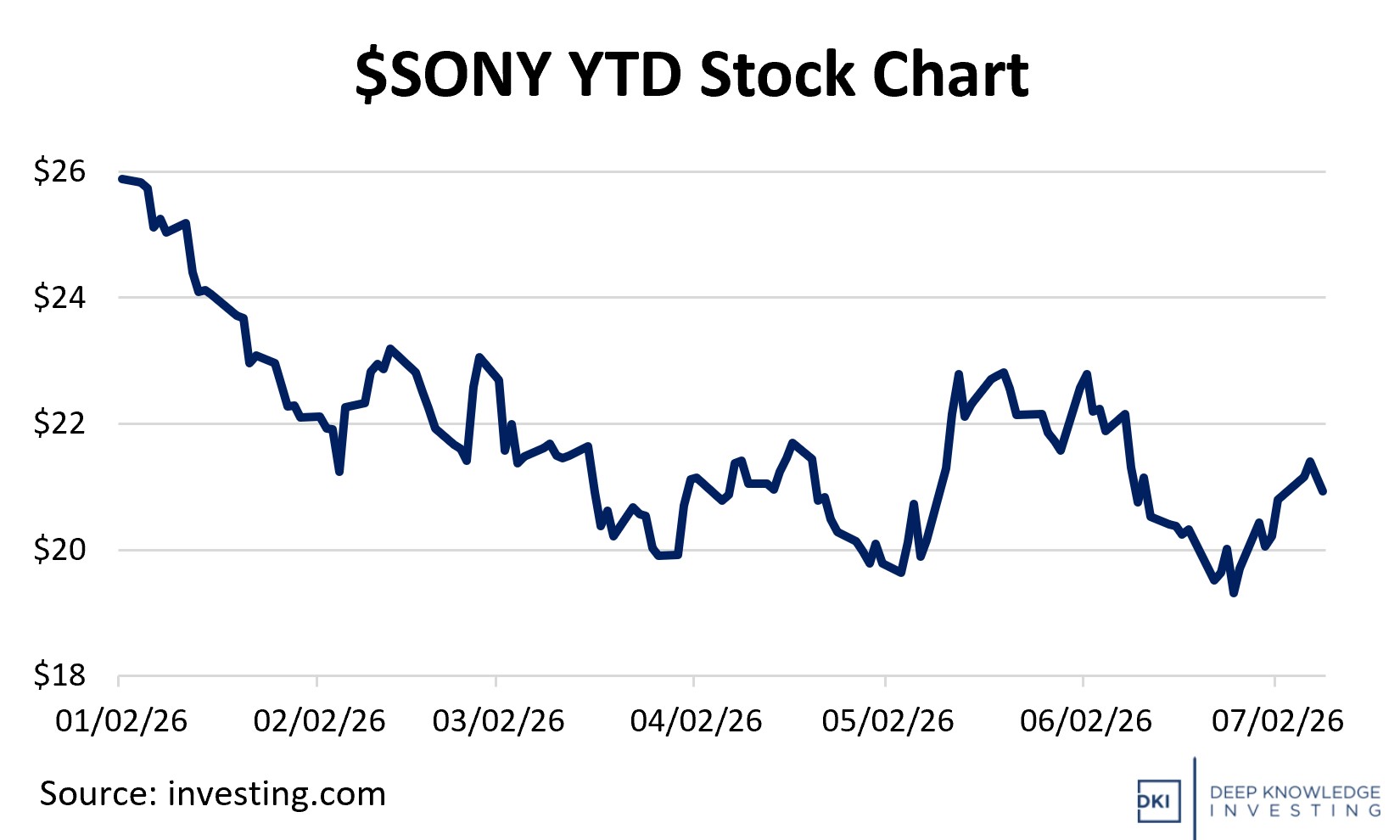
Is everyone excited about the new God of War game that’s coming?
DKI Takeaway: This accelerates the shift from owning games to licensing access to them. Existing physical titles aren’t affected, but every new PlayStation release after January 2028 exists only as a digital license, revocable and non-transferable. That kills the used-game and trade-in market for new titles, which pressures retailers like GameStop that benefit from that high-margin resale volume. Digital sales still face price competition from other storefronts, but Sony would gain more direct control over how and where its games are sold. Despite Sony’s claims that this is a response to gamer desires, it’s clearly a money-saving move as digital downloads are less expensive than pressing and shipping a disk in a box. As we pointed out in last week’s 5 Things regarding GTA VI only being sold as a digital download, this is unfriendly to gamers who will no longer own games. They can’t share or sell them. They can’t play a single-player game without an internet connection. And they will face a future where access to the game they “bought” will disappear at the whim of the publisher who may not like their style of gameplay or may have decided to discontinue hosting the game on its platform.
2) Samsung Reports Stellar Preliminary Earnings, But Stock Drops on Spending Concerns:
Samsung delivered a strong preliminary Q2 2026 and provided guidance. The company guided to consolidated operating profit of ₩89.4T ($58.4B), a 1,810% increase from last year and above analyst estimates of ₩84T – 87T. Revenue of ₩171T was up 129% y/y. Despite the strong operating profit increase the stock still fell. To give a sense of scale, profits from the chip division for the past year exceeded the prior 40 years combined.
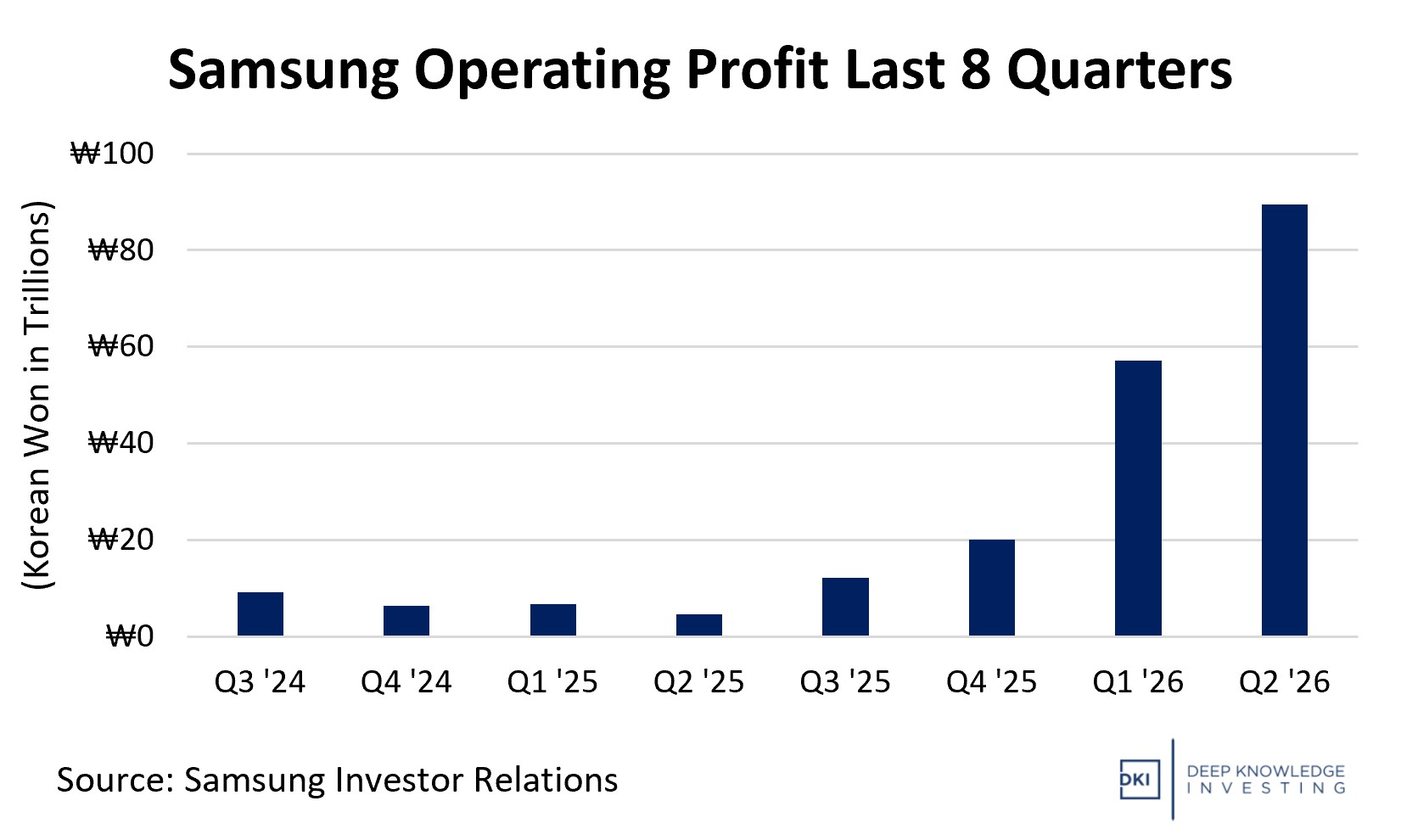
It’s a good time to be a chip-maker.
DKI Takeaway: The stock closed down more than 6% indicating Samsung was priced for perfection and that investors were expecting an even bigger beat vs estimates. This kind of result (an earnings beat combined with a stock decline) is becoming more common in the tech space. Investors are worried about the sustainability of demand given the growing capital expenditures required to build AI chip infrastructure and a many stocks are priced at levels which assume continued increases in future demand. The real question is whether spending on AI infrastructure will keep growing and support elevated memory prices. These worries hit the broader chip market with other competitors such as Micron also falling on the Samsung concerns. We’ll be addressing more on AI spending and revenue in next week’s 5 Things.
3) SpaceX Joins Nasdaq:
SpaceX was added to the Nasdaq and Nasdaq 100 Index on Tuesday. In order to arrange this outcome, the Nasdaq changed/broke a number of rules. Some speculated that they got the listing because of their willingness to change these rules to favor SpaceX. While SpaceX is one of the largest companies in the world by market capitalization, it will represent only 1% of the index. This small figure is because Nasdaq weights stocks based on free float market capitalization which excludes insider or restricted shares. Only 4.3% of SpaceX shares are publicly traded.
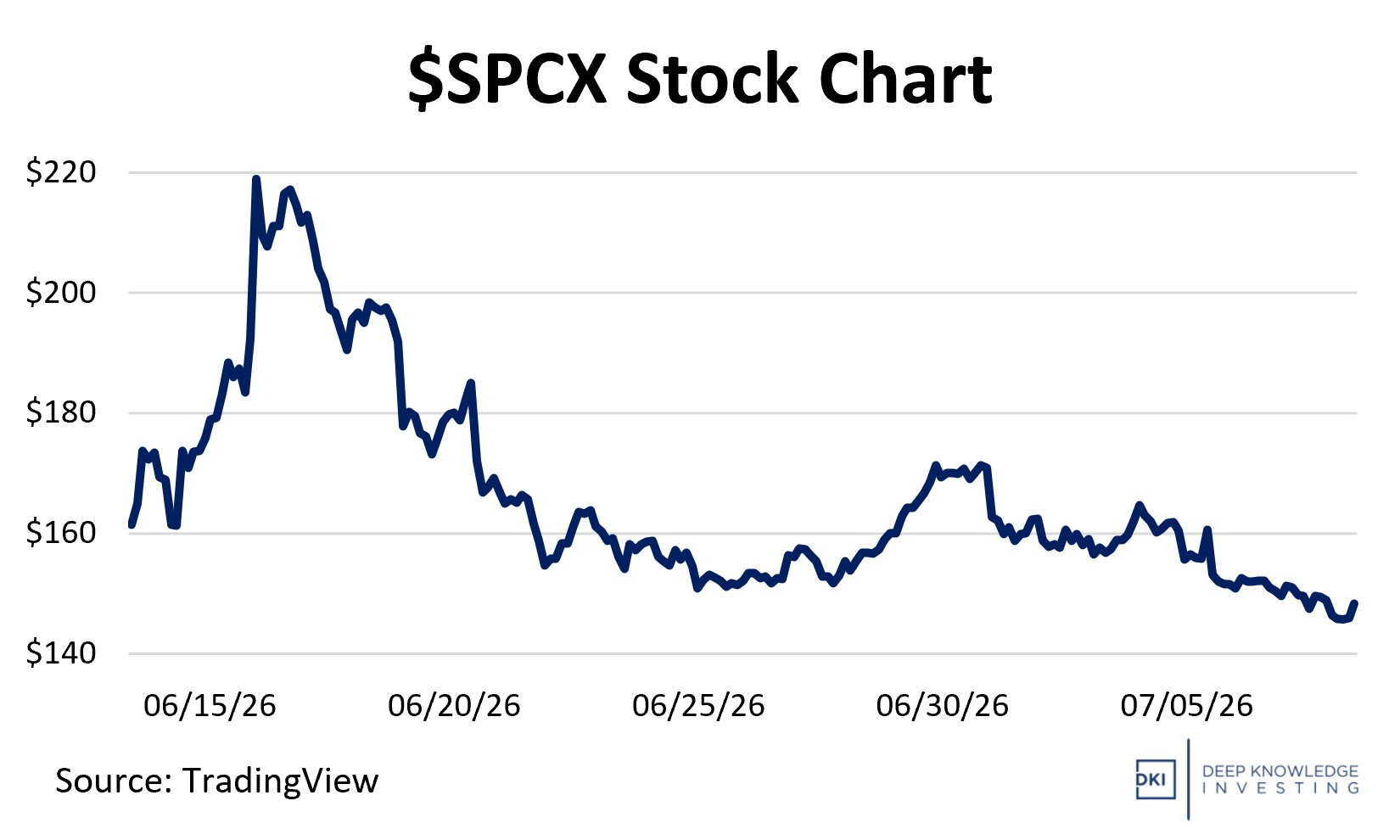
Part of the volatility relates to the knowledge that there’d be index buying.
DKI Takeaway: Adding SpaceX to the index means the ETFs and Mutual Funds tracking the Nasdaq need to buy a significant amount of SpaceX stock to match the index. Estimates for required index purchases are in the $22B – $27B range and JP Morgan thinks that the forced buying from the Invesco QQQ ETF alone could be more than $4B. This influx of non-discretionary buying is contributing to current stock volatility. It also means millions of investors are getting exposure to a company trading at a huge multiple of revenue and no probability of near-term profits. (Excluding a recent profitable quarter as a result of an accounting quirk.) The inclusion is a milestone for SpaceX. It guarantees a baseline of institutional ownership going forward and sets the stage for potential S&P 500 inclusion should they change their rules as well. That would require sustained profitability and won’t be possible until at least mid-2027.
4) Micron Strikes Memory Deals with Ford and General Motors:
Micron announced long-term Strategic Customer Agreements (SCAs) with General Motors (July 1) and Ford (July 6). The company will provide a reliable supply of memory and storage solutions to both automakers to support next-gen vehicles. This effort is enabled by Micron’s $2B investment into expanding its own advanced DRAM (Dynamic Random Access Memory) manufacturing at its Manassas, Virginia Fab. Micron will also collaborate with GM on future memory and storage requirements necessary for their vehicles over time. This includes alignment on product definition, system optimization, and the validation/qualification of future technologies.
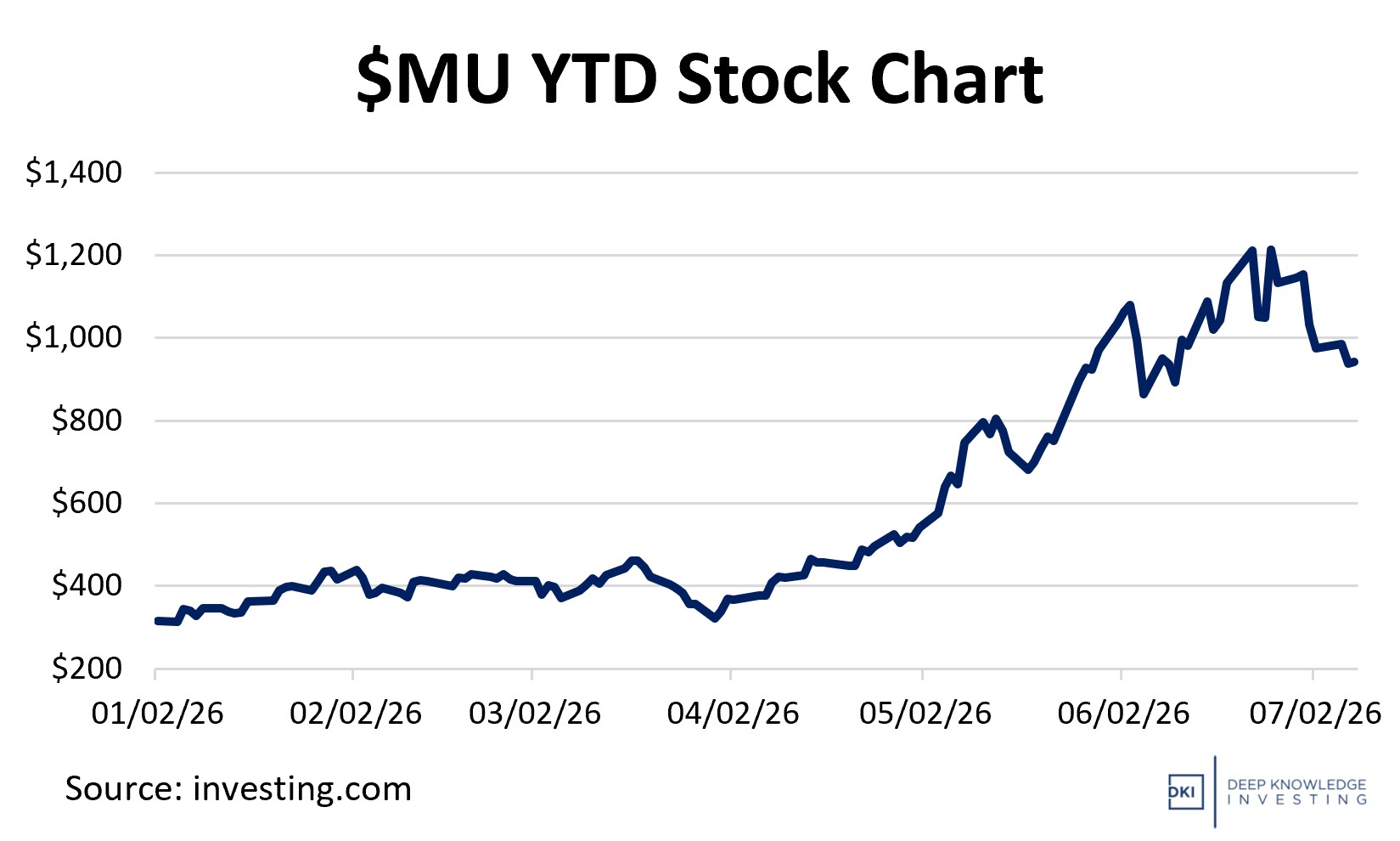
Current demand for high-bandwidth DRAM is huge.
DKI Takeaway: These SCAs bolster Micron’s long-term leadership in the automotive space. It also helps strengthen the continuity of the supply chain across the entire semiconductor ecosystem by giving the company a reliable demand source outside of pure AI plays. The collaboration with GM allows Micron to embed itself into the development stack of one of the biggest automotive manufacturers. Micron’s broader goal is to turn a cyclical commodity memory business into a stickier relationship. The auto makers get both guaranteed supply and some security on pricing although specific metrics haven’t been released yet.
5) Jersey Mike’s Files for IPO:
Jersey Mike’s filed for an IPO, planning to list on the New York Stock Exchange under the ticker symbol $JMKE. The company is seeking a $12B valuation and anticipates raising $1B from the IPO. With over 3,300 locations and $4.2B in systemwide sales, Jersey Mike’s is the second-largest sandwich chain in the U.S., behind Subway. Due to a previous LBO, the company has $2.1B in debt, with IPO proceeds expected to go to debt repayment Blackstone will retain majority voting control following its $8B acquisition in January 2025.
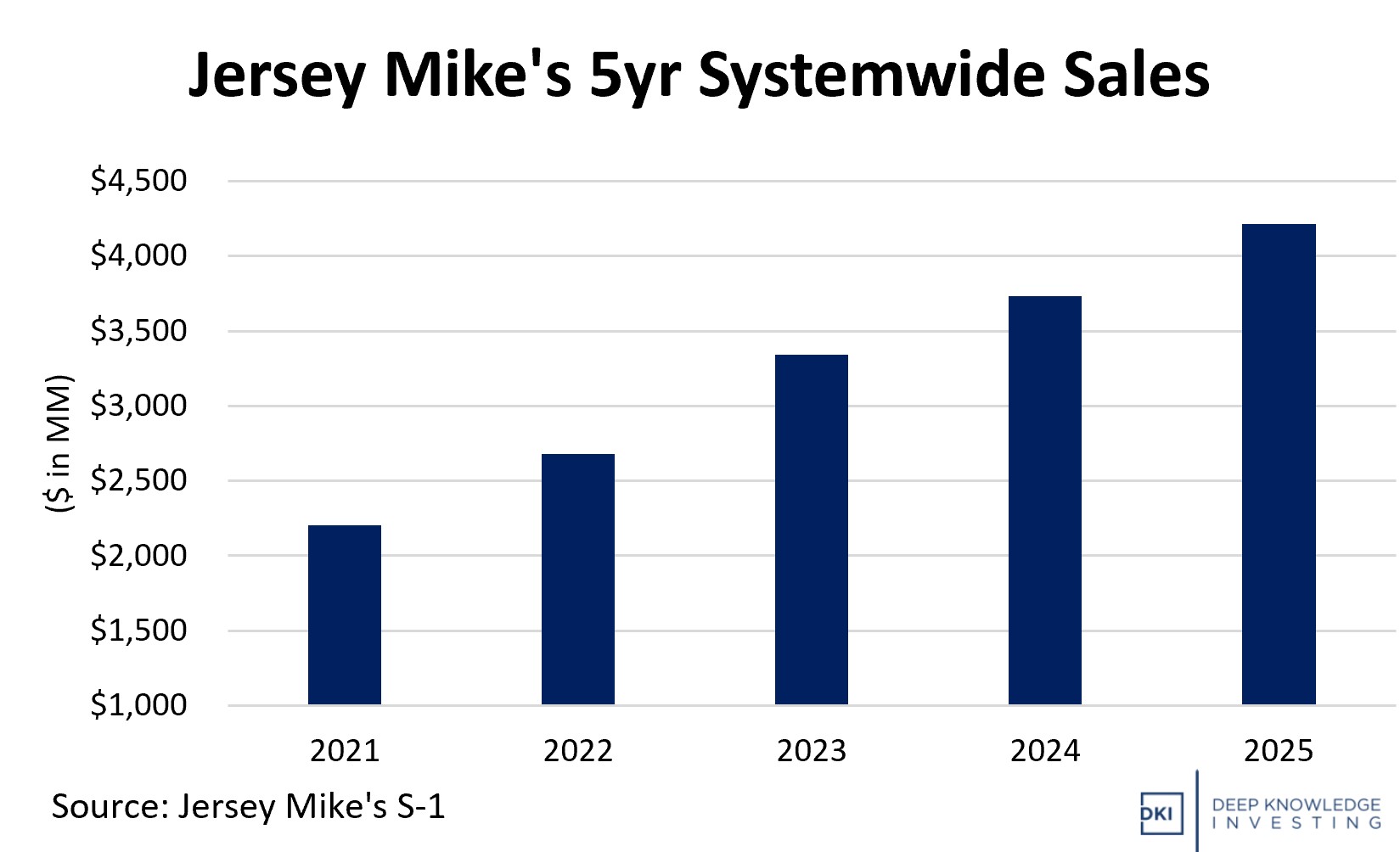
I had one of their subs a few years ago. Was better than Subway.
DKI Takeaway: The IPO looks more attractive to Blackstone than to new investors. Because Blackstone retains voting control, public investors have no input regarding strategy. New public investors will be buying into a company carrying significant debt from its leveraged buyout, while much of the value appreciation has been captured by Blackstone. This means future returns depend less on the market revaluing an underappreciated business and more on continued growth, expanding margins, and deleveraging.
6) Educational Topic: Fiscal vs. Calendar Year:
The calendar year always runs from January 1 to December 31. It’s the time-frame that affects our schedules and provides the accounting definition of the year for most public companies. A fiscal year is also a 12-month period, but can have a different start and end point depending on the needs of a particular business. For example, Apple’s fiscal year runs from October to September. Most retail companies have a fiscal year that ends at the end of January and starts at the beginning of February in order to capture and properly account for the seasonal holiday sales.
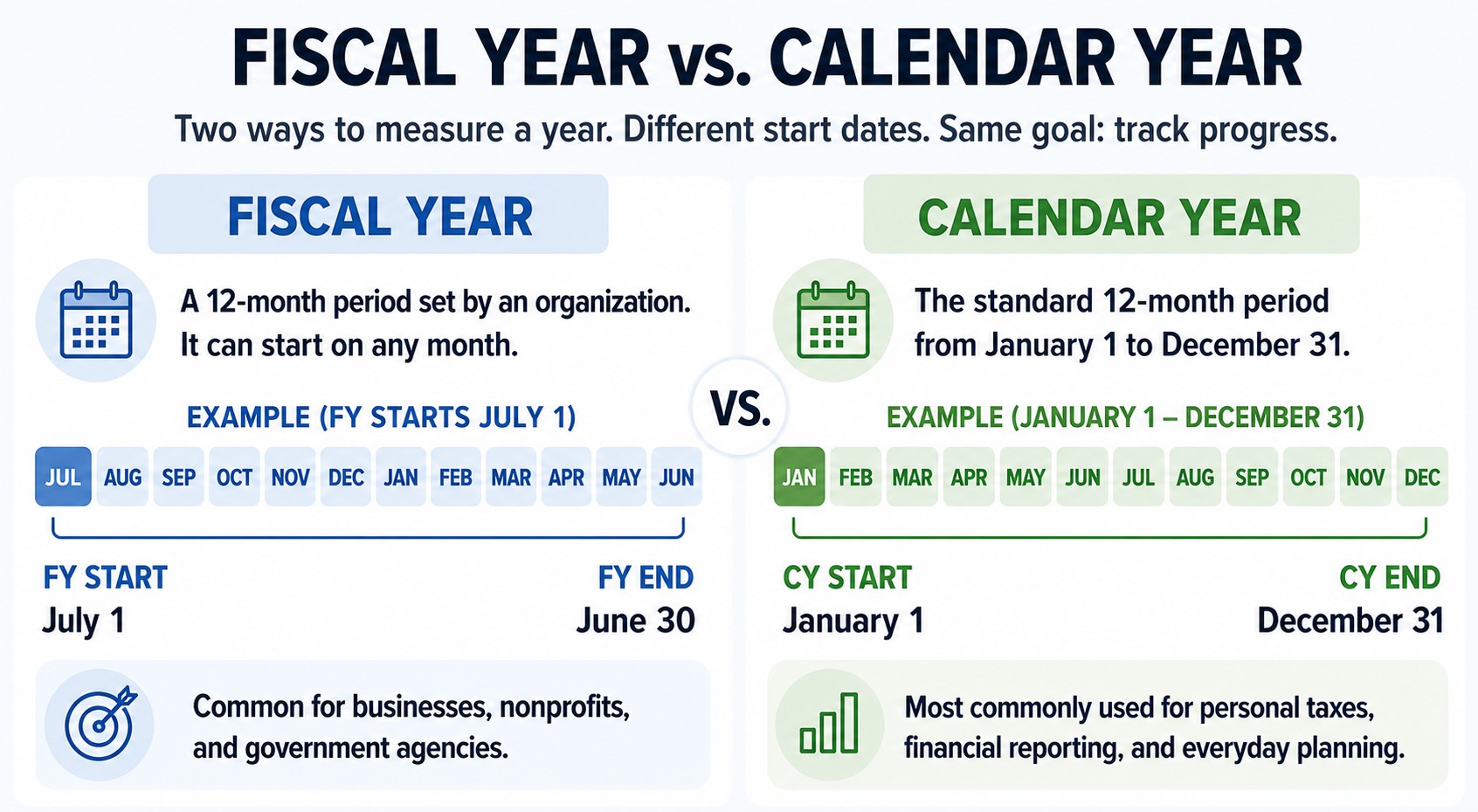
The fiscal year can match the calendar year if it starts Jan 1.
DKI Takeaway: Many companies align their fiscal year with the calendar year, but others choose a different 12-month period (or 52-week period for some businesses) based on what fits their business cycle. This is done so that revenue, profits, inventory, etc. are measured at a point in time that makes sense rather than an arbitrary calendar cutoff. For example, retailers often end their fiscal year around the end of January instead of December to ensure that the holiday season is kept intact. Otherwise, it would be split into two different accounting periods. Some companies choose a different fiscal year to reduce expenses and stress as accounting firms tend to be busy or relaxed at predictable times.
Information contained in this report is believed by Deep Knowledge Investing (“DKI”) to be accurate and/or derived from sources which it believes to be reliable; however, such information is presented without warranty of any kind, whether express or implied and DKI makes no representation as to the completeness, timeliness or accuracy of the information contained therein or with regard to the results to be obtained from its use. The provision of the information contained in the Services shall not be deemed to obligate DKI to provide updated or similar information in the future except to the extent it may be required to do so.
The information we provide is publicly available; our reports are neither an offer nor a solicitation to buy or sell securities. All expressions of opinion are precisely that and are subject to change. DKI, affiliates of DKI or its principal or others associated with DKI may have, take or sell positions in securities of companies about which we write.
Our opinions are not advice that investment in a company’s securities is suitable for any particular investor. Each investor should consult with and rely on his or its own investigation, due diligence and the recommendations of investment professionals whom the investor has engaged for that purpose.
In no event shall DKI be liable for any costs, liabilities, losses, expenses (including, but not limited to, attorneys’ fees), damages of any kind, including direct, indirect, punitive, incidental, special or consequential damages, or for any trading losses arising from or attributable to the use of this report.