Quick announcement: I’ll be in Bangkok, Thailand for the next 2 weeks before heading to Tokyo. While I’m here, I’m open to a small number of in-person conversations. If you’re based locally, or know someone here you think it would be worthwhile for me to meet, feel free to reach out privately at IR@DeepKnowledgeInvesting.com.
We’ve been warning about OpenAI’s inability to pay for the goods and services it committed to buy. This week, DRAM prices fell as OpenAI backed away from an agreement to purchase 40% of the world’s supply. Eli Lilly is paying $8B for Centessa Pharma. The business of helping people sleep is huge and growing. PE firms are having difficulty IPO’ing their companies. The “solution” is to borrow more money and pay themselves dividends. This is a coming PR nightmare for them when jobs disappear and customer service suffers. Despite the PE mess, 1Q M&A volume hits a record. Most of that is in huge mega-deals with less activity in the middle market. Finally, do you rebalance your portfolio? Should you? Don’t let the topic fill you with dread. We explain in plan language in this week’s educational topic.
This week, we’ll address the following topics:
- DKI warned about OpenAI’s inability to fund its stated plans. This week, they declined to purchase 40% of world DRAM supply. RAM prices are starting to fall.
- Eli Lilly is acquiring Centessa Pharma for almost $8B in cash. The appeal is a sleep drug still in trials.
- Private Equity firms are finding reduced demand for IPOs so they’re taking on debt to pay dividends. There’s downside.
- Global M&A volume hits a record in 1Q driven by huge deals. We’re still seeing weakness in the middle market.
- Rebalancing your portfolio: Should you sell your winners and buy your losers? Risk managers say yes. Traders say no. We explain.
As usual, we celebrate the accomplishments of DKI’s interns, Cashen Crowe, Samaksh Jain, and Kunal Arora. Cashen and Samaksh will be moving on in the next 1-2 weeks with the appreciation and applause of the entire DKI team. They have both done excellent work in their time here. Is Kunal ready for the challenge of being the Senior Intern, or will the 5 Things crumble in the coming weeks? My opinion: Never bet against Kunal!
Ready for a week of lower RAM prices and increasing OpenAI failures? Let’s dive in:
1) Memory Prices Fall as OpenAI Eases Spending and Google Launches TurboQuant:
Over the past week, (some) memory prices have begun to fall after a year of steep increases driven by AI expansion. Prices spiked in 2025 because OpenAI said it would purchase 40% of the world’s DRAM wafer supply from Samsung and SK Hynix. With OpenAI now scaling back data center investments and shutting down projects like its Sora AI platform, it has backed away from that previous commitment. Then, Google released TurboQuant, a new compression algorithm designed to reduce by more than 80% the memory necessary to run an AI model. These two forces have pushed some DDR5 memory kit prices down by as much as $100 from their peak, though still above prior norms.
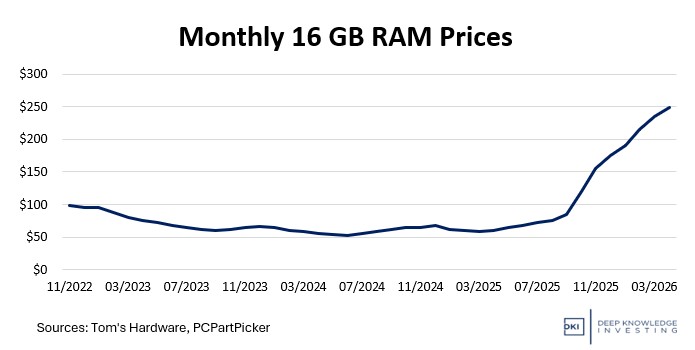
We can see this new trend in some retail prices, but it’s not in the data yet.
DKI Takeaway: Much of the OpenAI deal which sent prices skyrocketing had more to do with anticipation rather than real effects. None of the contracts were binding, but the market treated them as a done deal and priced in a massive supply crunch that had not yet materialized. Moreover, while OpenAI’s pullback helps ease memory prices, there is still massive demand from other AI players like Google, Microsoft, and Meta, which will make elevated prices likely. TurboQuant efficiency gains may not reduce total memory spending. Historically, when technology gets cheaper to acquire, companies scale up their ambitions and consume more.
This is a situation DKI warned about. We’ve spent the past year saying that OpenAI has no business model to earn a return on hundreds of billions of dollars of spending and that they had no path to raising the $1.4T they previously required to fulfill their purchase agreements. Those plans have been cut by almost 50%. There’s a reason so many OpenAI “purchases” were in exchange for OpenAI services instead of for cash.
2) Eli Lilly Acquires Centessa Pharmaceuticals in a $7.8 Billion Neuroscience Move:
Eli Lilly is buying Centessa Pharmaceuticals for about $7.8B in cash. The appeal is a medication to deal with orexin, a chemical in the brain which causes wakefulness. These new drugs are designed to help people with severe sleep disorders like narcolepsy stay awake. Centessa’s lead drug, cleminorexton, has shown very strong results in mid-stage trials, potentially working better than current treatments with fewer side effects. For Eli Lilly, this is a major move to use the massive profits from its weight-loss drugs to dominate a new area of medicine.
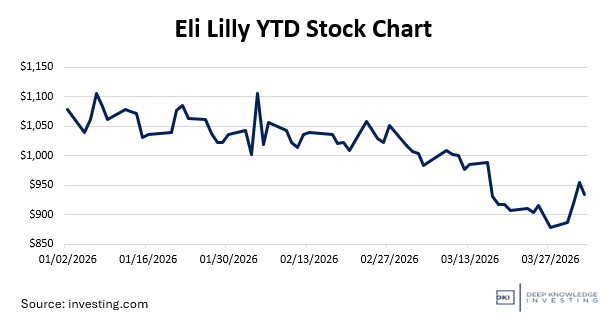
The market liked the deal.
DKI Takeaway: The company is trying to do for sleep what it did for weight loss. The drug is being tested for narcolepsy, a rare condition where individuals have lost brain cells producing orexin. With further testing, it could be used for much broader issues like general fatigue, brain fog, or even side effects from other medications. However, the $7.8B price tag is a big bet on a drug that isn’t approved yet. Lilly is paying a 40% premium because they don’t want to get left behind by competitors like Takeda, whose drug is much further along than Centessa’s. While Takeda will probably get to market first, data suggests that Centessa’s drug is more powerful and could take share once approved.
3) Private Equity Leans on Debt-Funded Dividends as Exit Environment Stalls:
Private equity firms turned to dividend recapitalizations in 2025, with portfolio companies borrowing $94 billion in leveraged loans and high-yield bonds to fund payouts to sponsors, according to Moody’s. These transactions allow firms to return capital to investors without exiting investments, a strategy that gained traction as IPO markets remained muted and M&A activity slowed, limiting traditional exit opportunities. In many cases, companies took on additional leverage pushing debt levels above 5x EBITDA and reducing financial flexibility. The scale of recap activity has surged relative to prior years, with combined issuance across 2024 and 2025 reaching near $200 billion, supported by still-open credit markets and investor demand for yield. While these deals provide liquidity to private equity sponsors and their limited partners, they also shift risk onto portfolio companies, which must service higher debt loads in an uncertain macro environment.
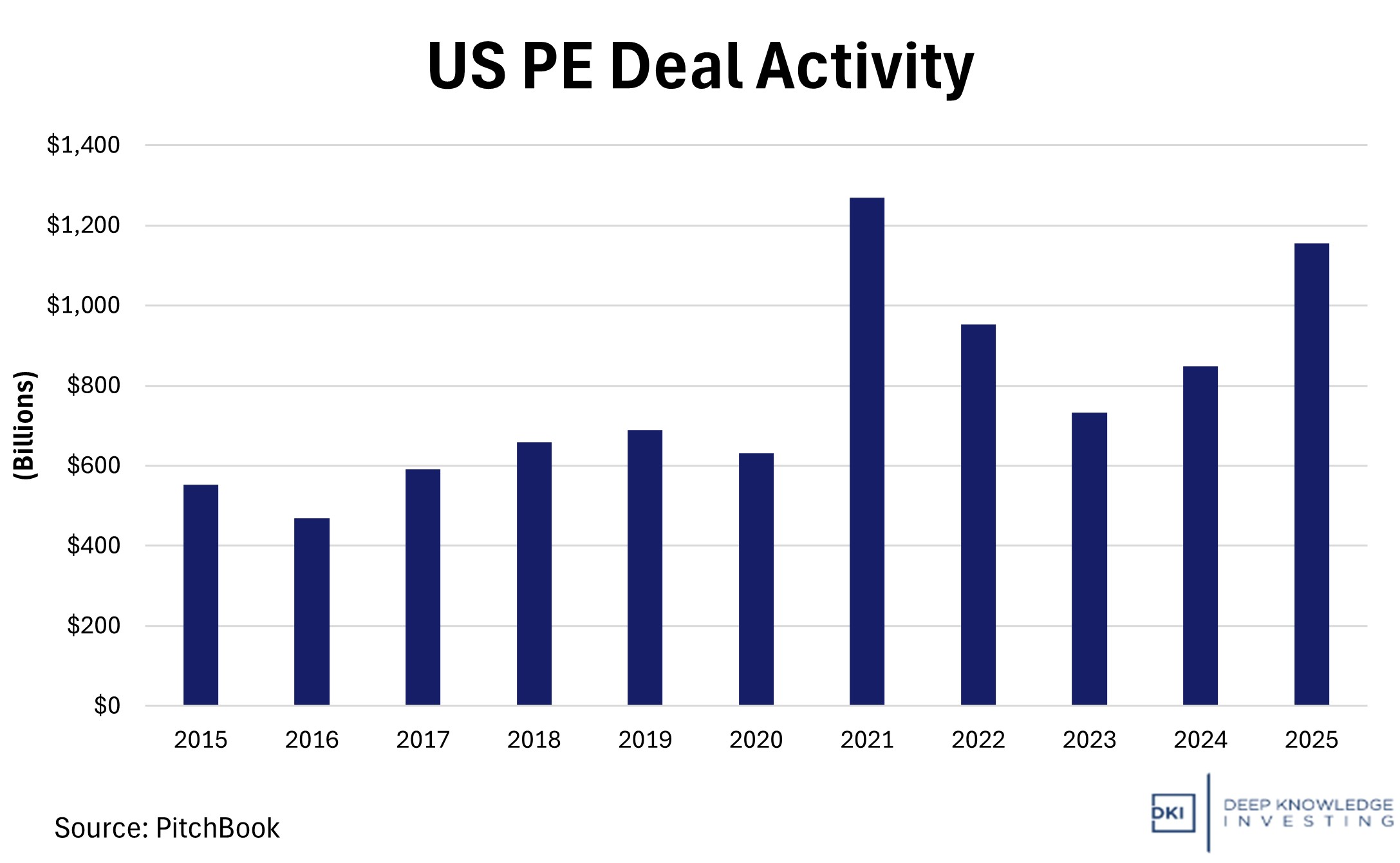
It’s been a good market to get into deals. Not a great one to get out of them.
DKI Takeaway: The rise in dividend recaps reflects a liquidity bottleneck in private equity, where firms need to return capital but lack viable exit paths. Borrowing to pay dividends solves the short-term distribution problem but introduces long-term balance sheet risk, as companies carry higher leverage without a corresponding increase in earnings power. This dynamic works when credit markets remain open and cash flows stay stable, but it becomes fragile if growth slows or financing conditions tighten. The trend also signals that private equity returns are becoming more dependent on financial engineering rather than operational exits, which may compress future returns if debt burdens limit flexibility. PE firms are starting to face more public pressure as cost cutting eliminates jobs and impairs the customer experience. When that’s combined with strip mining future returns for today’s dividends, it’s going to attract negative attention.
4) Global M&A Hits $1.3T in Q1 2026, Marking Best Q1 Yet:
Global M&A came in hot to start 2026, with first quarter deal value reaching roughly $1.3T, a record for 1Q. The surge was driven by an increase in megadeals rather than a widespread pickup in overall activity. A record number of transactions exceeding $10B accounted for a disproportionate share of total volume, with concentrations in technology and AI.
Large Corporations are deploying capital into high-conviction strategic acquisitions, particularly in areas tied to long-term growth themes like AI infrastructure, software, and data. In contrast, overall deal count remains relatively muted, showing that the middle market hasn’t rebounded.
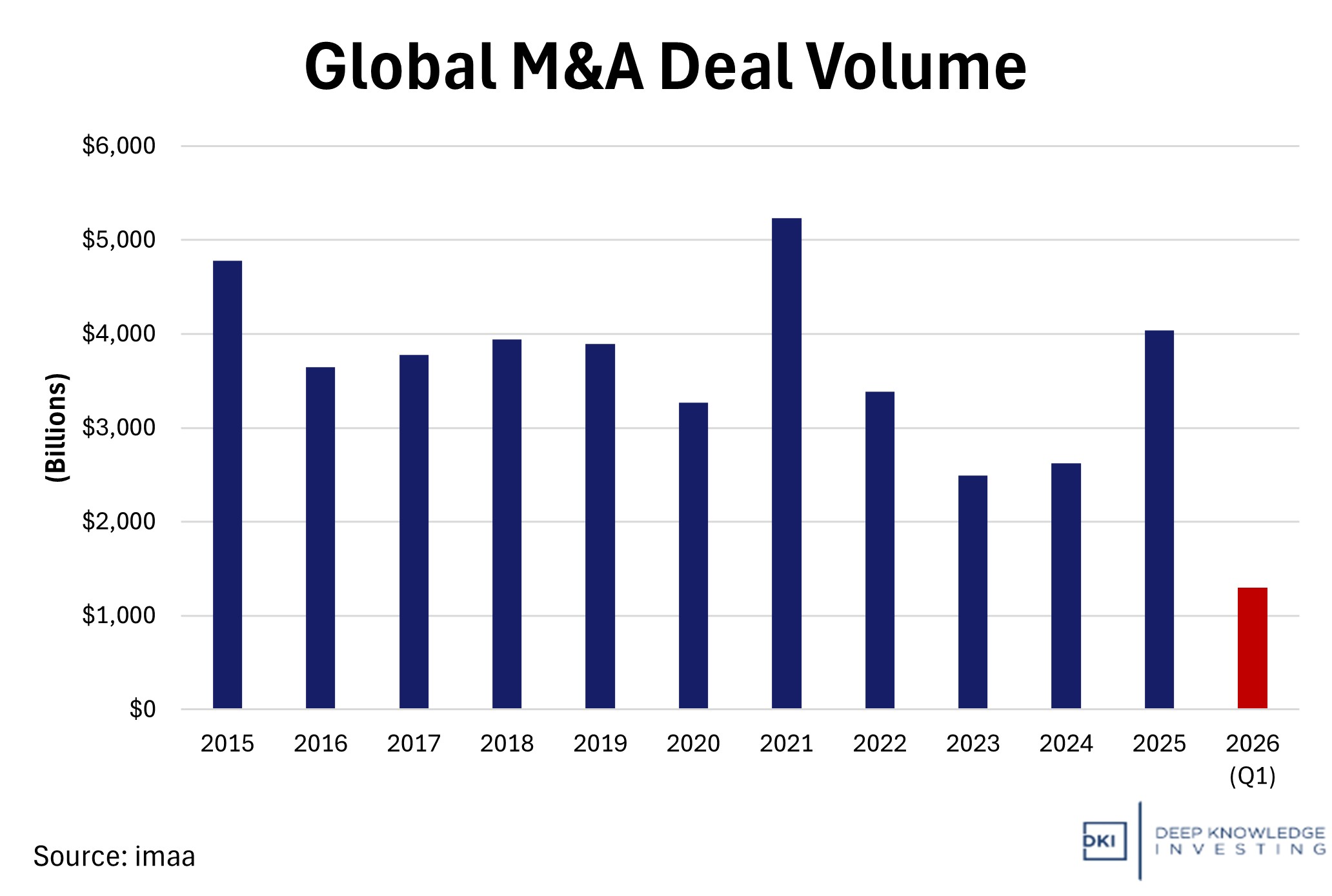
That 1Q is a record.
DKI Takeaway: While improving, financing conditions are still tighter than in prior cycles, which has a lot to do with the impact on smaller transactions. There is also a divergence growing between strategic buyers and private equity. While corporations are leaning into acquisitions, many private equity firms are still facing delayed exits, and are increasingly turning to dividend recapitalizations to return capital to investors (discussed above). DKI has had three portfolio positions acquired for premium prices. We expect they won’t be the last.
5) Educational Topic: Explaining Portfolio Rebalancing:
Portfolio rebalancing is the process of adjusting a portfolio’s asset allocation back to its target weights over time. When an investor builds a portfolio, they choose a mix of assets such as stocks and bonds based on their risk tolerance and goals. Market movements cause some assets to outperform others causing these weights to shift. Rebalancing corrects this drift by selling assets that have grown beyond their target weight and buying those that have fallen below it. Rebalancing matters because it maintains a consistent risk profile. Without it, portfolios can become unintentionally aggressive or conservative. It also enforces discipline by preventing investors from letting winners run unchecked.
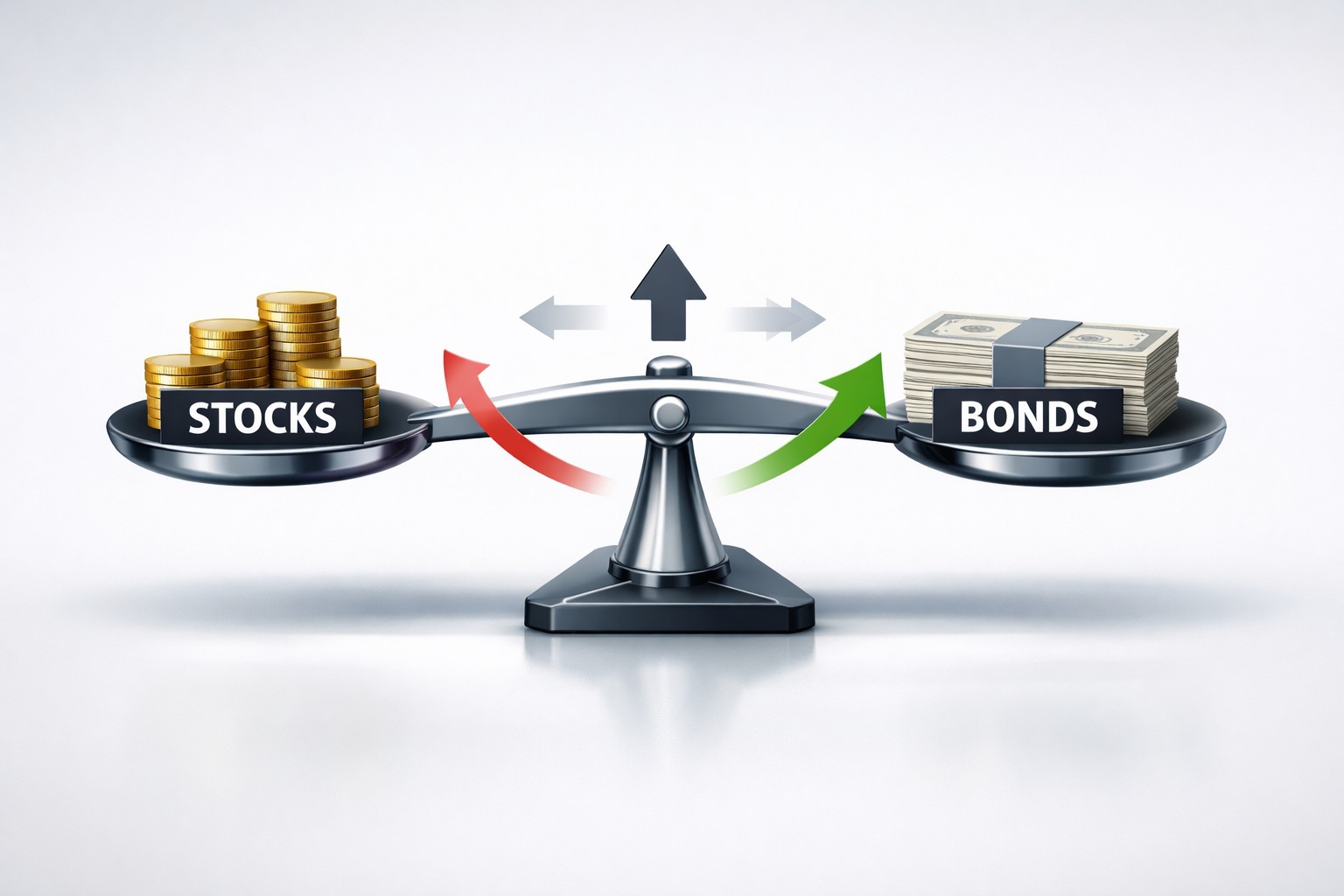
Do you sell the winners and buy the losers?
DKI Takeaway: The biggest advantage of rebalancing is it forces you to sell positions that have risen in value and to buy positions that have fallen in value. Theoretically, you are always buying your cheapest names and selling your most expensive ones. However, as any good trader will tell you, the only way you have a stock go up 3x or 4x or more is if it doubles first. Constantly selling your best positions and buying your worst ones doesn’t always work out well. I tend to have strict valuation targets and review my whole portfolio every couple of months. How do you like to handle this in your portfolio?
Information contained in this report is believed by Deep Knowledge Investing (“DKI”) to be accurate and/or derived from sources which it believes to be reliable; however, such information is presented without warranty of any kind, whether express or implied and DKI makes no representation as to the completeness, timeliness or accuracy of the information contained therein or with regard to the results to be obtained from its use. The provision of the information contained in the Services shall not be deemed to obligate DKI to provide updated or similar information in the future except to the extent it may be required to do so.
The information we provide is publicly available; our reports are neither an offer nor a solicitation to buy or sell securities. All expressions of opinion are precisely that and are subject to change. DKI, affiliates of DKI or its principal or others associated with DKI may have, take or sell positions in securities of companies about which we write.
Our opinions are not advice that investment in a company’s securities is suitable for any particular investor. Each investor should consult with and rely on his or its own investigation, due diligence and the recommendations of investment professionals whom the investor has engaged for that purpose.
In no event shall DKI be liable for any costs, liabilities, losses, expenses (including, but not limited to, attorneys’ fees), damages of any kind, including direct, indirect, punitive, incidental, special or consequential damages, or for any trading losses arising from or attributable to the use of this report.