Intel crushes estimates and raises guidance. Results in the 18A plant are ahead of expectations. They increase the cap-x budget to meet profitable demand. Yet the stock fall. We explain. In recent weeks, we’ve taken on the issue of personal ownership of purchased goods. President Trump is addressing the right to repair issue in favor of car owners. DKI agrees with him, but would like to see him pursue a different legislative path. Taiwan Semiconductor is raising prices. Customers will pay and pass on costs to consumers in the form of higher prices for electronics. Intel is looking more viable as a second supplier. AMD takes direct aim at Nvidia with Helios, a rack-scale AI system. They already have big customers. Goldman Sachs launched a private markets investment platform. It’s a good idea for Goldman, but DKI is concerned about what we’re seeing in the private investment space as well as seeing some misunderstandings about the way risk is presented. In this week’s educational topic, we discuss unit economics, customer acquisition cost, lifetime value, and churn. The topic is simpler than it might seem and we explain in plain language.
This week, we’ll address the following topics:
- Intel had an incredible quarter, gives great guidance, and the stock falls. I disagree with the market reaction and explain my reasoning.
- President Trump is making an effort to ensure car owners have access to the tools required to repair their vehicles. DKI recommends getting Congress involved.
- Taiwan Semiconductor is raising prices due to increasing costs and continued huge demand. Customers will pay and are also looking at Intel as a second supplier.
- AMD launches Helios, a rack-scale AI system aimed at taking share from Nvidia. Big customers are already onboard.
- Goldman Sachs has launched a new private markets alternative investments platform. This comes as other private investment vehicles are gating investors who wish to leave.
- Unit economics, lifetime value, customer acquisition cost, churn…If that sounds complicated, don’t worry. We explain in this week’s educational topic.
DKI’s interns Kunal Arora and Eli Killorin do their usual fantastic work on this week’s 5 Things. Let’s make sure the credit for what you’re about to read goes to them. We also credit Param Shah for finding a new way to automate and streamline the workflow here at DKI each week. All three of them are contributors!
Ready for a week of semiconductor news and more semiconductor news? Let’s dive in:
1) Intel Earnings:
Intel announced a fantastic 2Q. Revenue of $16.1B was up 25% and crushed analyst estimates of $14.5B. EPS of $.42 was almost double analyst estimates of $.22 and more than double guidance of $.20. 3Q revenue and EPS guidance were far above estimates with projected earnings of $.38 per share a premium over the $.28 expected. The news out of the 18A fab plant was just as good with yields above expectations set in March. There are rumors that yields are already above 80% which is close to what world-class Taiwan Semi does. Those rumors have been confirmed in recent expert calls I’ve done in the space. There is a confirmed new external customer for the fab plant and there are rumors that Google has engaged Intel to produce 3MM TPUs (Tensor Processing Units, a Google custom AI chip). For the second quarter in a row, Intel has said that difficulty in getting supply of some components prevented them from selling more meaning demand remains above even these excellent results. For more details, check out DKI’s post on the topic.
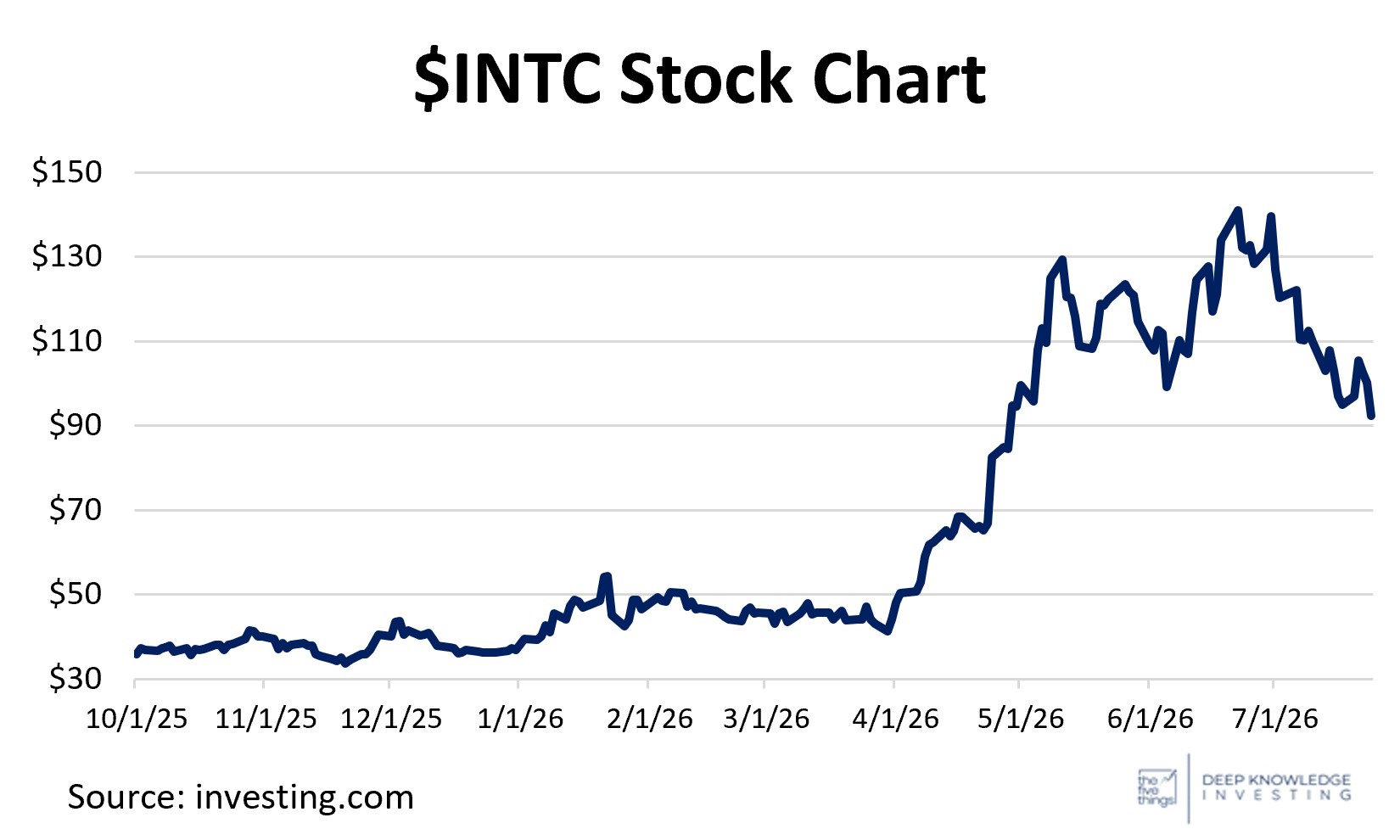
Right or wrong, I’m having a disagreement with the market reaction.
DKI Takeaway: The day following the massive beat and raise, Intel’s stock fell. Part of that relates to higher oil prices. The concern is expensive oil will lead to higher inflation and a more hawkish Federal Reserve. The primary issue relates to Intel’s guidance for increased capital expenditures. Previously, the market worried that Intel wasn’t spending as much due to a lack of demand. Now that Intel is investing to meet huge profitable demand (and executing admirably), the same people remain concerned. I think the market is grouping all tech spending as one combined issue. I’ve expressed concern for more than a year that the big hyperscalers spending trillions on AI development and datacenters have no plan to earn a return on capital. Inexpensive Chinese models are lowering the cost curve. Meta and OpenAI have announced new models with effective token pricing down 75%.
Intel spending is different. They are adding cap-x to meet profitable demand and grow a business that makes money. There is current customer demand that they can’t meet and are building to do so. It’s not the same thing. For full DKI analysis on the topic, please check out our post titled “A Repetitive Thought on Today’s Trading”. That one is paywalled so please feel free to subscribe.
2) President Trump Takes on Right-to-Repair:
President Trump signed a memorandum aimed at assisting car owners who want to repair their own vehicles. The memorandum directs the Environmental Protection Agency (EPA) and the CARB (California Air Resources Board – the only certifier in the nation) to deprioritize enforcement against owners making good-faith repairs. The EPA responded within days, reaffirming that manufacturers must give independent shops and owners the same diagnostic tools and service information they give dealers, and recognizing the Specialty Equipment Market Association’s (SEMA) Certified Emissions program as a second certification path.
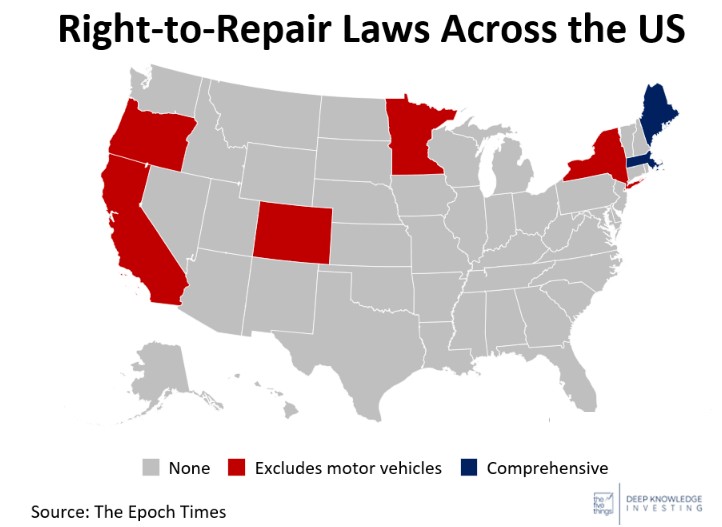
This needs to improve and owners should have access to diagnostic tools.
DKI Takeaway: This is a memo directing agency guidance, not a change to the Clean Air Act itself. It carries none of the permanence of legislation and can be reversed by the next administration as easily as it was issued. That fragility may make shops and manufacturers slow to invest in new certifications or inventory because the rules could snap back when Washington DC changes leadership. However, a narrower version of the REPAIR Act has moved forward in the House as part of the Motor Vehicle Modernization Act. If enacted, it would give vehicle owners and independent shops broader legal access to repair information and tools, going further than this memo does. This fits the wider narrative of ownership rights we’ve covered, where this memo and the Deere Settlement expand ownership rights whereas Sony’s and Rockstar’s elimination of physical disks for games limit them.
DKI remains in favor of personal ownership of purchased products (games, tractors, and autos). We note that when he thought Congress was being uncooperative, President Obama exclaimed that he had a phone and a pen and started writing executive orders. He was later disappointed when these same orders were overturned by the next person sitting at the same desk with a different pen. We hope President Trump learns from this example and works to push this legislation through Congress instead of relying on an easily-reversed memo.
3) Taiwan Semiconductor Raises Prices:
Taiwan Semiconductor ($TSM) announced plans to raise chipmaking prices. The company recently finalized base-price hikes of 5% to 10%, with these changes taking effect next year for advanced and mature semiconductors. The price increase is in response to the rising prices of raw materials, equipment, and energy as well as continued demand from AI developers and hyperscalers.
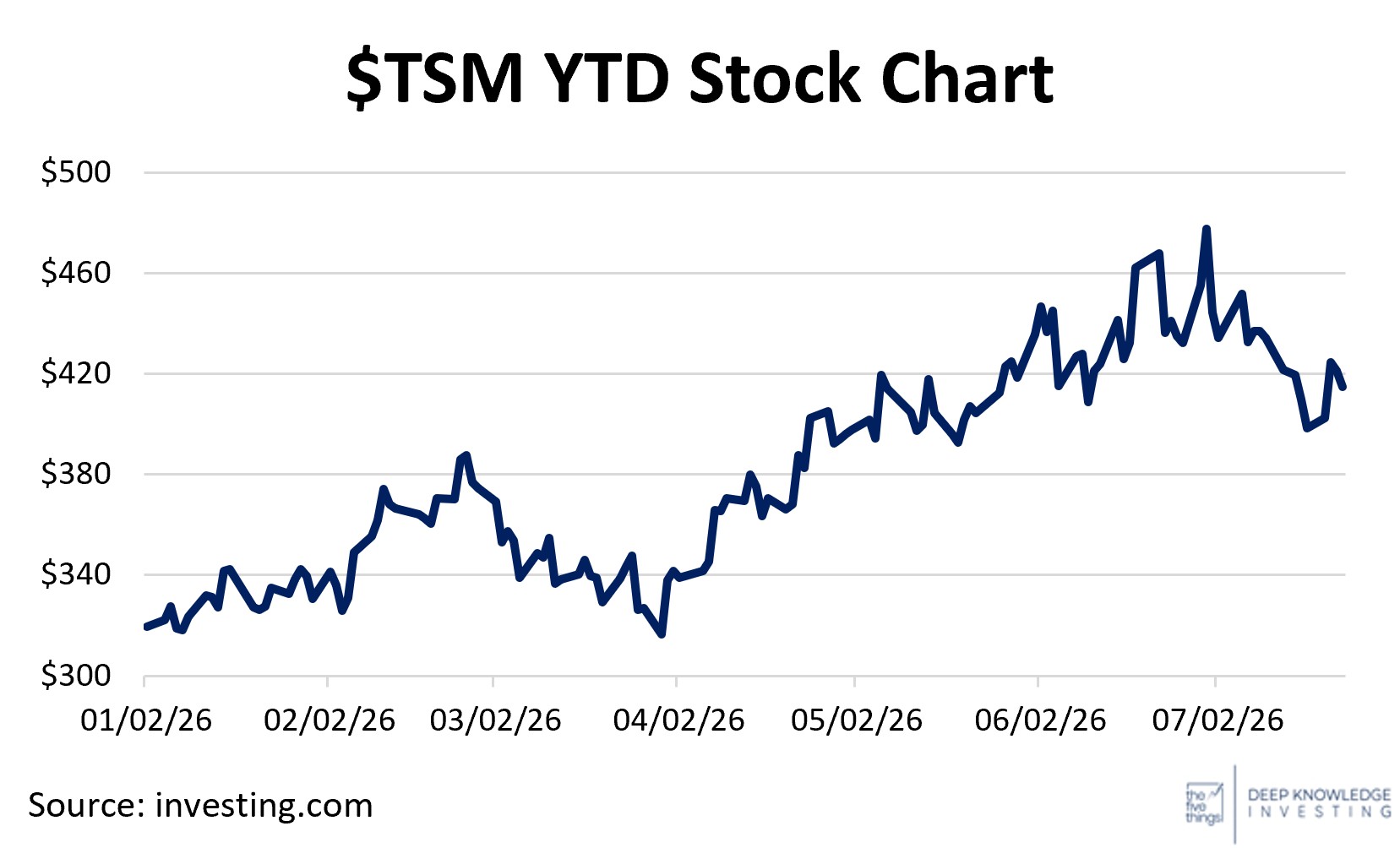
Still the gold standard in chip manufacturing.
DKI Takeaway: TSM is the largest producer of advanced chips, and switching chip producers is extremely difficult for customers. As a result, companies like Nvidia and Apple have an incentive to pay what Taiwan Semi requests. When TSM raises prices, these companies will pay more and then pass the higher costs on to customers through higher device prices. The chip industry is betting on sustained demand to justify the billions being spent on new factory construction. Higher prices could lead to slower adoption and slower consumer upgrade cycles. The company is protecting its margins and expecting that demand will stay strong enough to absorb the increase. Intel’s success getting to high yields in its 18A plant and interest in the coming 14A process is becoming a viable alternative for the big tech companies – see Thing 1 above.
4) AMD launches Helios and Strikes New Deals with Microsoft and Anthropic:
AMD launched its first rack-scale AI system, Helios. It treats an entire server rack as a unified computing system with integrated GPUs, networking, memory, and cooling. This is a change from the traditional approach of having individual chips handle these tasks. The company plans to start shipping to major enterprise customers in the second half of this year. Microsoft announced it would deploy Helios racks in its Azure data centers. AMD also announced a partnership with Anthropic to deploy up to 2 gigawatts of AMD Instinct MI450 Series GPUs in Helios systems. In turn, AMD will make a $5B equity investment in Anthropic in the future.
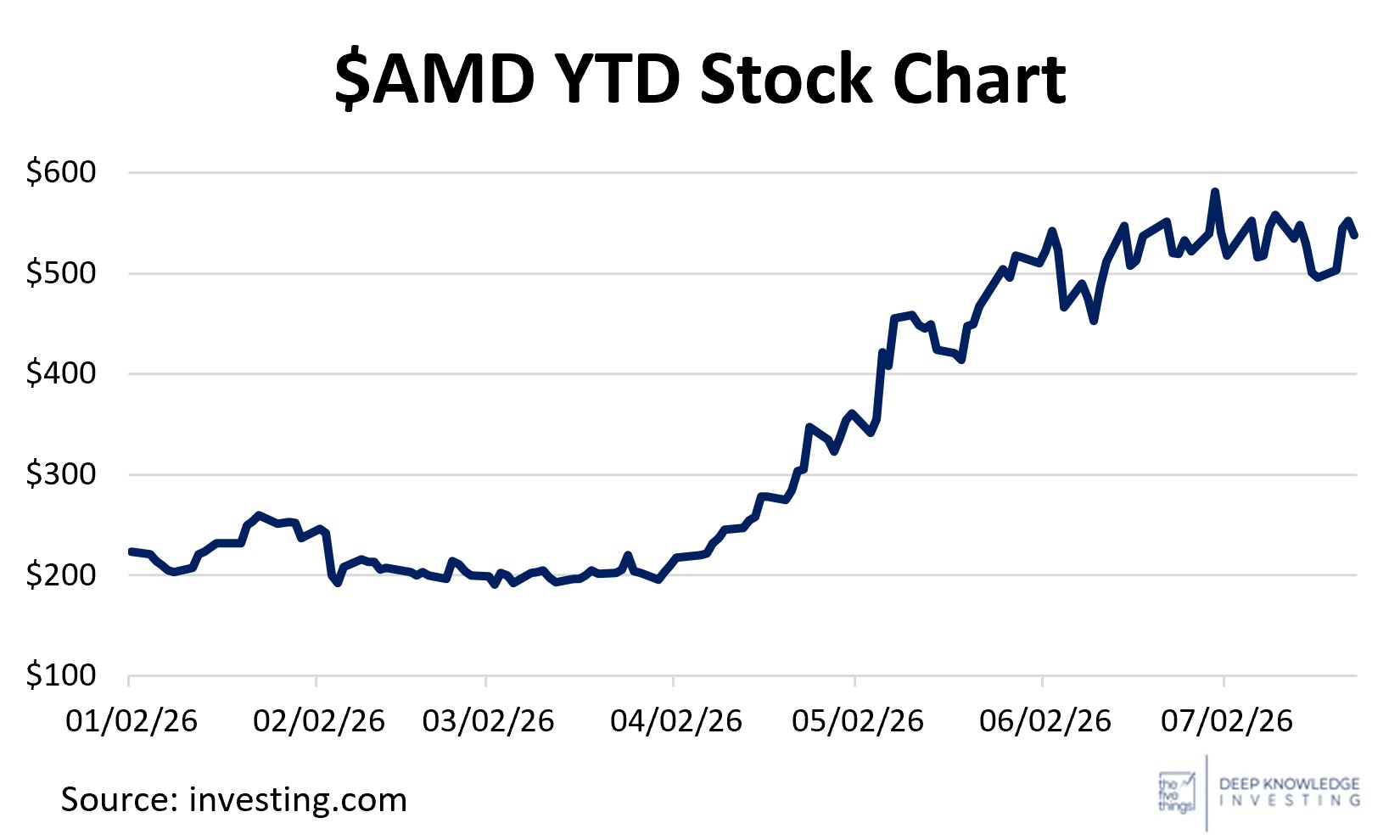
It’s been a great year for investors in the chipmakers.
DKI Takeaway: AMD is providing Nvidia its first rival to Grace Blackwell and Vera Rubin. Landing Microsoft and Anthropic adds to the growing list of Helios customers which already includes Meta, OpenAI, and Oracle. AMD didn’t comment on cost, but estimates put Helios at between $5.0 – $5.5MM (Vera Rubin is estimated to cost between $3.5 – $4.0MM). The premium is due to Helios’s massive 31 TB of HBM (High-Bandwidth Memory) compared to Vera Rubin’s 21 TB. Vera Rubin still leads on raw performance at 3.6 exaFLOPS (a measure of performance equal to at least one quintillion floating-point operations per second) vs. Helios’s 2.9, but AMD is betting hyperscalers will value memory capacity over the top-line benchmark. Nvidia holds over 95% of the data center GPU market compared to AMD at around 4.5%. Helios could help AMD gain share.
5) Goldman Sachs Creates a New Private Market Division:
Goldman Sachs has launched a new alternative investments platform to give ultra-high-net-worth individuals and family offices direct access to private companies. The new group will combine Goldman’s existing alternative investments business with two new teams. The firm’s stated goal is to allow clients to invest in fast-growing companies before they reach peak IPO valuations. (The skeptics among us think the firm’s real goal is more fee income from their wealthy client base.)
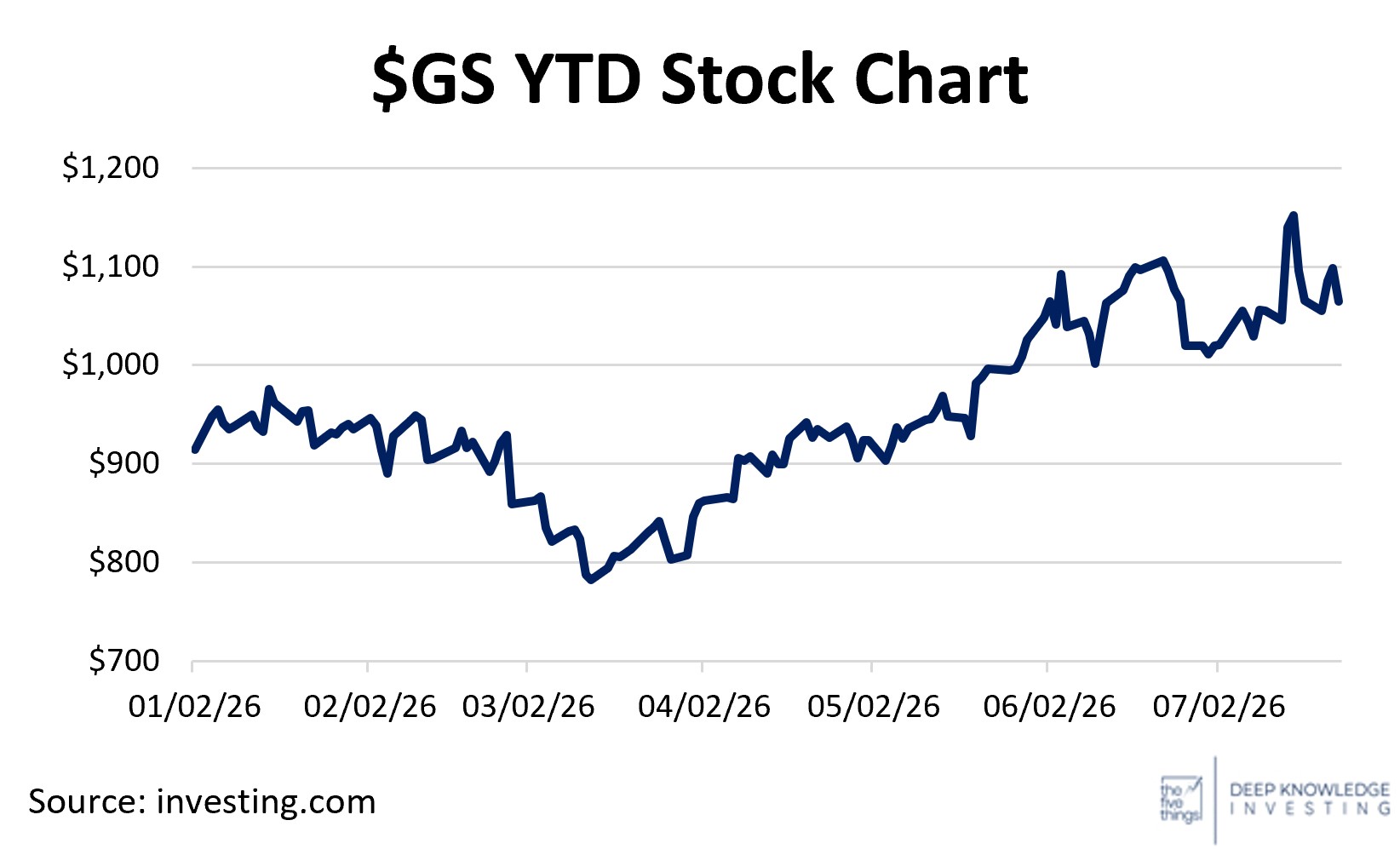
It’s been a good year in trading and M&A for the big banks.
DKI Takeaway: Goldman’s expansion into private markets comes at a time when the private debt market is facing public problems. Apollo Global Management capped redemptions on its $25B flagship fund, and funds across the space are closing gates after seeing redemption requests exceed 10%. Similar stories are playing out across the private credit asset class. This exemplifies the broader private market’s liquidity problem. Goldman is betting that it can solve this by building a marketplace for private equity. However, the same liquidity problem may persist after Goldman expands. When the next credit crunch comes and wealthy clients start to request the return of their capital at the same time, Goldman’s private market expansion could see the same gatekeeping we are seeing at Apollo.
One additional point of caution: These private investments are often marketed as being less volatile and therefore, less risky. DKI notes that these investments appear less volatile solely because there is no widely-reported public market meaning the value of these assets isn’t marked to market on a regular basis. Not marking your book to market doesn’t mean low volatility; but rather, it indicates reduced pricing information.
6) Educational Piece: Unit Economics:
Unit economics measures the revenue and cost tied to a single unit of a business to see whether the underlying model is profitable and sustainable. In retail, the unit is typically a store, where average unit volume (AUV) is the annual sales one location generates. You would compare this to build-out costs and the cash payback period showing how many years of store cash flow it takes to recover that investment. Things like the use of debt and the company’s ability to pay it off are also important. In SaaS (software as a service), the customer is the unit. You compare the total profit a customer generates during their relationship with the company against the cost to acquire a customer. While retail payback is driven by foot traffic and square footage, SaaS payback is driven by subscription revenue against acquisition cost as well as churn. (Churn is the percentage of the customer base that cancels their subscription each year.)
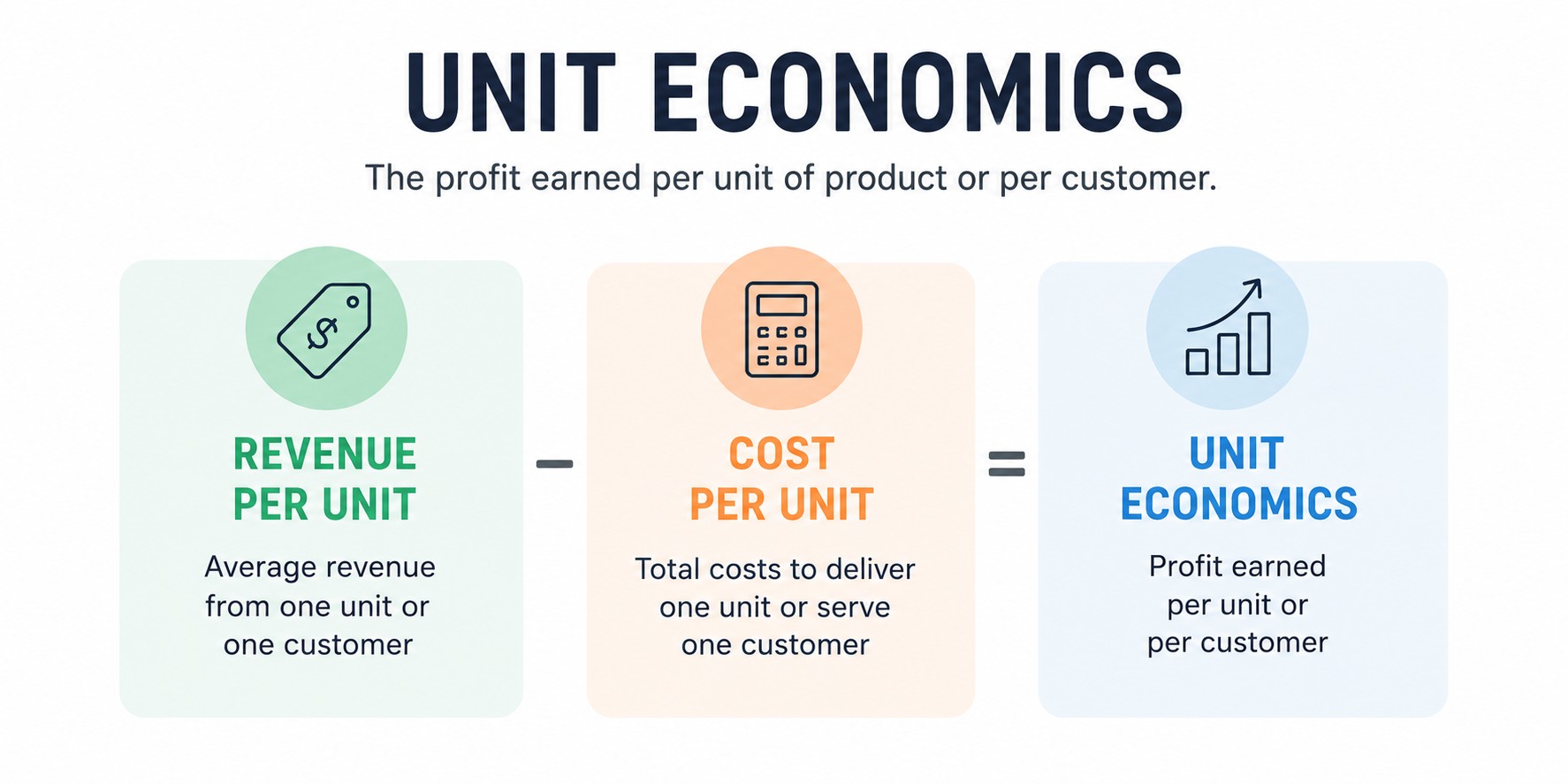
Is each individual piece of business profitable?
DKI Takeaway: Unit economics matter because growth alone can mask a broken business model. A company can post rising revenue, expanding store count, or a growing customer base while losing money on every unit sold. The pattern can become unfortunately clear when the growth rate slows. Checking whether a business is profitable at the unit level, before other factors complicate the picture, is what separates durable growth from growth that’s borrowed against the future.
Information contained in this report is believed by Deep Knowledge Investing (“DKI”) to be accurate and/or derived from sources which it believes to be reliable; however, such information is presented without warranty of any kind, whether express or implied and DKI makes no representation as to the completeness, timeliness or accuracy of the information contained therein or with regard to the results to be obtained from its use. The provision of the information contained in the Services shall not be deemed to obligate DKI to provide updated or similar information in the future except to the extent it may be required to do so.
The information we provide is publicly available; our reports are neither an offer nor a solicitation to buy or sell securities. All expressions of opinion are precisely that and are subject to change. DKI, affiliates of DKI or its principal or others associated with DKI may have, take or sell positions in securities of companies about which we write.
Our opinions are not advice that investment in a company’s securities is suitable for any particular investor. Each investor should consult with and rely on his or its own investigation, due diligence and the recommendations of investment professionals whom the investor has engaged for that purpose.
In no event shall DKI be liable for any costs, liabilities, losses, expenses (including, but not limited to, attorneys’ fees), damages of any kind, including direct, indirect, punitive, incidental, special or consequential damages, or for any trading losses arising from or attributable to the use of this report.