I’m heading to Buenos Aires this week followed by a few days in Florence, Italy, and will spend November in Japan. I’m open to a small number of in-person conversations. If you’re based locally, or know someone in those locations you think it would be worthwhile for me to meet, feel free to reach out privately at IR@DeepKnowledgeInvesting.com.
If you are interested in accumulating Bitcoin via mining, I’ve been mining with Simple Mining and it’s been a great experience you can check them out here. It’s even easier than you think. It took me 30 minutes to set up the first miner and I’m already earning sats. It would take 5 minutes to setup the second.
This week, I was hosted by Janet Alvarez on the SiriusXM Business Briefing. If you’re a SiriusXM subscriber, it’s worth checking out her show. Last week, I had the opportunity to speak to the Manhattan Alternative Investment Network about using Bitcoin as a currency and the implications of remarks by Treasury Secretary Bessent on the Japanese reverse carry trade.
This week, DKI covered our Intel Dec $140 short call position. We made 128% in two weeks. We also sold our position in Talen Energy after making 226% in 2 ½ years plus additional trading profits. We credit Enrique Abeyta for the Talen idea which he outlined in a DKI webinar. Is DKI going to make you more than 100% a month? Of course not, but you still might want to think about subscribing.
This week, we’ll address the following topics:
- Google and Constellation announce a cleverly-designed deal to comply with and partly circumvent the new bring your own power rules.
- FOMC: The market celebrated the Fed’s intention to hold instead of hike this month. I explain why it doesn’t matter.
- McDonald’s is facing an antitrust lawsuit based on its use of AI and data sharing. I think it’s data that could be easily replicated, but am concerned about person-based pricing.
- $SVIA does another stock buyback bringing shares retired to 20% of the recent total. DKI subscribers have made 140% in two months plus additional trading profits.
- Educational: We explain the basics of how companies choose between equity and debt to raise capital.
DKI’s interns do their usual excellent work this week. Please extend a mental round of applause to Kunal Arora and Eli Killorin. I also had the opportunity to mention them by name on Janet Alvarez’s Business Briefing show. They are responsible for much of the piece you’re about to read.
Ready for another week of bringing your own power? Let’s dive in:
1) Google and Constellation Energy Strike Power Purchase Agreement:
Constellation and Google announced a 3,590MW power deal in the PJM interconnection region. The nuclear part of the agreement covers a 20-year power purchase agreement for 890MW coming from upgrades that squeeze more output from existing reactors. Constellation will invest $4.3B and will begin to supply power in 2028. The other 2,700MW covers a separate 15-year supply agreement based on plants Constellation already operates. Constellation also signed a 5-year Google Gemini and Cloud Enterprise contract, at an undisclosed price.
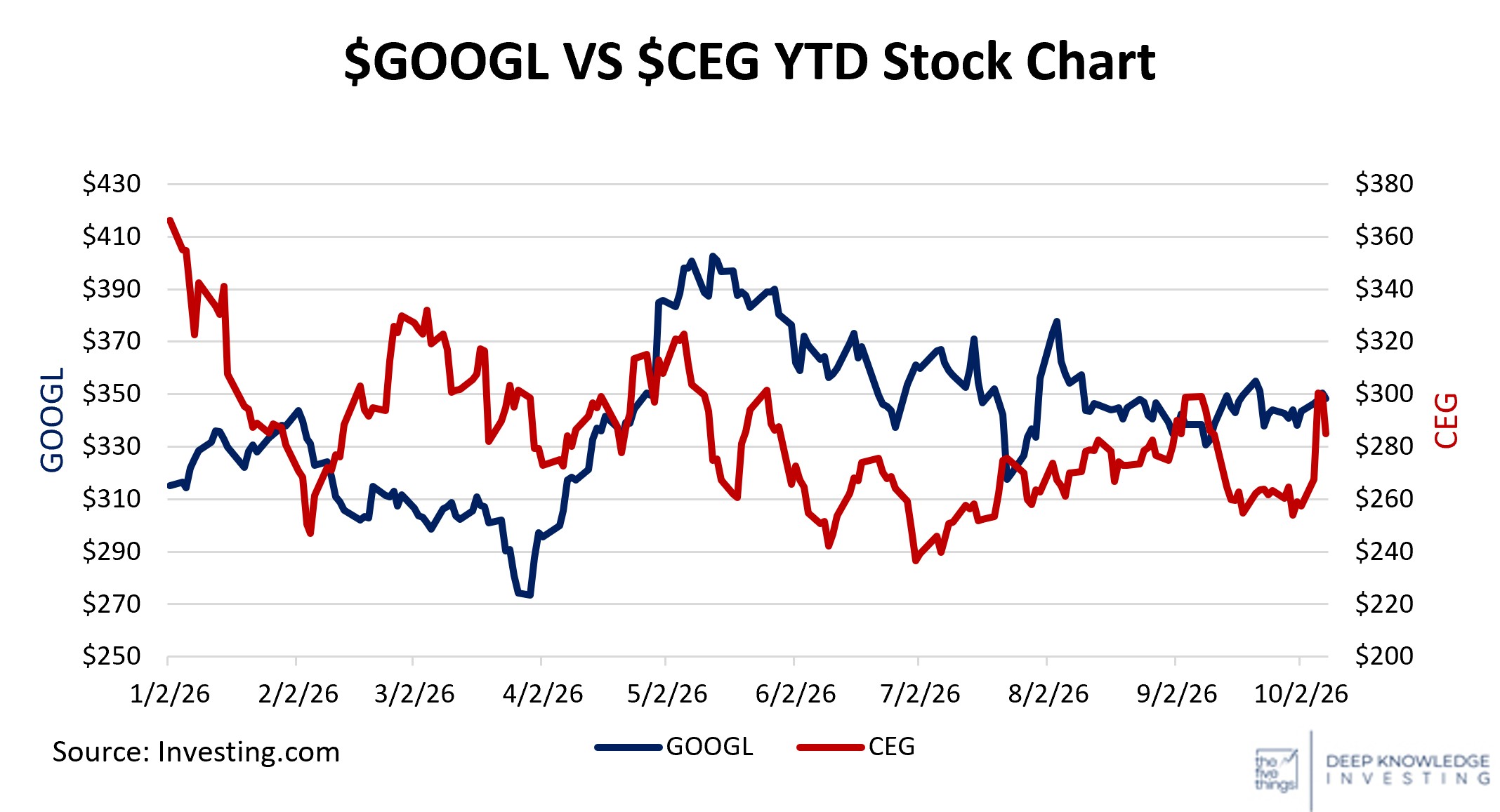
DKI Takeaway: There are two interesting elements to the deal. There have been considerable complaints from constituents in the PJM area due to much higher power prices as hyperscalers bid on capacity for datacenters. Google is trying to get around that by bringing their own capacity in partnership with Constellation. Rather than creating entirely new generation capacity, Google is paying Constellation to upgrade existing capacity. Are they following the new rules, or cleverly skirting them? The deal caused a price spike in other independent power producers with nuclear assets like Talen Energy ($TLN). DKI made more than 225% in 2 ½ years in the stock with additional returns earned by trading it well. As always, we credit Enrique Abeyta for the original idea.
2) FOMC Minutes and Bond Auctions:
The release of the minutes from the most recent Federal Reserve meeting caused relief by disclosing what people already expected. The Fed expressed concern about inflation, and said it expected to raise rates once more this year but not at this month’s meeting. Somehow, the same people who are concerned about inflation are also expecting that the Fed can reduce borrowing rates by lowering the fed funds rate. The below chart begins just before the Powell Fed began a two-year cutting cycle. By the time Warsh got the big chair, the yield on the 10-year was higher as were mortgage rates. Inflation is being driven by overspending out of Congress and a bond market that is modeling in higher long-term inflation due to additional currency creation. The Fed can’t stop that by changing the overnight rate.
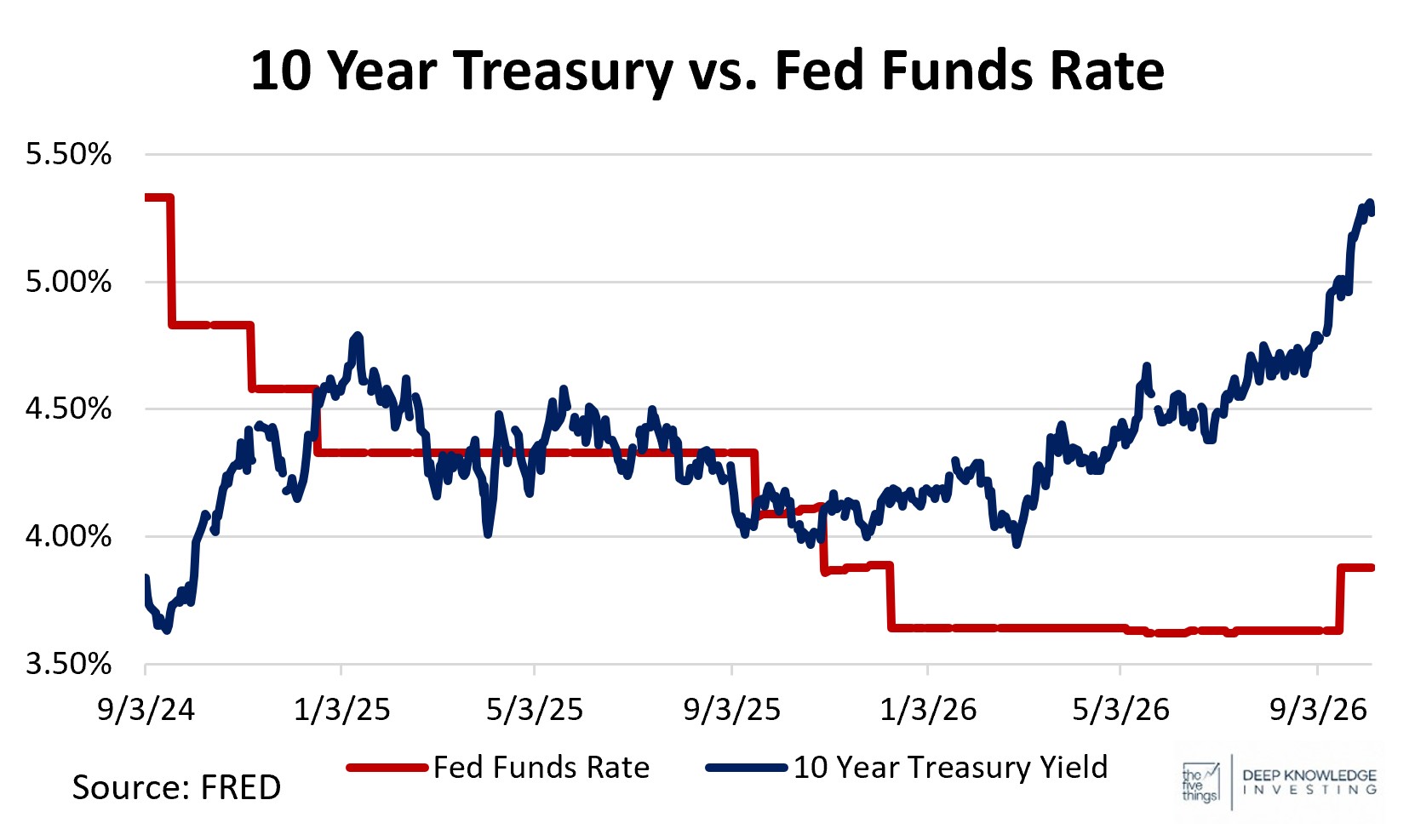
DKI Takeaway: This week’s $39B 10-year Treasury auction went well if you only look at demand. The yield of 5.30% was the highest since 2000. Again, if you look at the chart above, yields began increasing as soon as the Powell Fed cut and rose strongly during the long hold ahead of last month’s rate hike. Demand was strong at the higher yields. At some price, the market will always clear. We’ll now be adding higher interest expense to Congressional irresponsibility as reasons for the expansion of the money supply.
3) McDonald’s Faces Class-Action Lawsuit Over AI Tool:
McDonald’s is facing a federal lawsuit over its use of an AI-enhanced pricing tool that allegedly violates antitrust laws. The lawsuit includes claims that the tool shares nonpublic data with franchisees and uses AI to collect data that competitors wouldn’t normally share. The lawsuit further claims this system is responsible for raising the company’s US prices. McDonald’s responded, stating that the lawsuit was inaccurate and that franchisees, not AI, set prices.
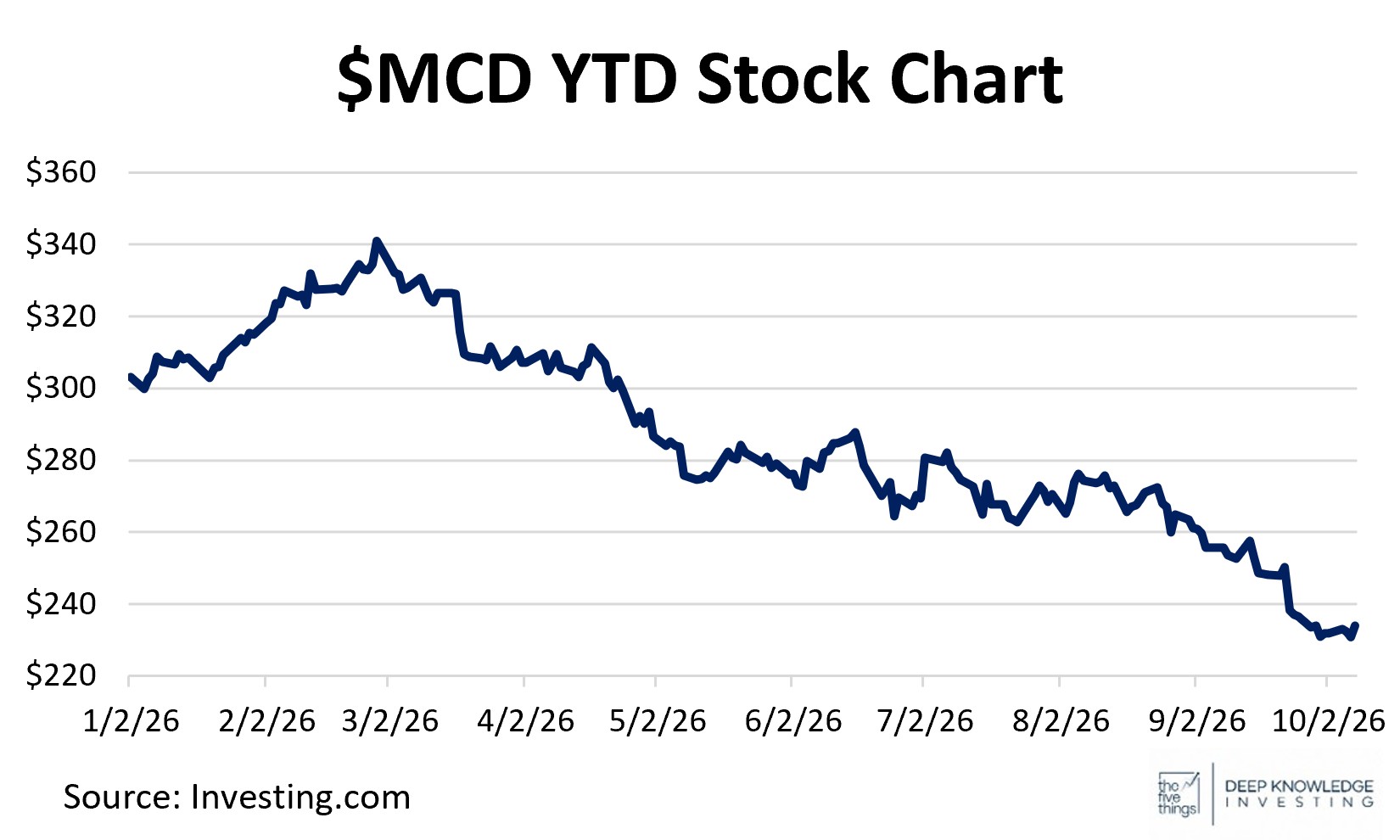
DKI Takeaway: McDonalds said it’s had the pricing tool for more than a decade to recommend optimal pricing depending on competitor prices, location, sales, and more. It sounds like standard data analytics. However, the legal issue is the claim of the tool pooling competing franchisees’ non-public data to make shared recommendations. Since franchisees are considered separate legal entities and competitors, they’re supposed to make pricing decisions independently instead of based on each other’s data. Plaintiffs argue this amounts to conspiring. The unclear part is whether McDonald’s pressured the franchisees into pricing decisions. Reuters cited some franchisees who made this claim, but the same article cited legal experts saying courts often give brands control over franchisee pricing, making this difficult to prove.
I’m less concerned about the antitrust elements of this practice because it’s easy enough to send someone to every fast food place in your market to examine pricing data and get a sense of whether the parking lot is full or empty. I’m starting to become more concerned about micro-market pricing or even individual customer pricing. It’s becoming easier for more companies to charge different prices to different customers. This is irritating when airlines do it, but try to imagine different checkout prices for food based on who you are or how much money a company thinks you have.
4) $SVIA Another Share Buyback:
Silvia (formerly ProCap Financial) announced they bought back an additional 5% of the shares outstanding. Total repurchases so far have totaled 20%. Management has a history of being willing to shrink the size of the company to create shareholder value. Part of my positive initial thesis on the stock (originally $BRR) was that this is one of the most shareholder-friendly management teams I’ve ever seen. CEO, Anthony Pompliano (Pomp), and CFO, Renae Cormier, have a demonstrated history of buying back stock when the discount to NAV is substantial. Pomp also receives no meaningful compensation for running the company. Instead, he has an option package that provides massive compensation if shareholders make a large multiple of their money vs the current stock price. As I said in my initiation report, if he does that, the appropriate response is to pay him and say “thank you”.
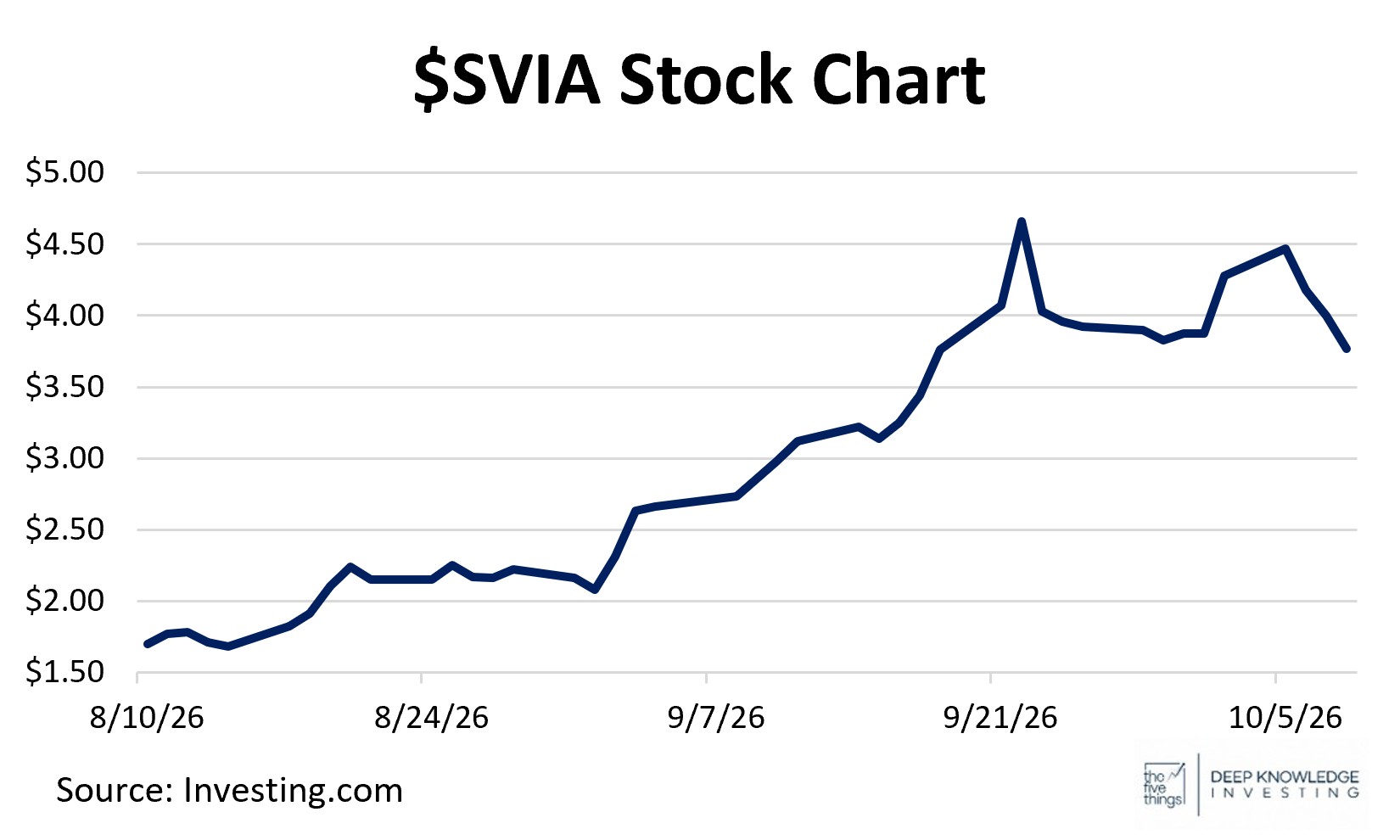
DKI Takeaway: When we made our initial purchase, we were buying Bitcoin at a 33% discount to net asset value (NAV) and getting the CFO Silvia business for free. That discount to NAV has collapsed and DKI subscribers have made about 140% since initial purchase plus additional trading profits. As of this writing, when you buy $SVIA, you are buying Bitcoin at the current market price and getting the AI CFO Silvia business at zero cost. The risk is that spending on that business exceeds the value created. Initial disclosures from the company indicate CFO Silvia is growing quickly and attracting paying users at an extraordinary rate. It’s early, but they’re succeeding.
5) Educational Topic: Debt or Equity – How to Choose:
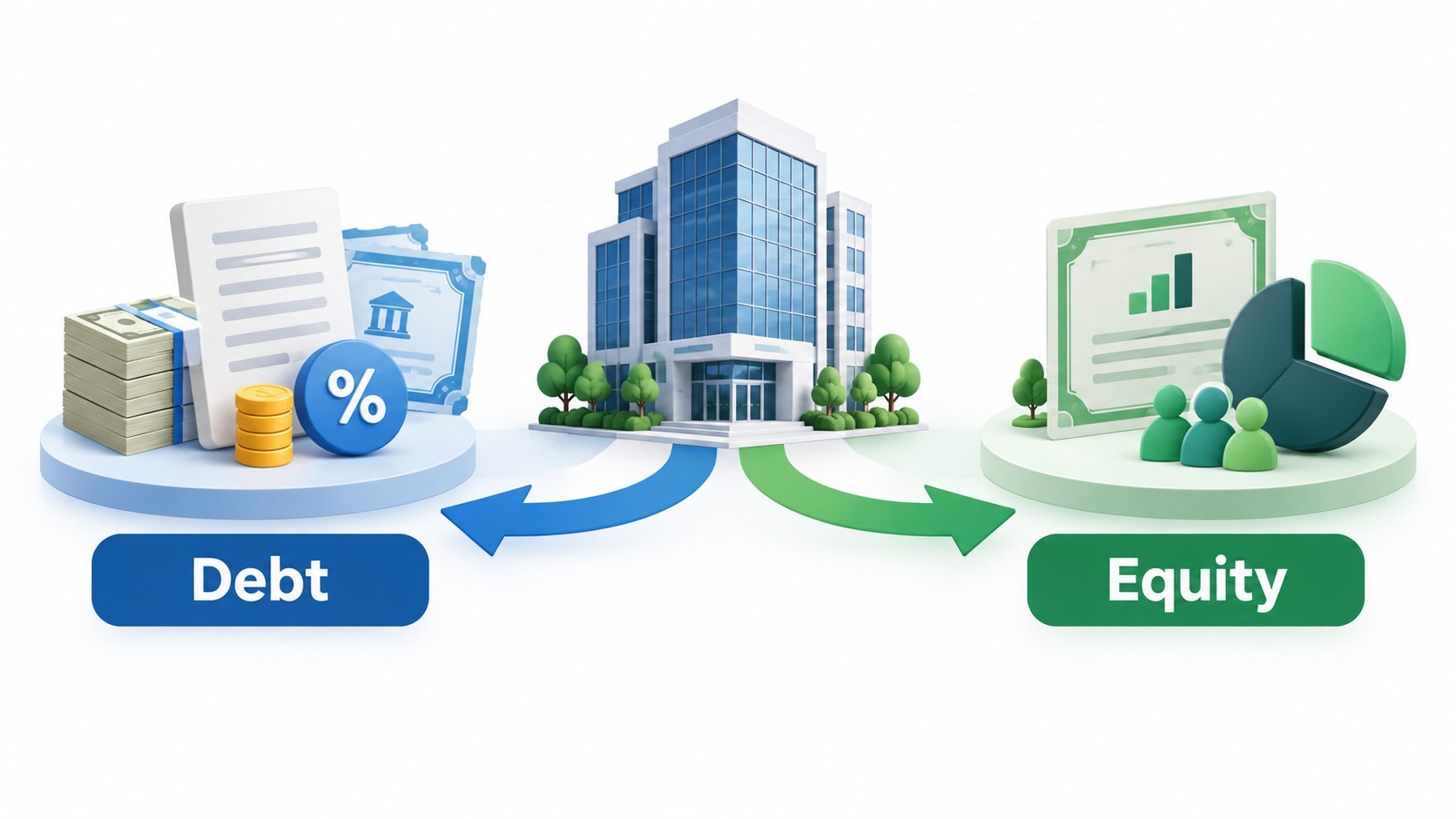
Many businesses need capital for growth. Companies can do so through debt or equity. Debt comes from issuing corporate bonds or taking out loans. Equity represents the sale of part of the business through private or public offerings. If a company issues equity, they receive the proceeds from investors. For public companies, the newly issued shares will trade on an exchange. The cost of debt is often cheaper than equity for a few reasons. Interest expense is tax-deductible while dividends (if paid) are not covered by the tax-shield. Debt payments are also much more predictable and receive priority in any payout. Debt holders are supposed to be fully paid before equity holders receive anything.
DKI Takeaway: Why would companies raise equity knowing debt is less expensive? It depends on the business. Companies often raise equity if a lack of cash flow means they can’t service debt comfortably, or if the capital raise is so large that leverage becomes unreasonable. Early-stage companies may not have a lot of operating income making high interest expense difficult or impossible. Companies that must raise massive amounts of capital might use equity to avoid the leverage. A good example is Google’s $80B equity raise last June. The company used equity alongside other debt financing to support its investments while maintaining balance sheet flexibility.
Information contained in this report is believed by Deep Knowledge Investing (“DKI”) to be accurate and/or derived from sources which it believes to be reliable; however, such information is presented without warranty of any kind, whether express or implied and DKI makes no representation as to the completeness, timeliness or accuracy of the information contained therein or with regard to the results to be obtained from its use. The provision of the information contained in the Services shall not be deemed to obligate DKI to provide updated or similar information in the future except to the extent it may be required to do so.
The information we provide is publicly available; our reports are neither an offer nor a solicitation to buy or sell securities. All expressions of opinion are precisely that and are subject to change. DKI, affiliates of DKI or its principal or others associated with DKI may have, take or sell positions in securities of companies about which we write.
Our opinions are not advice that investment in a company’s securities is suitable for any particular investor. Each investor should consult with and rely on his or its own investigation, due diligence and the recommendations of investment professionals whom the investor has engaged for that purpose.
In no event shall DKI be liable for any costs, liabilities, losses, expenses (including, but not limited to, attorneys’ fees), damages of any kind, including direct, indirect, punitive, incidental, special or consequential damages, or for any trading losses arising from or attributable to the use of this report.