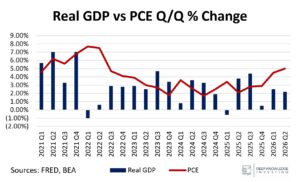
Overview:
Today, we got the January Consumer Price Index (CPI) report which showed an overall increase of 2.4% for the last year. That’s below last month and below the 2.5% expected. The monthly change was 0.2% vs the 0.3% estimate. The Core CPI which excludes food and energy was up 2.5%, consistent with expectations. The Core change was up 0.3% vs last month which annualizes to 3.7% and was consistent with expectation. These numbers remain well above the 2% target and have been so since 2021, but were also down from recent prints. The equity indexes yawned and are roughly flat as I write this. Let’s go through the details:
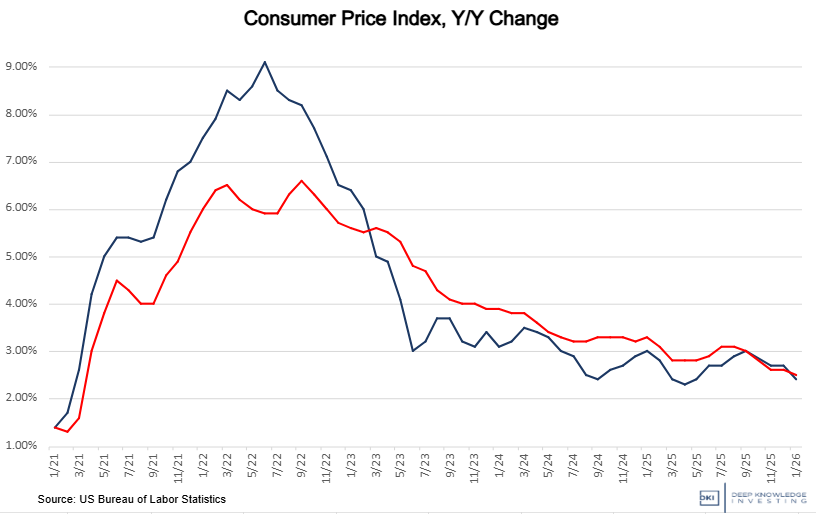
Schrodinger’s inflation. Is the line pointing down, or is it too high?
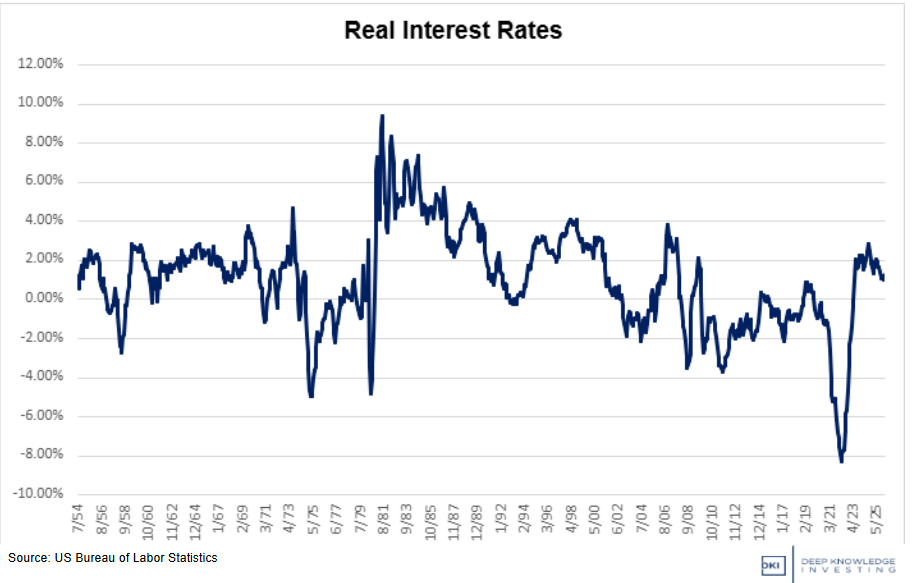
Powell keeps saying the current fed funds rate is “restrictive”, but the real rate is < 2%.
Food:
Food inflation came in at 2.9%, a meaningful increase from previous reports. Food at home was up 2.1% which isn’t awful. Food away from home was up 4.0%, an increase that gets worse when considering much more aggressive tipping expectations.
We continue to note that both the rate of increase and price levels for food purchases are creating problems in many homes. Simply stated, even if food prices stop rising, the current level remains too high for many families. Using buy now pay later for groceries has become common. This category continues to create stress for consumers. (Copied from prior months because household finances don’t change that much from month to month and this is still an issue.)
Energy:
Energy was down 0.1% y/y. Gasoline was down 7.5% vs last year and prices at the pump are at a multi-year low, fulfilling one of President Trump’s big campaign promises. Fuel oil was down 4.2%. I’m wondering how much of the recent cold weather and snow storms are included in this. Many analysts projected improvement from Venezuela, but it’s going to take some time and tens of billions of dollars of investment to see increased production from there. Electricity is up 6.3% y/y which strikes me as a relatively low number given the increased demand from price-insensitive data centers.
Vehicles:
New vehicle pricing was up just 0.4% y/y. Consumers have pushed back on the huge price increases from earlier this decade. Prices are still high, but are no longer rising much. As we’ve pointed out in previous CPI analysis, the higher new car prices had pushed more people into the used market where prices had been consistently higher, but were down 2.0% in January vs last year.
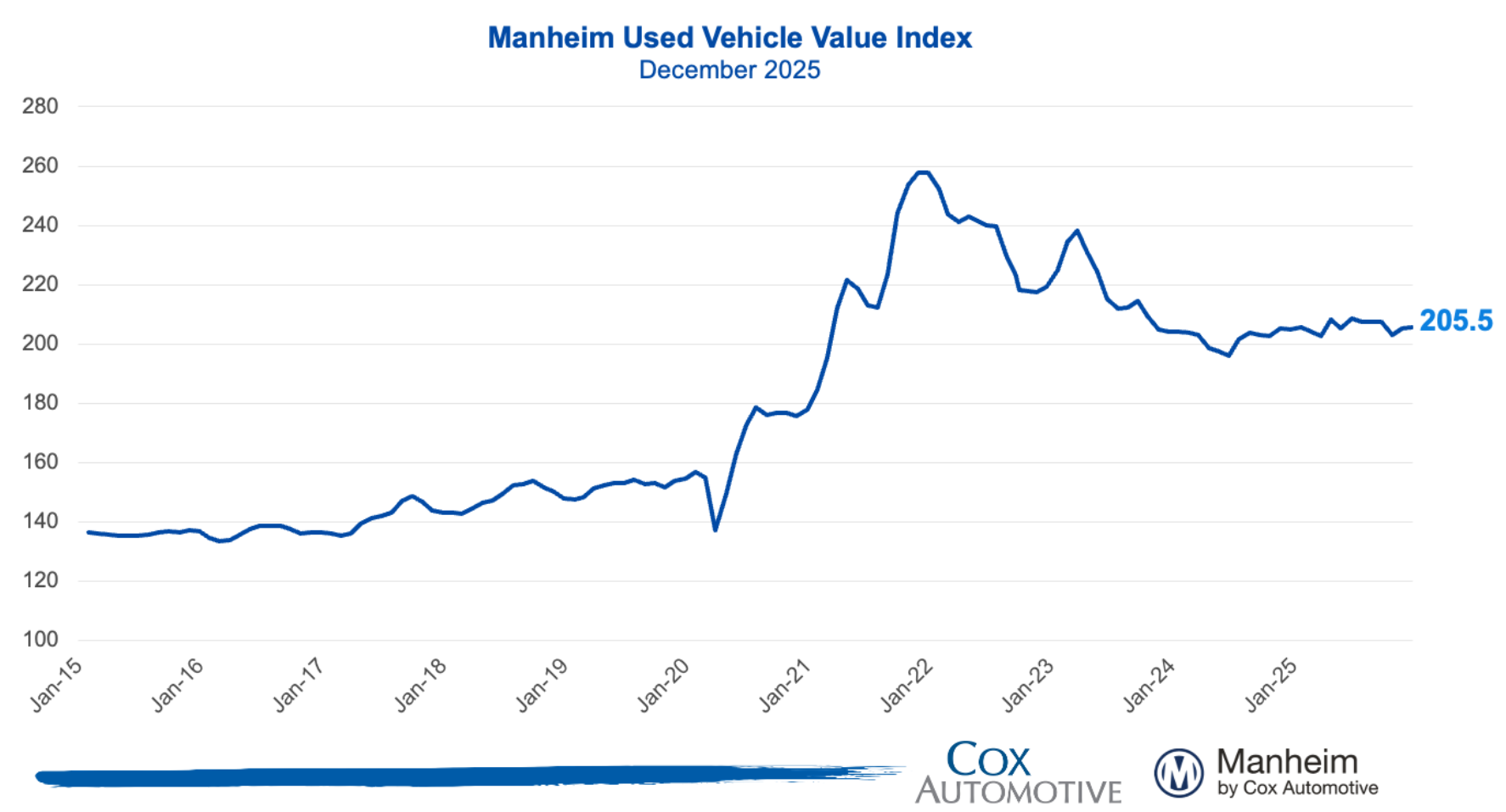
That plateau is looking permanent despite a good month for auto prices.
Services:
Services prices were up 2.9%. This has been a consistently sticky part of the CPI. Much of the increase has been caused by higher wages and there’s been a lot of debate about the employment numbers. Recent employment numbers are up despite huge decreases in government positions. There were also big revisions due to the birth/death model. The early returns indicate that President Trump is succeeding in improving the way the Bureau of Labor Statistics compiles data and hopefully, we see smaller revisions in the future.
Shelter (a fancy word for housing) costs were up 3.0% (again). This was yet again the largest reason for this month’s CPI increase. This line item is highly market-specific. While prices for consumer electronics like phones and televisions tend to be the same nationwide, housing price trends depend on location. Some markets have continued to weaken while others remain strong or are even rising. I spoke with a top real estate broker in the SE United States who told me he’s getting deals done at continued high prices. Much of the Northeast remains strong as well.
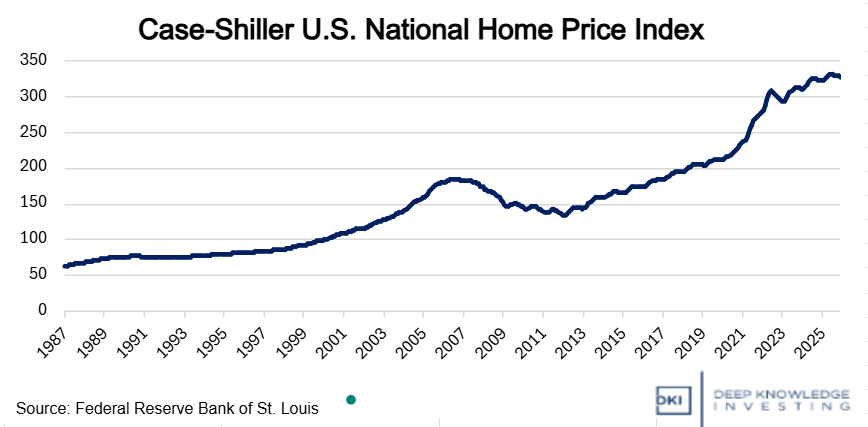
Housing prices continue to rise. I’m not sure lower mortgage rates help this.
Conclusion:
Despite all the predictions of catastrophe from fiat economists relating to the Trump tariffs, disaster simply hasn’t happened. We were warned the tariffs would lead to massive inflation. That then got altered to a big one-time increase in the price level which would then be stable. Then, there were threats that tariffs would lead to decreased trade and a worldwide recession. None of that has happened. Some fiat economists have reasonably said that it might take a while for the higher tariff prices to work through complicated supply chains, but we’re past the point when this would have happened. If they were more honest, they’d start issuing public mea-culpas. I left this section unchanged from previous months because I’ve yet to see a fiat economist admit their error.
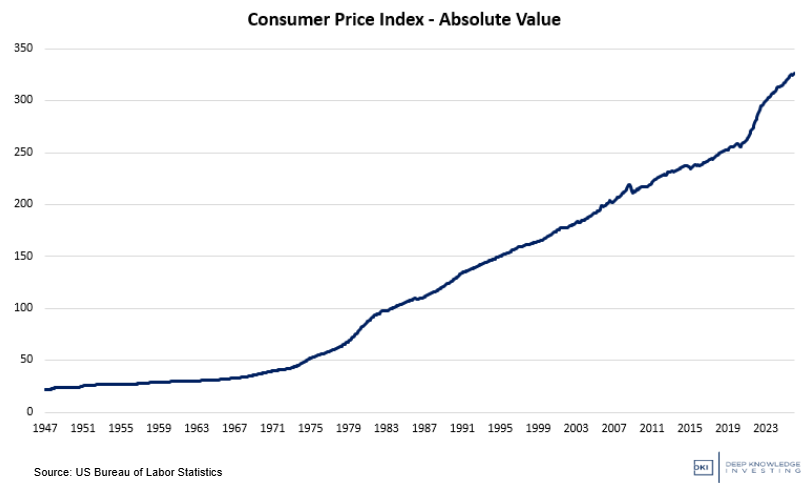
This chart shows why most Americans are experiencing more financial distress.
I’m seeing rumors that Kevin Warsh, the nominee to replace Jerome Powell as Chairman of the Federal Reserve, will move the Fed’s inflation target from the current 2% (which is already 2% too high) to 3% (ish). First, it was just two weeks ago that the market panicked because Warsh was supposed to be an ultra-hawk, something DKI disagreed with in writing. Second, that’s no different from the current Fed. We’ve been above target since 2021 and the Fed has already cut 175bp (1.75%). While this month’s CPI was better than recent versions, it’s still too high and the CPI remains understated. I think this is unwise because a continually debased currency has a horrible social and economic impact. Given that this is the direction our government and quasi-governmental agencies are heading, the best thing to do is to prepare your portfolio for continued inflation, something DKI has done.
IR@DeepKnowledgeInvesting.com if you have any questions.
Information contained in this report is believed by Deep Knowledge Investing (“DKI”) to be accurate and/or derived from sources which it believes to be reliable; however, such information is presented without warranty of any kind, whether express or implied and DKI makes no representation as to the completeness, timeliness or accuracy of the information contained therein or with regard to the results to be obtained from its use. The provision of the information contained in the Services shall not be deemed to obligate DKI to provide updated or similar information in the future except to the extent it may be required to do so.
The information we provide is publicly available; our reports are neither an offer nor a solicitation to buy or sell securities. All expressions of opinion are precisely that and are subject to change. DKI, affiliates of DKI or its principal or others associated with DKI may have, take or sell positions in securities of companies about which we write.
Our opinions are not advice that investment in a company’s securities is suitable for any particular investor. Each investor should consult with and rely on his or its own investigation, due diligence and the recommendations of investment professionals whom the investor has engaged for that purpose.
In no event shall DKI be liable for any costs, liabilities, losses, expenses (including, but not limited to, attorneys’ fees), damages of any kind, including direct, indirect, punitive, incidental, special or consequential damages, or for any trading losses arising from or attributable to the use of this report.