
CPI of 3.4% was in line with expectations and consistent with last month’s 3.4%. The monthly change was 0.4% driven by fuel and shelter. The monthly increase annualizes to 4.9%.
Core CPI of 2.4% was also in line with estimates and slightly below last month’s 2.5%. The monthly change of 0.3% was above estimates of 0.2% and above last month’s 0.2%. The monthly change annualizes to 3.7% The huge difference this month between CPI and Core is due to energy which was not a surprise.
Food was up 2.7% and a more reasonable 0.1% for the month. I’ve been saying forever that this category has been understated and we’re now seeing increases. Note that some fertilizer isn’t coming through the Strait of Hormuz and food depends on fuel for tractors and transportation as diesel prices hit all-time highs. This is a geopolitical and energy-related increase, however, please take note of the way the press portrays this. A media operation that previously thought inflation was both under control and necessary for economic growth is now talking about the price of fuel without accounting for inflation. No one likes higher prices for gas, food, or airline tickets. I’m just suggesting that the presentation of absolute vs inflation-adjusted prices isn’t always consistent.

The real price of oil isn’t being reported accurately.
Energy up 16.3% and up 2.1% vs last month after two straight months of declines. Gas up 27.4% and up 3.9% vs last month. Fuel oil up 52.0% and up 10.1% vs last month. This is (again) the whole CPI report here and the BLS notes that one-third of the monthly all-items increase was energy. This is also the reason for the difference between the all-items and the Core CPI numbers.
I’ve been saying since June that the war in Iran isn’t heading for a quick close because there isn’t overlap between acceptable end conditions for the Iranian Mullahs and President Trump which makes any ceasefire temporary. However, there is another reason, besides the war, for the high price of gas and diesel which is making its way into the cost of airline tickets. The monthly change in gas prices for the past three months has been -9.7%, -2.9%, +3.9%. The monthly change in fuel oil for the past three months has been -9.2%, -1.7%, +10.1%. This isn’t terrible overall, so there’s something else happening. It’s crack spreads. A crack spread is the cost of converting useless crude oil into distillates (a fancy word for usable products like gasoline and diesel fuel). The decrease in crude production and shipping/transportation hasn’t been as large as feared, but the cost being charged by refineries has risen. Focus on the war is appropriate, but is not the sole reason for your pain at the pump.
Shelter (housing) was up 3.0% for the year and 0.3% for the month. This has been a huge contributor to the CPI for half a decade despite multi-year analysis by housing experts showing weakness in some markets, home builders offering incentives, and mortgage prices that are both typical for the US and well-above Fed-fueled multi-year lows. We’re not going to see 3% mortgages again so if you’re looking at buying a house, don’t wait for that to happen. Figure out what you can comfortably afford based on the current rate.
There’s a constant drumbeat of analysis in the Fin-X community calling for the Fed to lower interest rates. The primary arguments they make are that the CPI is coming down and it’s harmful to raise rates into a CPI elevated by fuel prices. I both disagree and think this doesn’t matter.
Let’s start with where the argument for lower rates is correct. Higher energy prices create their own cooling effect on the economy. While energy companies only make up a few percentage points of the market capitalization of the S&P 500, energy is a much higher percentage of the average American’s spending through gas prices, heating oil, electricity costs, food prices, and travel. Energy is almost 100% correlated with a higher material quality of life. So, if I agree on this meaningful point, why do I disagree on a lower fed funds rate?
One criticism I’ve had about most CPI analysis is it tends to exclude the things we need. The Core CPI excludes food and energy. In recent years, people have been trying to get the market focused on a new measure called “supercore” which excludes food, energy, and shelter. What percentage of your spending goes towards those three items? Should we exclude them?
Even if we do accept the logic that raising the fed funds rate is the wrong policy decision due to higher fuel prices, we have the Core CPI to analyze. Let’s look at the chart:

The Core CPI print for this month was 2.4% and has been above the 2% target (which is 2% too high) since early 2021. That’s five and a half years above the target and it has nothing to do with energy prices. I’ve been saying for years that the Fed has quietly moved the target to something in the 3% – 4% range. If financial analysts and economists want to argue that the Fed should cut here, that’s fine, but I’d like them to stop talking about energy prices and just admit they’re fine with a higher inflation target. If more than five years above target doesn’t lead to a rate increase, then we’ve collectively decided on more inflation and should stop complaining about it.
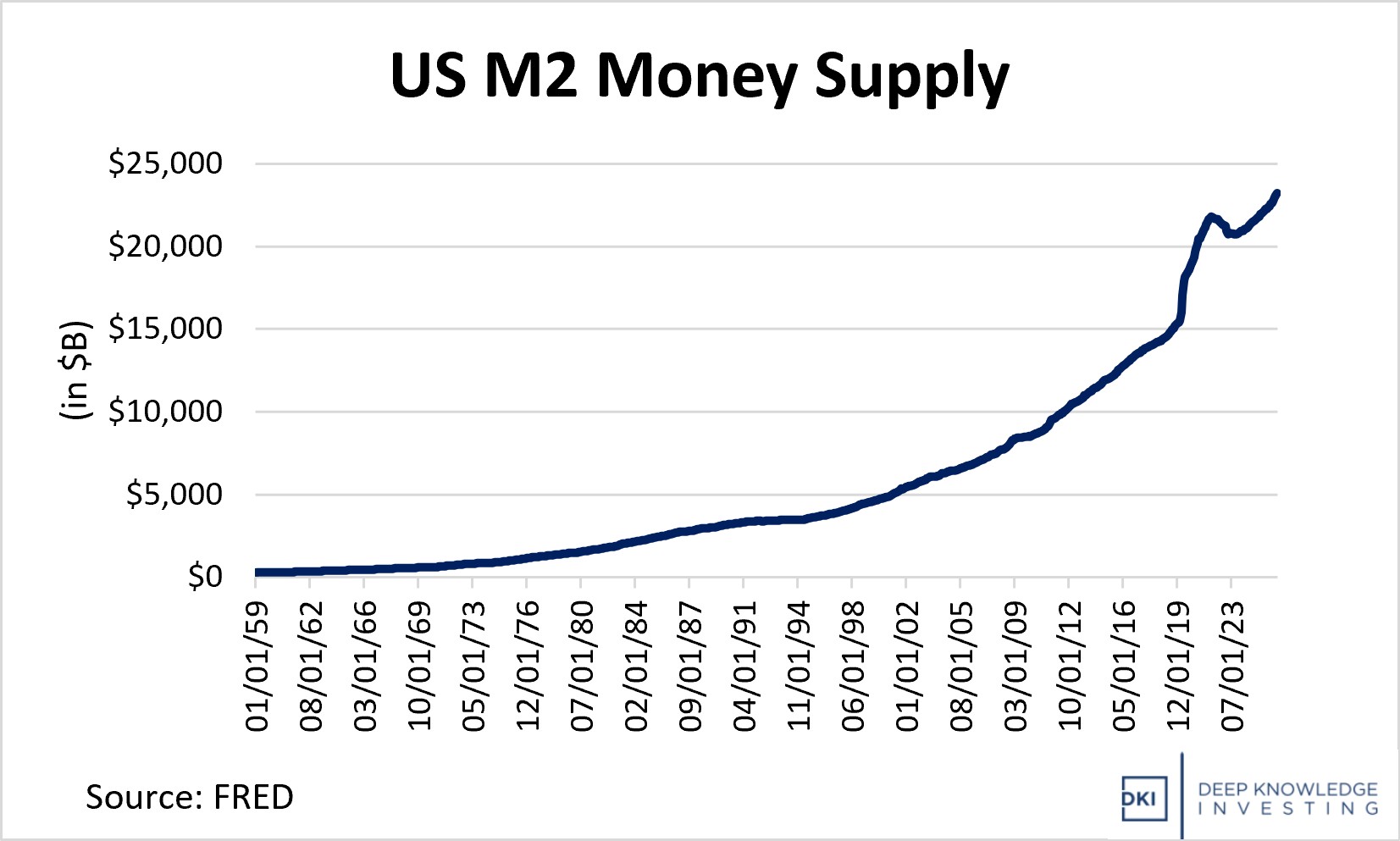
I’ve said this before, but the Fed decision no longer matters. Congress is overspending by trillions of dollars a year using an on-balance sheet calculation. They’re overspending by additional trillions a year when we look at off-balance sheet liabilities (Social Security, Medicare, Medicaid, pensions, etc…). This is being funded by debt-fueled money creation and is the real reason for inflation. The Fed began its current easing cycle two years ago. Let’s look at the results:

The Fed has cut by almost 200bp (2%) and the yield on the 10-year Treasury is up by about 100bp (1%). There is a misconception that the Fed controls borrowing rates. They don’t. The Fed controls the overnight rate. Corporate borrowing rates are set off of the 5-year Treasury while mortgage rates tend to be set off of the 10-year. Further rate cuts simply cause the bond market to project higher future inflation which causes a reduction in bond prices and an increase in yields. There’s nothing the Fed can do to bring down the rates that matter to you. The only thing that will help is a reduction in Congressional spending and that’s not going to happen.
The Administration isn’t helping. Prior to the 2024 election, I said we couldn’t vote our way out of our problems. President Trump has always been a big spender, and I believe Vice President Harris would have been an even bigger spender than the President. No combination of team red / team blue Congressional control will reduce spending. No credible candidate for 2028 will advocate for reduced spending once in the Oval Office. We’re printing dollars to pay the interest on dollars we printed last year. That’s the definition of a Ponzi scheme and it’s been the fate of all fiat currencies for thousands of years. Lyn Alden regularly posts a “Nothing stops this train” meme and as usual, she’s correct. Prepare your portfolio for higher long-term inflation. It’s what I’ve done with mine.
Treasury Secretary, Bessent, is experienced in this arena and knows more about trading currencies than the people who analyze him. He’s also contributing to the problem. Secretary Bessent is using the Treasury to buy long-term bonds and refinancing them with lower-yielding short-term bonds that will need to be refinanced more often. This is the same thing Secretary Yellen did ahead of the 2024 election aided by Fed Chair, Powell. The bond market is seeing through the effort and despite billions of dollars of Treasury purchases, yields are rising.
Your tl;dr version:
- The CPI remains too high fueled by energy and shelter (again).
- Those who claim the Fed can’t hike due to higher energy prices are right about energy, but in my opinion, are wrong on the whole.
- The Core CPI and Supercore CPI are not good measures, but do invalidate the “Fed can’t hike” narrative.
- We’ve been above target for more than half a decade. At what point do we all agree that the 2% target has been changed?
- The market is trading off of whether the Fed pauses or hikes by 25bp (.25%). It’s irrelevant and the bond market is telling you that.
- Higher inflation is unavoidable. The balance sheet, deficit, and history are all confirming this. Prepare your portfolio accordingly.
DKI Intern, Kunal Arora, contributed to this report. His attention to detail and work ethic are assets to Deep Knowledge Investing.
Information contained in this report is believed by Deep Knowledge Investing (“DKI”) to be accurate and/or derived from sources which it believes to be reliable; however, such information is presented without warranty of any kind, whether express or implied and DKI makes no representation as to the completeness, timeliness or accuracy of the information contained therein or with regard to the results to be obtained from its use. The provision of the information contained in the Services shall not be deemed to obligate DKI to provide updated or similar information in the future except to the extent it may be required to do so.
The information we provide is publicly available; our reports are neither an offer nor a solicitation to buy or sell securities. All expressions of opinion are precisely that and are subject to change. DKI, affiliates of DKI or its principal or others associated with DKI may have, take or sell positions in securities of companies about which we write.
Our opinions are not advice that investment in a company’s securities is suitable for any particular investor. Each investor should consult with and rely on his or its own investigation, due diligence and the recommendations of investment professionals whom the investor has engaged for that purpose.
In no event shall DKI be liable for any costs, liabilities, losses, expenses (including, but not limited to, attorneys’ fees), damages of any kind, including direct, indirect, punitive, incidental, special or consequential damages, or for any trading losses arising from or attributable to the use of this report.