I’m in San Salvador for a few days followed by a longer trip to Montevideo, Uruguay. After that, I’ll have a week in Buenos Aires, a week in Florence, and will spend November in Japan. I’m open to a small number of in-person conversations. If you’re based locally, or know someone in those locations you think it would be worthwhile for me to meet, feel free to reach out privately at IR@DeepKnowledgeInvesting.com. In other DKI-related news, we are now sponsored by both Simple Mining and River. Look for more details soon. You’ll also see a Bitcoin white paper co-authored with former DKI Intern, Alex Petrou, in the coming week. Finally, I’d like to thank SiriusXM for hosting me on their Business Briefing show last week. I’ll be on with the team at Onramp Bitcoin this week.
This isn’t a 5 Things topic this week, but DKI covered our short position in Intel puts (that’s a bullish bet on the company). We made 161% in two weeks. Is DKI going to make you more than 100% a couple of times a month? Of course not, but you still might want to think about subscribing.
This week, we’ll address the following topics:
- CPI of 3.4% seems high to me. Some say it’s a win and the Fed should cut at the next meeting. I disagree and also think it doesn’t matter what the Fed does.
- Google is spending $15B on data centers in Finland where cold temperatures means reduced cooling needs.
- Chinese Backdoors – More spyware and malware from China. This time, it’s in hospital medical devices. When is it enough?
- GE acquisition of Consolidated Precision products is going to cost $12B. Competitor, Howmet Aerospace, fell on the news.
- Educational Topic: Subchapter M/Conduit Rule. If you’ve ever wondered what this is, then you’re in good company. I didn’t know this one so the interns wrote it. Did they get the details right? Let us know.
Kunal Arora and Eli Killorin come through with excellent work this week (as usual). I had no idea what the Subchapter M rule was so let us know if they got the details right or if there needs to be another round of pushups for them.
Ready for a week of everyone seeing what they want to see in the CPI? Let’s dive in:
1) CPI is 3.4% and Everyone Sees Something Different:
CPI of 3.4% was in line with expectations and consistent with last month’s 3.4%. The monthly change was 0.4% driven by fuel and shelter. The monthly increase annualizes to 4.9%. Core CPI of 2.4% was also in line with estimates and slightly below last month’s 2.5%. The monthly change of 0.3% was above estimates of 0.2% and above last month’s 0.2%. The monthly change annualizes to 3.7%. The huge difference this month between CPI and Core is due to energy which was not a surprise.
Food was up 2.7% and a more reasonable 0.1% for the month. I’ve been saying forever that this category has been understated and we’re now seeing increases. Note that some fertilizer isn’t coming through the Strait of Hormuz and food depends on fuel for tractors and transportation while diesel prices hit all-time highs. This is a geopolitical and energy-related increase; however, please take note of the way the press portrays this. A media operation that previously thought inflation was both under control and necessary for economic growth is now talking about the price of fuel without accounting for inflation. No one likes higher prices for gas, food, or airline tickets. I’m just suggesting that the presentation of absolute vs inflation-adjusted prices isn’t always consistent.
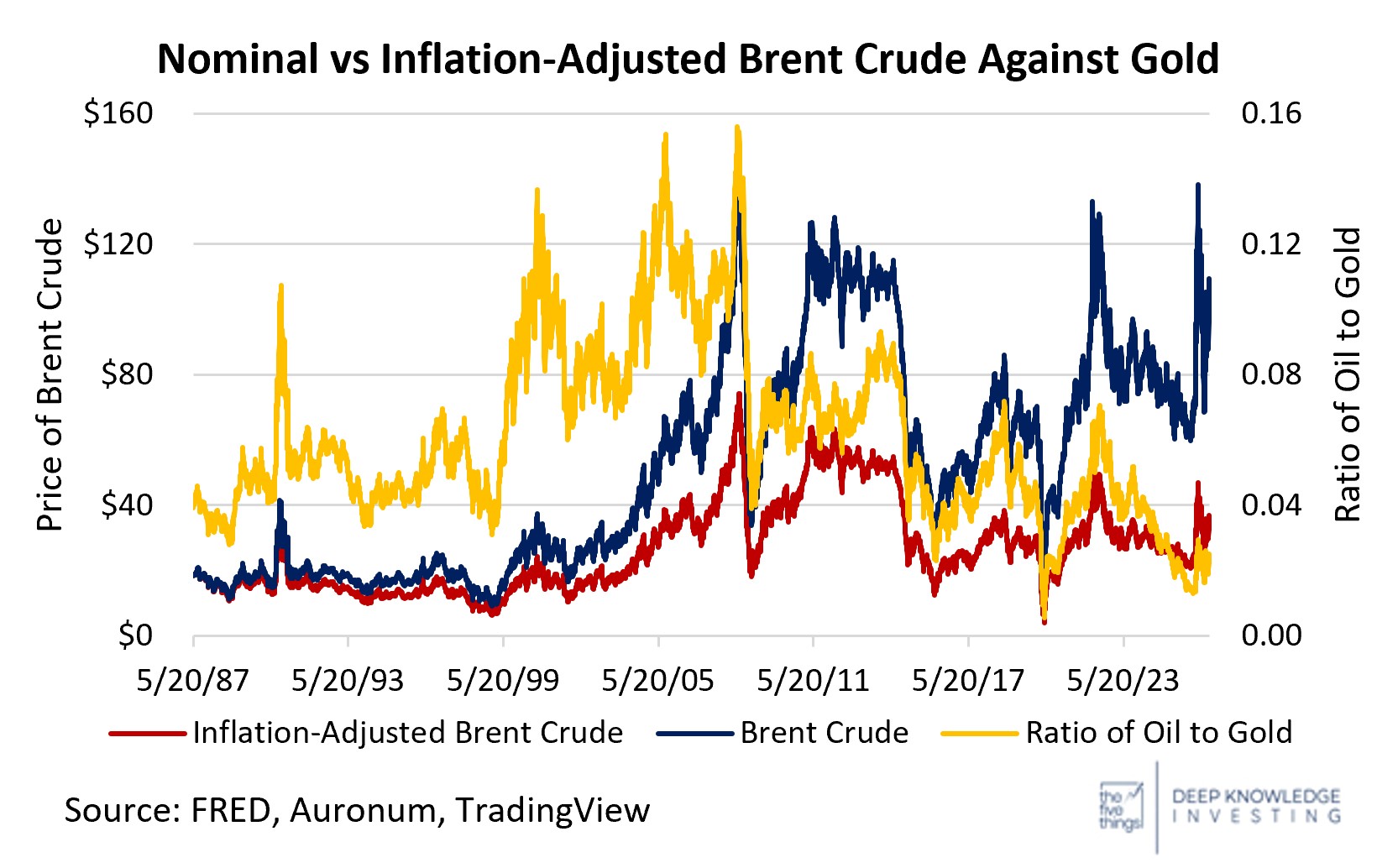
Gas prices above $4 hurt. They also hurt two decades ago.
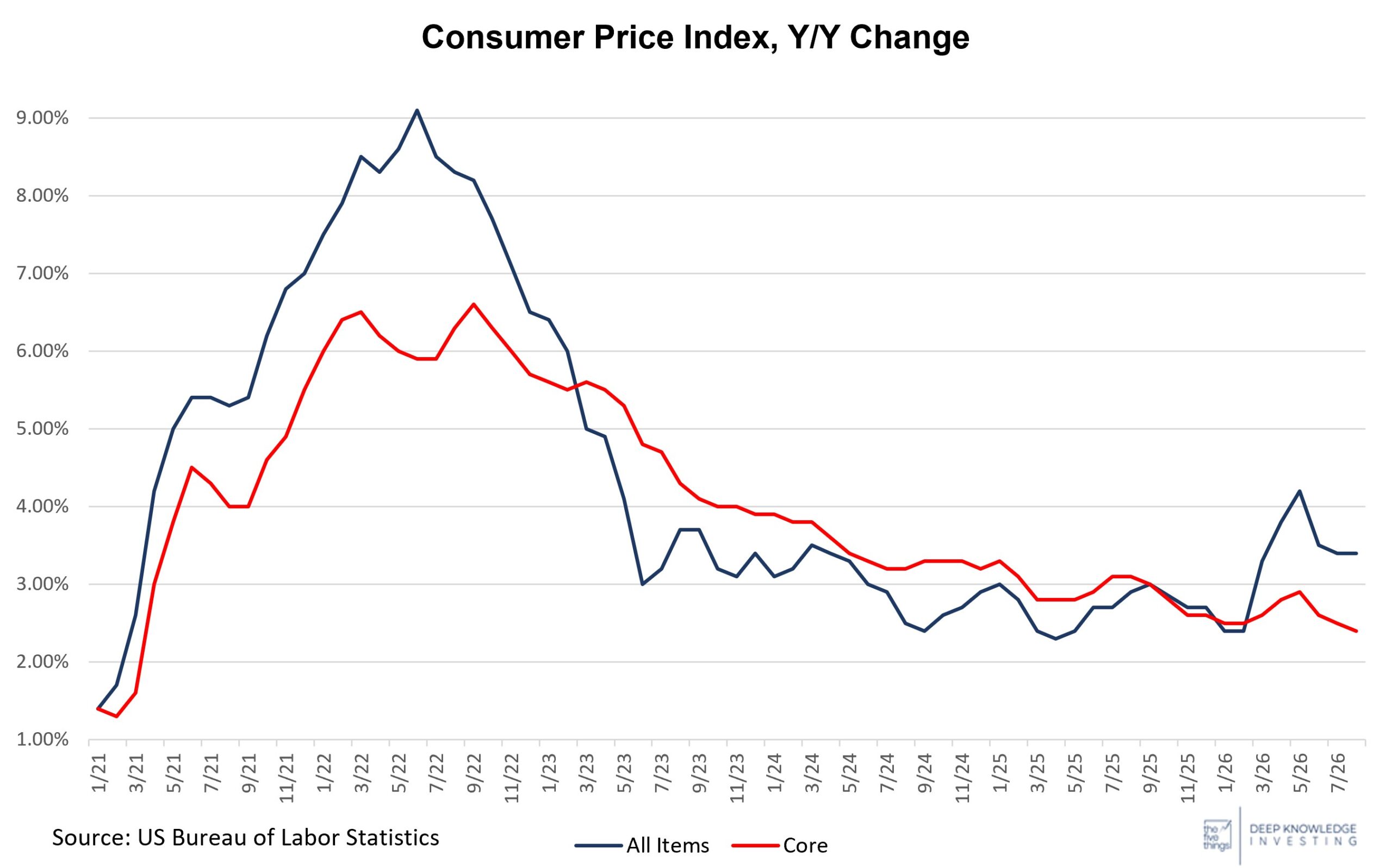
Some see disinflation. Others see more than half a decade above target.
DKI Takeaway: The Core CPI print for this month was 2.4% and has been above the 2% target (which is 2% too high) since early 2021. That’s five and a half years above the target and it has nothing to do with energy prices. I’ve been saying for years that the Fed has quietly moved the target to something in the 3% – 4% range. If financial analysts and economists want to argue that the Fed should cut here, that’s fine, but I’d like them to stop talking about energy prices and just admit they’re ok with a higher inflation target. If more than five years above target doesn’t lead to a rate increase, then we’ve collectively decided on more inflation and should stop complaining about it. There’s also a bigger debate about energy prices and how it should affect the way the Fed views inflation. If you want to read, DKI’s full analysis of the latest CPI report and our debate with other analysts, click here.
2) Google is Investing in Data Centers in Finland:
Google parent Alphabet announced a $15.1B investment in Finnish data centers and digital infrastructure over the next two years. The facilities are expected to create over 7,000 jobs annually, making this Google’s largest investment project in Europe. Finland was chosen because of its cold climate and carbon-free power. Fortum will sell Google half the output coming from its Lovisa nuclear plant. This resulted in Fortum shares rising on the release of this news. Nokia shares rose as well. Looking ahead, Alphabet raised its full-year capex to $205B back in July, with more similar deals expected to be announced.
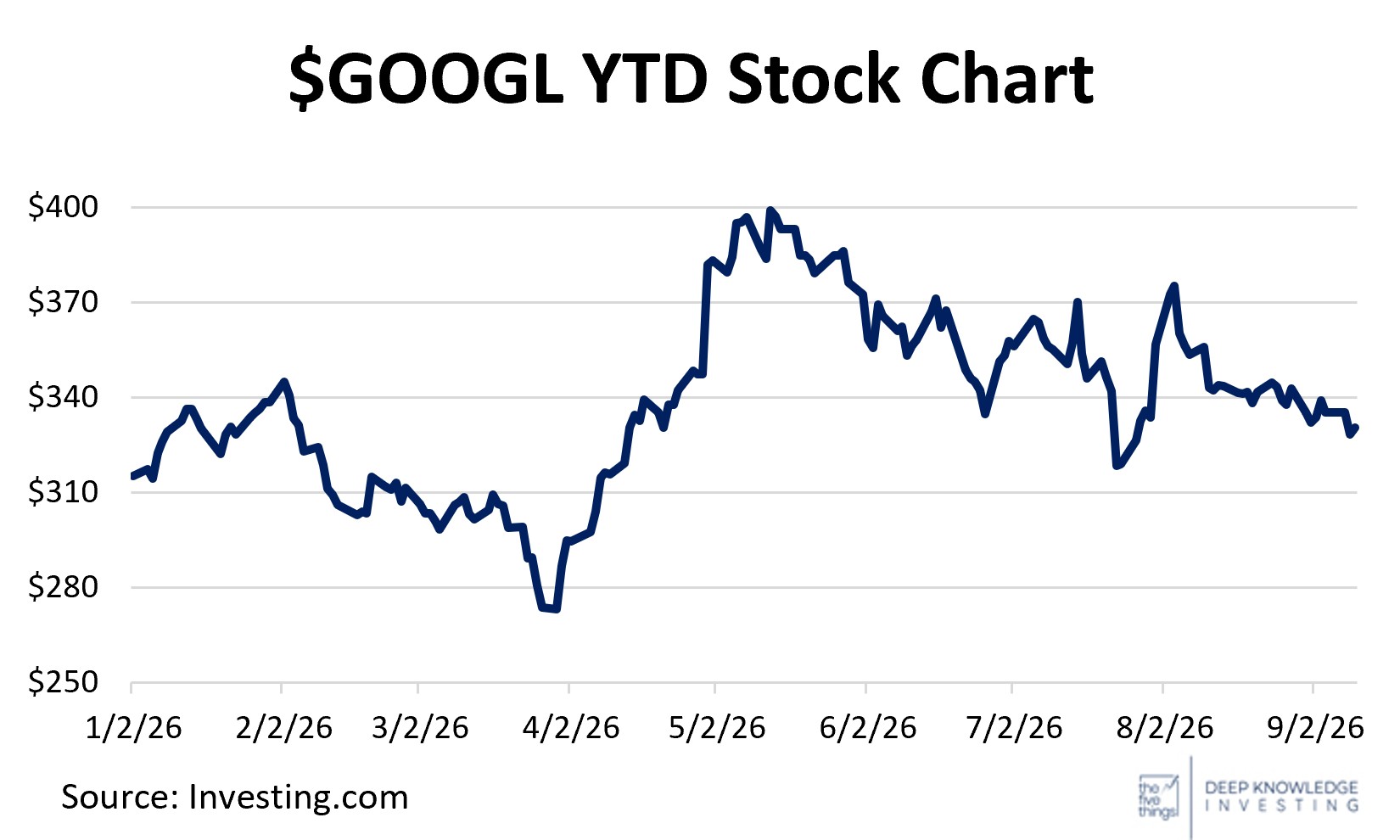
$200B of cap-x and rising bond yields aren’t great for the stock price.
DKI Takeaway: AI needs huge amounts of electricity to run, so tech companies are looking for cheap reliable power. Finland can win these deals because it has land and carbon-free energy which is a political consideration for Google. With the AI infrastructure buildout continuing to become more costly, it is possible more hyperscalers will be looking to countries where low average temperatures mean a reduced cooling bill for packed circuits. These deals are also very attractive to the prospective countries with Google promising over 37,000 total jobs and $3.6B a year for Finland’s economy. I’ve done a number of research calls in the European cooling sector and every expert I’ve spoken with emphasizes the advantage of putting data centers in places with a cold climate.

The fastest easiest way I’ve found to pay for goods and services (including coffee) using Bitcoin. Referral link: partner.river.com/dki.
3) Chinese Backdoors in Medical Devices:
Chinese-manufactured medical devices are increasing data security risk in U.S. hospitals. This is because all domestic Chinese companies are legally obligated to comply with CCP data requests. Any networked device sourced from a Chinese manufacturer carries a data-risk exposure. A specific example of this risk came in 2025 when the FDA and CISA issued a joint safety communication on the Contec CMS8000. Investigators identified a built-in back door used to extract patient data and send it to remote servers. This was not a bug. It was a built-in remote pathway to steal sensitive personal data.
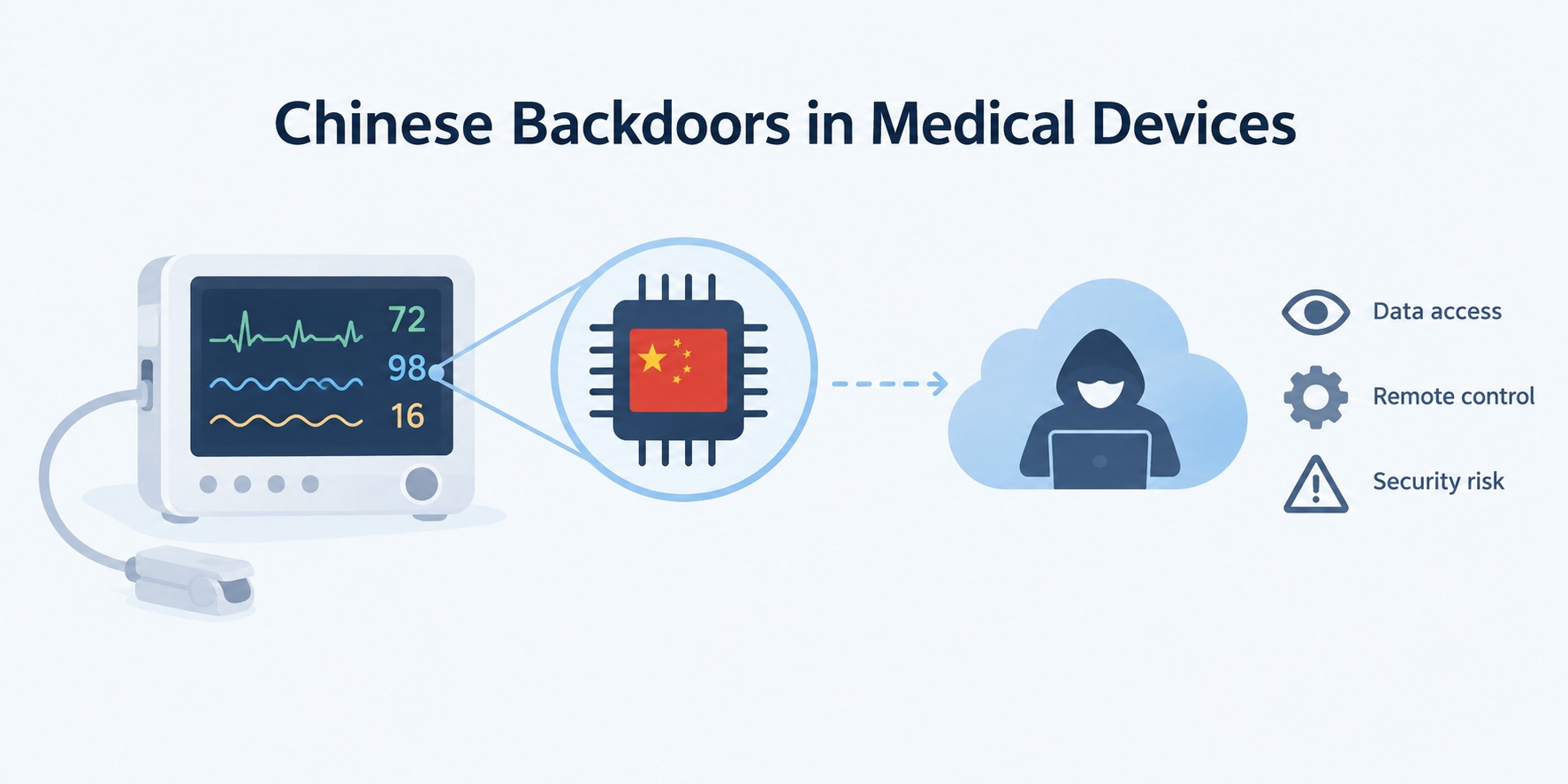
Solar panel equipment, wifi routers, and medical devices. Time to decouple.
DKI Takeaway: U.S. hospitals rely on Chinese-made medical devices with documented backdoor vulnerabilities, and Chinese law legal compels data sharing with their government. This creates unavoidable critical exposure. Furthermore, healthcare is already the most cyberattacked sector which creates risks for patients and hospital operations. There is a section 232 investigation underway with proposals to restrict funding for facilities using Chinese devices. There should be shifts toward domestic medical device makers and a rising demand for healthcare cybersecurity infrastructure as more issues with Chinese made infrastructure arise. China’s intention is to make the world dependent on it and every few months we read about another product with Chinese spyware and malware in it. It’s time to decouple our economy from theirs.
4) GE to Buy Consolidated Precision Products for $11.8B:
GE Aerospace agreed to buy metal-castings provider Consolidated Precision Products (CPP) for $11.8B. CPP makes high-precision metal castings used in aerospace, defense, and industrial power systems. GE plans to fund the acquisition with $7B in cash and the rest through debt. The deal is expected to close in the second half of 2027.
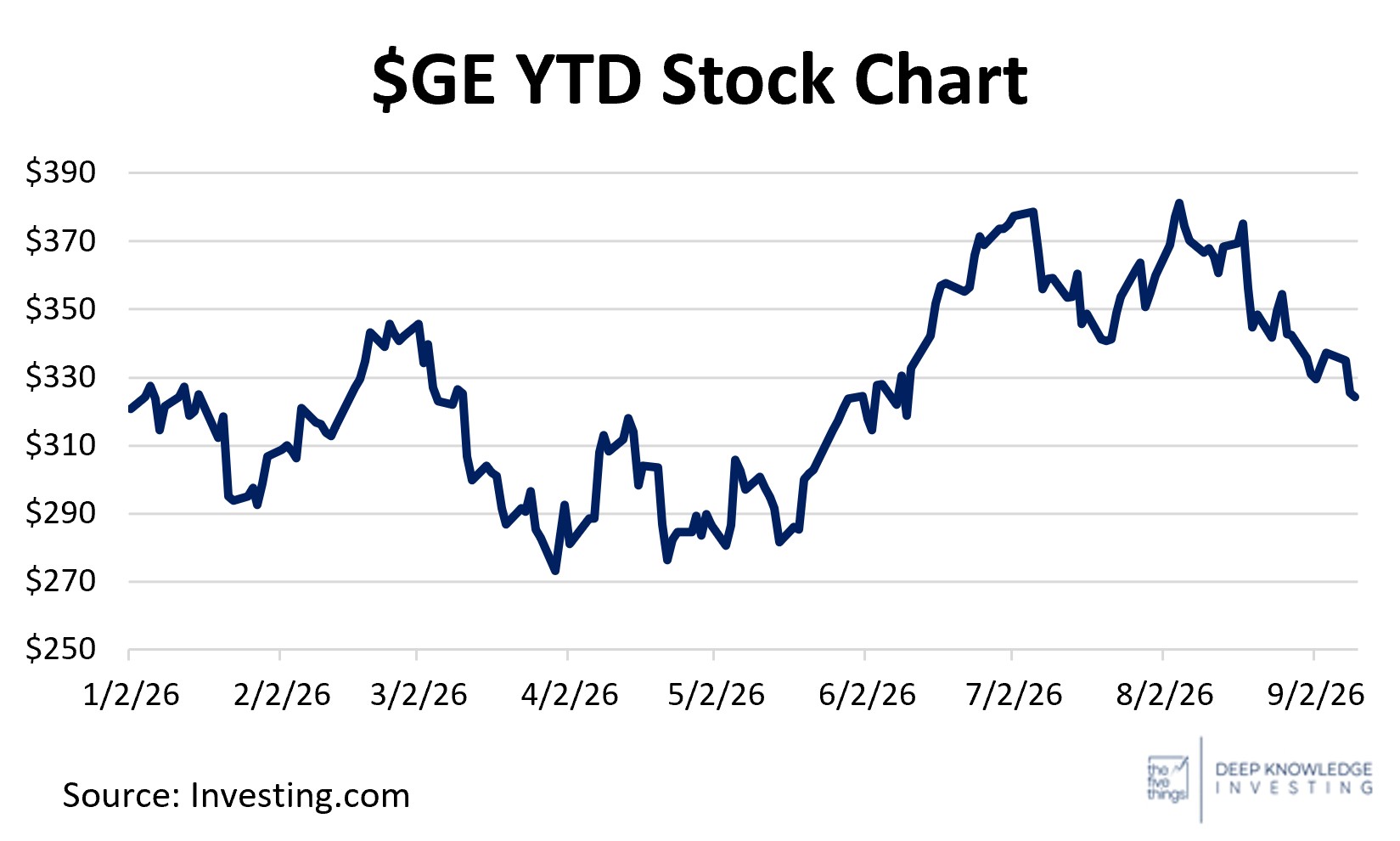
DKI Takeaway: Castings are metal parts made from pouring molten metal into a mold. They’re versatile and used for high-performance applications like jet engines and aerospace fasteners. GE Aerospace, among other engine makers, is struggling to keep up with growing commercial and military aircraft orders. Combined with greater demand for turbines to power AI data centers, GE’s purchase will bring the entire process in-house and allow them to meet mounting orders. Competitor, Howmet Aerospace, fell by more than 10% during the week on fears of greater competition.
5) Educational Topic: Subchapter M/Conduit Rule:
Subchapter M, otherwise known as the conduit rule, is a rule that allows some mutual funds to avoid being taxed at the fund level. To qualify, they must distribute 90%+ of their Net Investment Income (NII). NII includes dividends and interest income, while long-term capital gains are segmented separately. For qualifying funds, shareholders get taxed on gain distribution, not the fund returns. Funds qualifying for Subchapter M are also called “regulated” funds.
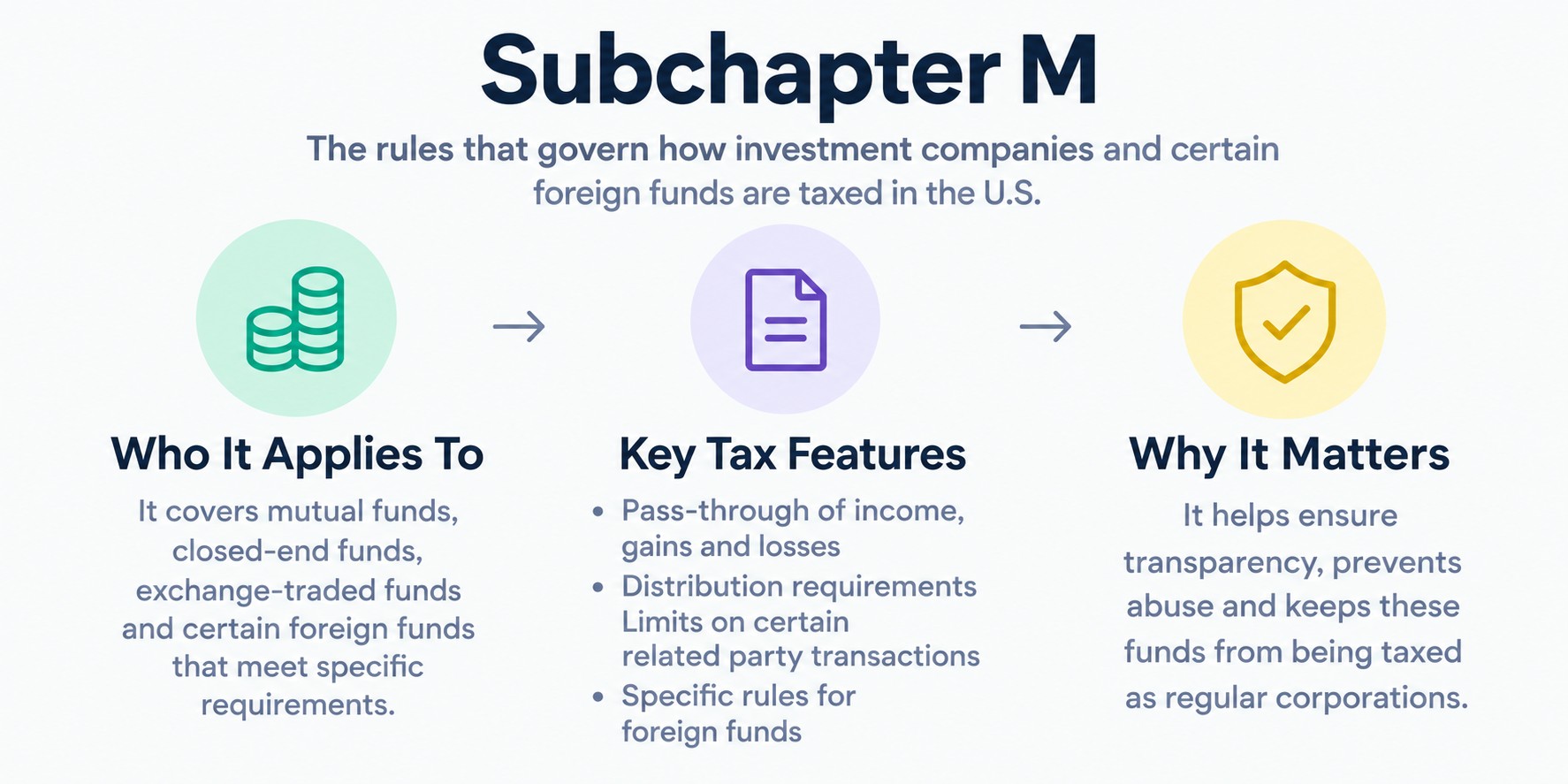
DKI Takeaway: In practice, the majority of funds pass on around 99%+ of their NII. While it seems like passing on the tax burden would be a negative for investors, the practice is designed to protect them. A fund avoiding taxes at the entity level means that it’s not paying corporate-level tax before shareholders receive earnings. Investors get taxed when they receive income, so the investment would suffer double taxation if handled differently. (Triple if you count the fact that the corporate earnings of fund holdings have already paid income taxes.) Since tax payments would come directly out of fund assets, the net asset value would decline. Under Subchapter M qualification, the fund avoids this erosion of fund assets.
Information contained in this report is believed by Deep Knowledge Investing (“DKI”) to be accurate and/or derived from sources which it believes to be reliable; however, such information is presented without warranty of any kind, whether express or implied and DKI makes no representation as to the completeness, timeliness or accuracy of the information contained therein or with regard to the results to be obtained from its use. The provision of the information contained in the Services shall not be deemed to obligate DKI to provide updated or similar information in the future except to the extent it may be required to do so.
The information we provide is publicly available; our reports are neither an offer nor a solicitation to buy or sell securities. All expressions of opinion are precisely that and are subject to change. DKI, affiliates of DKI or its principal or others associated with DKI may have, take or sell positions in securities of companies about which we write.
Our opinions are not advice that investment in a company’s securities is suitable for any particular investor. Each investor should consult with and rely on his or its own investigation, due diligence and the recommendations of investment professionals whom the investor has engaged for that purpose.
In no event shall DKI be liable for any costs, liabilities, losses, expenses (including, but not limited to, attorneys’ fees), damages of any kind, including direct, indirect, punitive, incidental, special or consequential damages, or for any trading losses arising from or attributable to the use of this report.