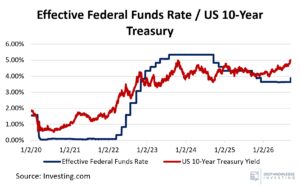
Bitcoin has a volatile price history. An article on Portfolio Lab says there have been 16 drawdowns of 20% or more in the past 16 years. There have been four crashes of 75% or more in the past 15 years plus another three of around 50% in that time-frame. That amounts to one 20% drawdown each year on average, one 50% (or so) drawdown every two years(ish), and one 75%+ crash every four years. At times, there have been no real reasons to cite, but that won’t stop us from looking for what’s different this time and what causes are being cited for the current drawdown (currently a little over 50%).
1) Michael Saylor sells 32 Bitcoin:
Through Strategy, formerly MicroStrategy, Saylor controls more than 840k Bitcoin which is more than 4% of all Bitcoin currently mined. This week, he sold 32 Bitcoin. While that’s irrelevant based on Strategy’s total holdings, some are alarmed at the change in position from someone who has constantly preached to “never sell your Bitcoin”.
I have a mixed opinion of Saylor. He has been an effective evangelist for Bitcoin as non-fiat digital money. I also appreciate his idea that institutions with enough Bitcoin could act as fully-reserved banks in the future. The negative is that as the public face of Bitcoin for many people, it’s a risk that he’s used increasing leverage to continue buying. Leverage is great when the price rises and dangerous when it falls. He also has a tendency to make up nonsense financial metrics and has tried to convince shareholders that Strategy has provided them with a Bitcoin dividend when he’s simply used leverage to buy more. I also think it was a strategic error to tell people that he’d never sell, an absolute position he violated this week, although in a minor way. He’d have been better off saying he expected to be a net long-term buyer of Bitcoin, but investors should expect that he’d make some strategic timely sales from time to time.
Your tl/dr version: I don’t think Saylor selling 32 Bitcoin matters, but having one person use leverage to control 4% of the total float who is also a public evangelist was always a risk. We’re feeling that right now.

2) Does price determine legitimacy:
I read about a discussion between gold evangelist, Peter Schiff, and author of The Bitcoin Standard, Saifedean Ammous where Schiff asked at what price Ammous would admit his support of Bitcoin was an error. Ammous replied that would be around $15k. Many were shocked. How could one of the best and most supportive writers on Bitcoin acknowledge there was a price that would invalidate his positive thesis?
However, if we look at what’s actually being said, it’s not such a big deal. Most of what we consider money has purchasing power because people believe it does. Gold has limited industrial use, but is considered money because that’s been a common opinion over thousands of years. Most of the value of diamonds exists because people think they have value, and the shift to lab-grown diamonds is changing that right now. I’d argue that the intrinsic value of the dollar backed by “faith” and the “credit” of a government that’s $39T in debt exists because the world has accepted it as the reserve currency since the end of WWII.
Bitcoin is no different. There is no inherent “value” to a Bitcoin. It is code based on a great idea. As more people accept it and assign value to it, the more value it will have. If enough people reject it, then Saif is right. It would then become a great experiment that failed. People are entitled to be shocked, but I think he’s just acknowledging the reality that whatever instrument we commonly accept as “money” always contains some element of widespread agreement to treat it as such.
3) Quantum computing:
There has been a long-term concern that quantum computers could easily crack Bitcoin’s encryption enabling someone to steal everyone’s Bitcoin. There’s a new concern that AI could potentially do this as well. I’ve always found this to be an interesting argument. Put yourself in the position of a thief with a code-breaking quantum computer. Would you prefer to go after Bitcoin and its $1.2T market cap, or would you first try your code-breaking tool at the US Federal Reserve, the European Central Bank, the Bank of Japan, JP Morgan, Blackrock, Fidelity, and dozens of other financial institutions with greater available assets? The “solution” to this future problem is quantum encryption. Some have said that traditional financial institutions could have one person make that decision and implement it while Bitcoin requires the agreement of most of its miners to make changes. It’s a risk, but in that event, those miners have a strong incentive to permit the change.
4) AI is monopolizing investor capital:
In this week’s 5 Things (available this weekend), we wrote about the coming IPOs of SpaceX, Anthropic, OpenAI (probably), and Google’s $80B equity offering. The early years of AI were funded by the largest companies in the world. Right now, we’re seeing hundreds of billions of dollars of AI-related securities being offered to investors. People have a limited amount of attention and capital, and it’s possible there’s rotation out of Bitcoin and into AI plays.

5) AI is bidding away electricity:
Proof of work is behind the security of the Bitcoin network, and the fact that this involves using expensive electricity make attempts to try to defraud the network expensive and ineffective. Historically, there has been a correlation between the price of Bitcoin and the hash rate which is the amount of computing power being used by the network. Bitcoin miners are sensitive to the cost of electricity, and at some point, they have an incentive to unplug their machines. AI is using enormous amounts of computing power supplied by huge quantities of energy. The companies building the LLMs and supplying answers to inquiries have been willing to bid above-market rates for reliable access to power. The more price competition there is for electricity, the lower the incentive for Bitcoin miners to keep the hash rate high.
One member of the DKI Board of Advisors also suggests that new more efficient mining machines will become available in a few months which should increase the hash rate then.
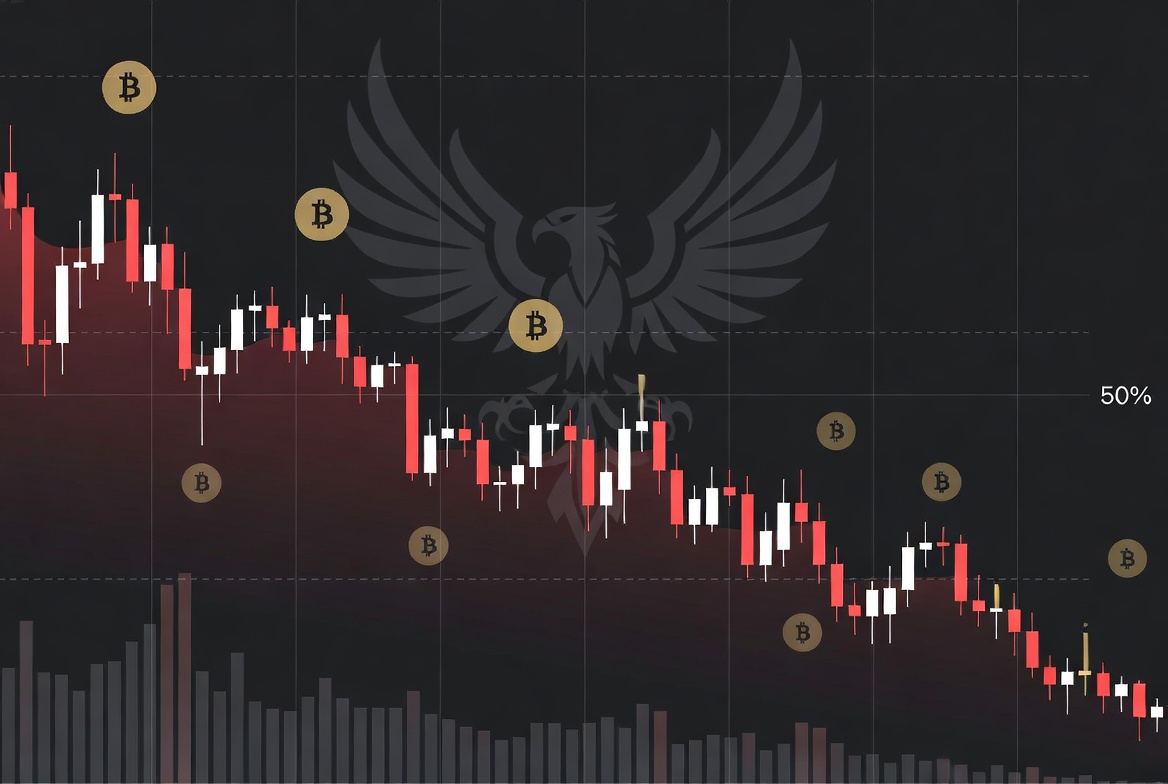
I suspect that the big levers here are the Saylor sale which could continue until Strategy reduces leverage, and rising energy costs. If Bitcoin is at risk from quantum-enabled theft, then so is the dollar. While I think Saifedean’s admission shocked some, his expressed view makes sense to me and upon further reflection, isn’t as surprising. It’s also possible there’s no real reason. Bitcoin has experienced 50% drawdowns every other year on average and 75% drawdowns about every four years. The last one was in 2022.
I continue to own Bitcoin because I’m 100% confident that the US Congress is going to keep debasing the dollar. We need money that’s not dependent on government decisions and is free of central banks. All of the above reasons outline possibilities that Bitcoin could experience trouble. Dollar debasement will continue and all fiat will lose purchasing power. Right now, your options consist of volatile gold (22% drawdown since January), very volatile Bitcoin, or the dollar which isn’t volatile; but rather, loses purchasing power each year.
Information contained in this report is believed by Deep Knowledge Investing (“DKI”) to be accurate and/or derived from sources which it believes to be reliable; however, such information is presented without warranty of any kind, whether express or implied and DKI makes no representation as to the completeness, timeliness or accuracy of the information contained therein or with regard to the results to be obtained from its use. The provision of the information contained in the Services shall not be deemed to obligate DKI to provide updated or similar information in the future except to the extent it may be required to do so.
The information we provide is publicly available; our reports are neither an offer nor a solicitation to buy or sell securities. All expressions of opinion are precisely that and are subject to change. DKI, affiliates of DKI or its principal or others associated with DKI may have, take or sell positions in securities of companies about which we write.
Our opinions are not advice that investment in a company’s securities is suitable for any particular investor. Each investor should consult with and rely on his or its own investigation, due diligence and the recommendations of investment professionals whom the investor has engaged for that purpose.
In no event shall DKI be liable for any costs, liabilities, losses, expenses (including, but not limited to, attorneys’ fees), damages of any kind, including direct, indirect, punitive, incidental, special or consequential damages, or for any trading losses arising from or attributable to the use of this report.