Nvidia startles the CPU designers with plans to start selling Windows PCs with Spark CPUs and RTX GPUs. They’re aimed at high-end content creators and AI users. There may be some compatibility issues with the ARM-based processors, but it’s a positive to see more AI computing pushed to personal devices with fewer privacy issues. Uber is one of several companies that used its entire annual AI budget in just a few months. Maybe telling employees they’ll be evaluated based on how much they use AI wasn’t a good idea. Anthropic files for a giant IPO and Google raises $80B. That, plus the SpaceX IPO, mean investors are taking on a lot of AI risk at a time when more companies are starting to worry about the cost of increasing usage. An Amazon Blue Origin rocket didn’t make it off the launchpad creating a problem for AST SpaceMobile which had planned on using Amazon for satellite delivery into orbit. The main beneficiary of this is SpaceX which has both a rocket business and a space-based internet business. Finally, in this week’s educational topic, we explain ROE, how to calculate it, and why I don’t use it.
Check out The Concerns About Bitcoin for a better understanding of what’s happening there.
This week, we’ll address the following topics:
- Nvidia will start selling Windows PCs with its own Spark CPUs and RTX GPUs. Is it time for AMD and Intel to panic? (No – but consider reading the section anyway!)
- Uber burned through its entire 2026 AI budget in four months. The stock market sees infinite AI usage while the corporate market sees unlimited expense.
- Anthropic IPO plus Google’s $80B equity raise plus the SpaceX IPO means public investors are getting a lot more AI exposure (and risk).
- An Amazon rocket exploded which delays the plans of AST SpaceMobile to get more satellites in orbit.
- In this week’s educational topic, we explain what return on equity is, how to calculate it, and why I don’t use it.
Excellent work this week by DKI Interns, Kunal Arora and Eli Killorin who did the heavy lifting for this week’s issue. Their ability to pitch good ideas, research them thoroughly, and deliver high-quality work product early is an asset to the firm.
Ready for a week of new PC configurations? Let’s dive in:
1) Nvidia Enters the PC Chip Market:
Nvidia announced it will start selling Windows PCs through various manufacturers including ASUS, Dell, HP, Lenovo, and Microsoft. The new PCs will have Nvidia Spark CPUs (ARM-based) and RTX GPUs. These machines will be targeted at content creators, people running AI agents, and gamers. The laptops are expected to hit retail this fall and with some models configured with as much as 128GB of RAM, are targeted at the very high-end user. The intention is to permit more private AI computing at the edge (on your device) alleviating some of the massive current demand on datacenters. The day of the announcement, both AMD and Intel stock fell a little as the market digested the idea of a new entrant in the CPU space.
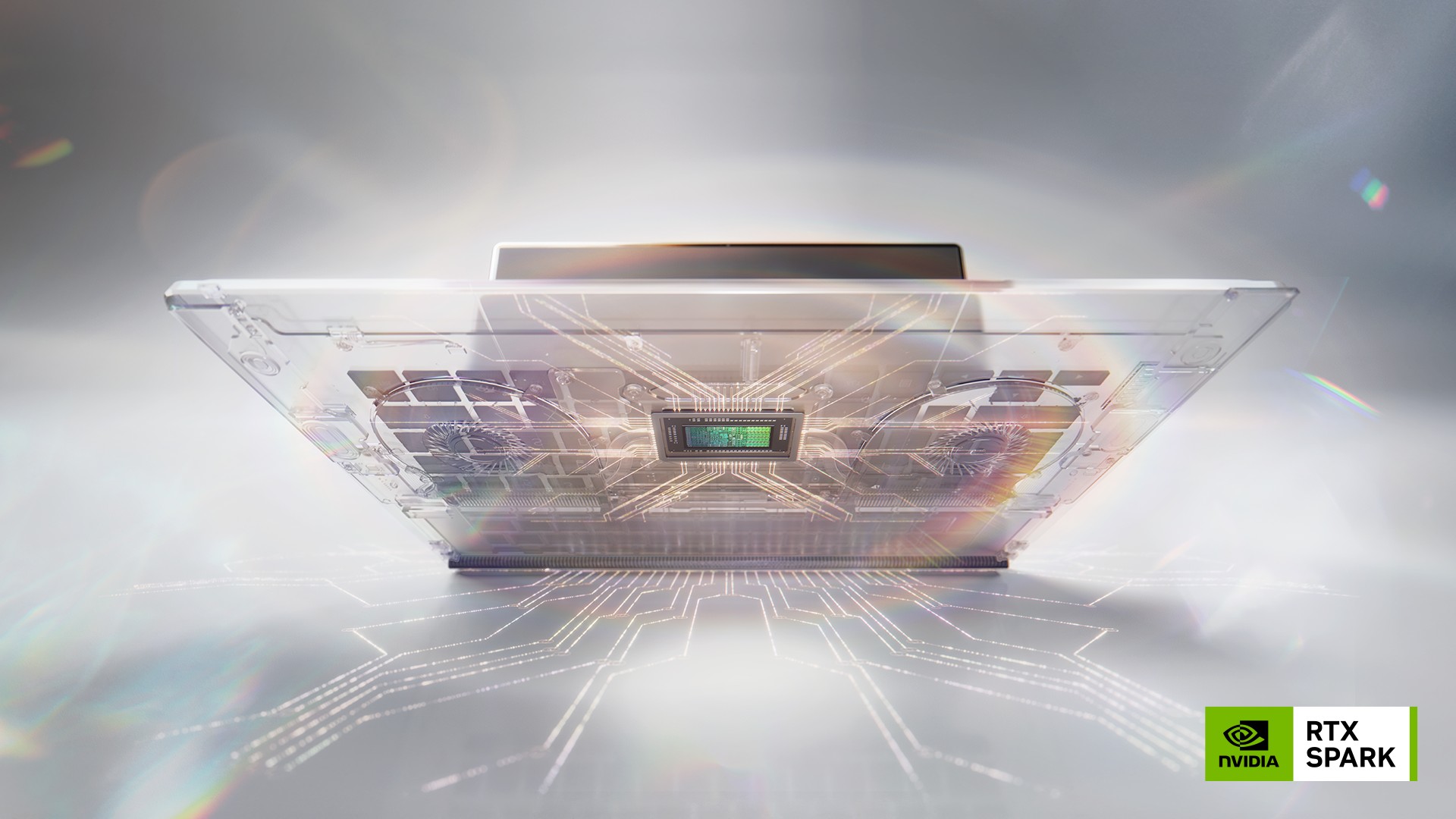
Instead of an x86 CPU and Nvidia or AMD GPU, Nvidia is suggesting Spark and RTX.
DKI Takeaway: While I never want to be dismissive of Nvidia’s capabilities, it’s one thing to crack the small community of high-end gamers and content creators who need advanced GPU solutions and will buy very expensive laptops. Grabbing share in the compatibility-oriented larger corporate market will be more challenging. I also think it matters that Intel could have sold another $1B+ of chips last quarter if they had more supply. Nvidia has been on allocation for years. AMD keeps reporting huge sales. The industry is not currently suffering from overcapacity.
The semiconductor space is also a little unusual in the amount of simultaneous competition and cooperation among the big players. Intel and Nvidia are jointly developing custom CPU/GPU combinations. Intel and Google are using Intel Xeon CPUs with Google custom silicon in datacenters. Meta (which is designing its own custom chips) and AMD are partnering to deploy AMD GPUs optimized for Meta workloads. It’s possible that Nvidia CPUs could take share in less-expensive laptops a few years from now, but by the time we get there, the entire semiconductor space will look different. We’ll be monitoring this going forward.
2) Companies Are Blowing Through AI Budgets:
Companies are overspending on enterprise AI and exhausting their yearly budgets in months. The AI industry’s shift from flat-rate fees to a token-based billing system, which charges users for every line of code, has become too expensive for many companies. Microsoft’s annual AI budget was consumed in months, leading to termination of its Claude Code agreement by June 30th. Uber burned through its entire 2026 AI budget by April. As AI costs continue to increase companies are forced to make a decision whether the hoped-for productivity gains are worth the price.
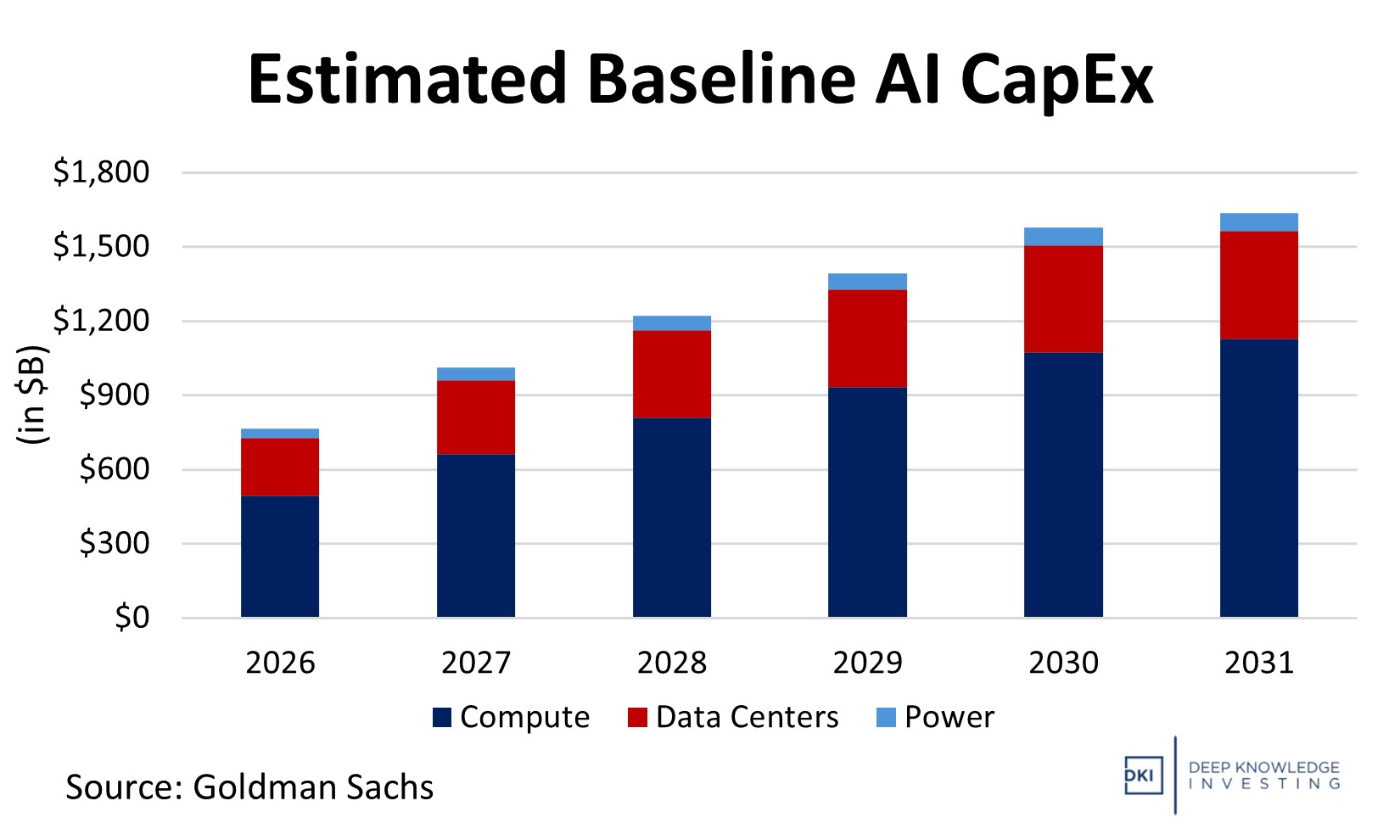
It’s not going to be like your unlimited-usage internet bill.
DKI Takeaway: The enterprise AI boom is running into a budget problem. Token-based pricing models have shifted the financial risk from vendors to consumers, leaving these enterprises with massive AI expenses. This is a potential problem for equity investors who have been valuing AI based on infinitely-expanding usage while high-value corporate accounts are starting to view AI as an expense. Those corporations are also to blame for their own situation as many of them have communicated to employees that their evaluations will depend on amount of AI usage. Unsurprisingly, these employees have been using AI for everything, even when its economically destructive.
3) AI Funding News from Anthropic and Alphabet Hit Wall Street:
Anthropic raised $65B in a Series H round, pushing its post-money valuation to $965B and surpassing rival OpenAI. The company also reported a revenue run rate of $47B. Days after the funding closed, on June 1, Anthropic submitted a confidential filing for an IPO. On the same day, Google parent Alphabet announced it was raising $80B through equity offerings to fund AI infrastructure spending, including a $10B investment from Berkshire Hathaway.
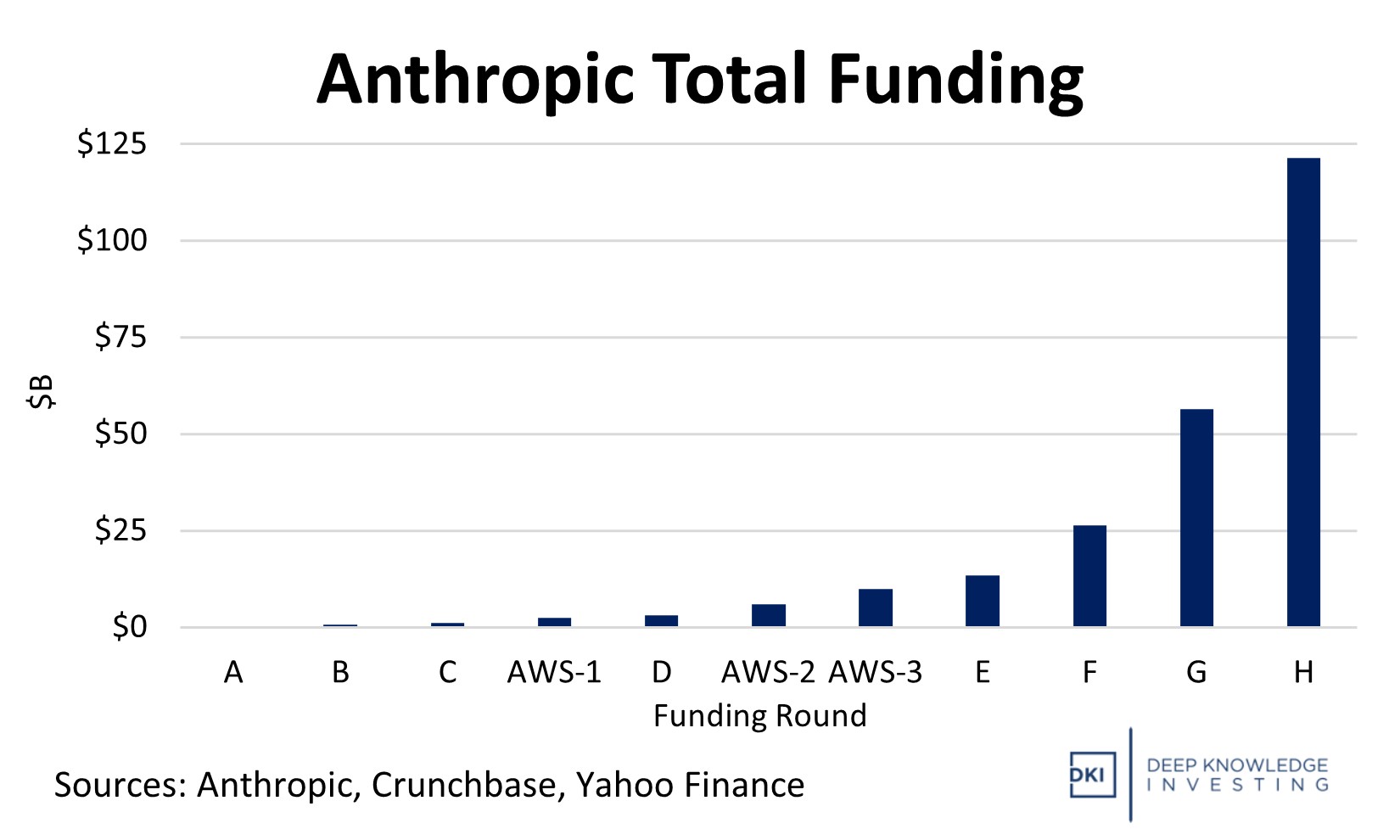
The era of trillion-dollar IPOs has arrived.
DKI Takeaway: Anthropic’s IPO filing will test whether investor appetite for AI can match the sector expectations. Unlike OpenAI’s retail focus, Anthropic’s enterprise strategy has made it temporarily profitable. It expects losses to resume, but this is a different business model than OpenAI’s cash destroying one. Combined with an ARR of $47B, this relieved some concerns and pushed the valuation past OpenAI’s. On the infrastructure side, Alphabet’s $80B equity raise tells us how expensive AI has become. Shares closed down 3.8% the day after the announcement, demonstrating unease that a company of Alphabet’s scale requires fresh equity to fund its AI plans. All of this, plus the massive SpaceX IPO means public shareholders are about to get a lot more exposure to AI along with the associated risk.
4) Amazon’s Blue Origin Rocket Explodes, Affecting AST Deployment Schedule:
On May 28th, 2026, Blue Origin’s New Glenn rocket exploded during a pre-launch engine test. This came just days before it was scheduled to carry Amazon’s Project Kuiper internet satellites into orbit. This explosion destroyed the only operational New Glenn launch pad, which freezes an entire 24-mission manifest. The following morning ASTS fell 15%, because the company had signed a multi-launch agreement with Blue Origin in 2024.
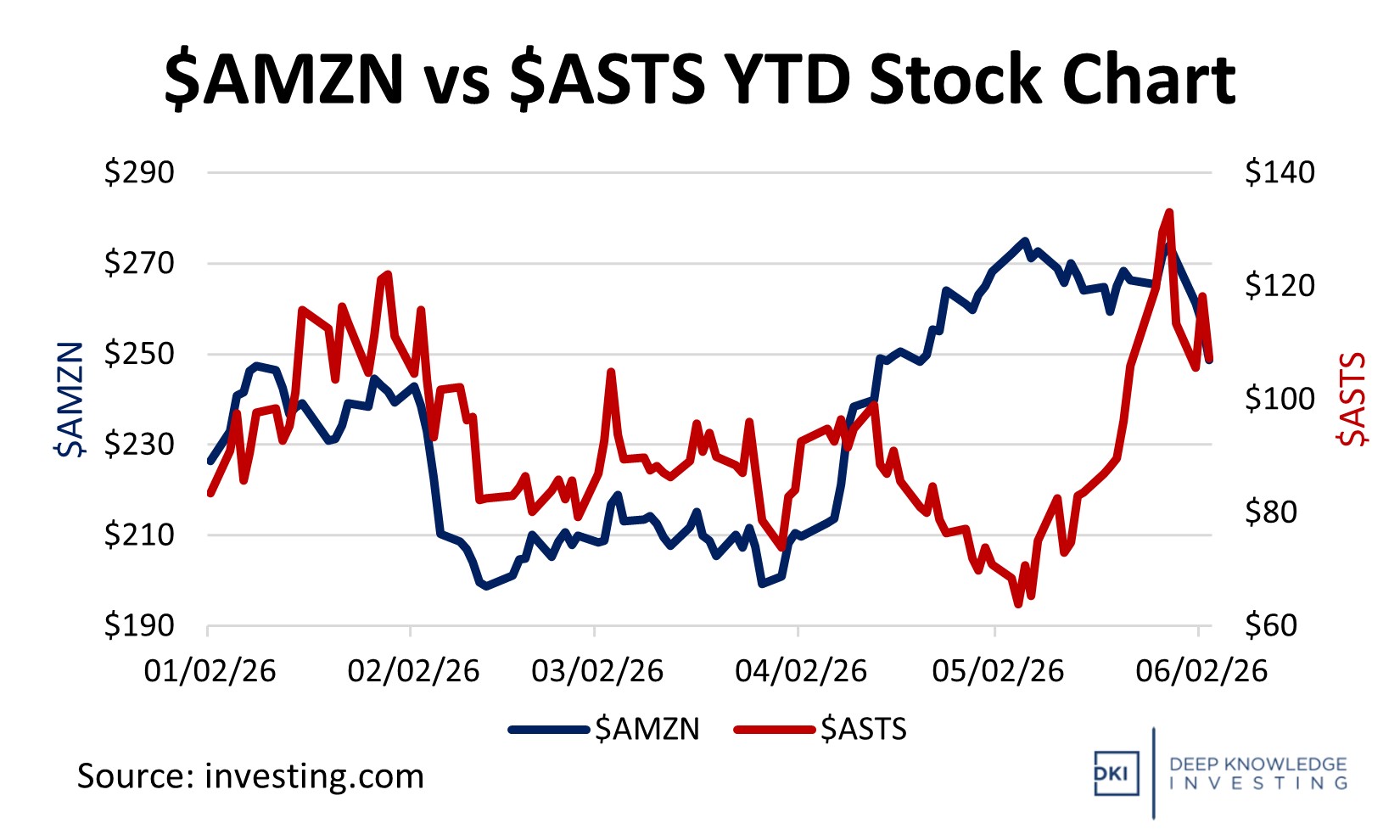
Space delivery is a difficult business. Even NASA and SpaceX had setbacks.
DKI Takeaway: SpaceX now has a more compelling narrative for its IPO. In 2025 SpaceX claimed about 80% of global rocket launches and has over 10,000 Starlink satellites in orbit. The launchpad setback from Blue Origin makes SpaceX’s dominance harder to challenge for now. While Blue Origin faces investigations and the challenge of rebuilding the launch site, SpaceX is accelerating towards what could be the largest IPO in history. For ASTS, SpaceX is the only option to keep its near-term deployment schedule alive. The next batch of satellites are currently scheduled to launch with SpaceX’s Falcon 9.
5) Educational Piece: Return on Equity:
Return on equity measures how efficiently a company generates profit from its shareholders’ equity, which is the money owners have invested plus any retained earnings. It is calculated by dividing net income by shareholders’ equity and expressed as a percentage. An ROE of 20% means the company produced $20 in profit for every $100 of equity. Because equity equals assets minus liabilities, ROE captures both profitability and how well management deploys the capital left over after debt service.
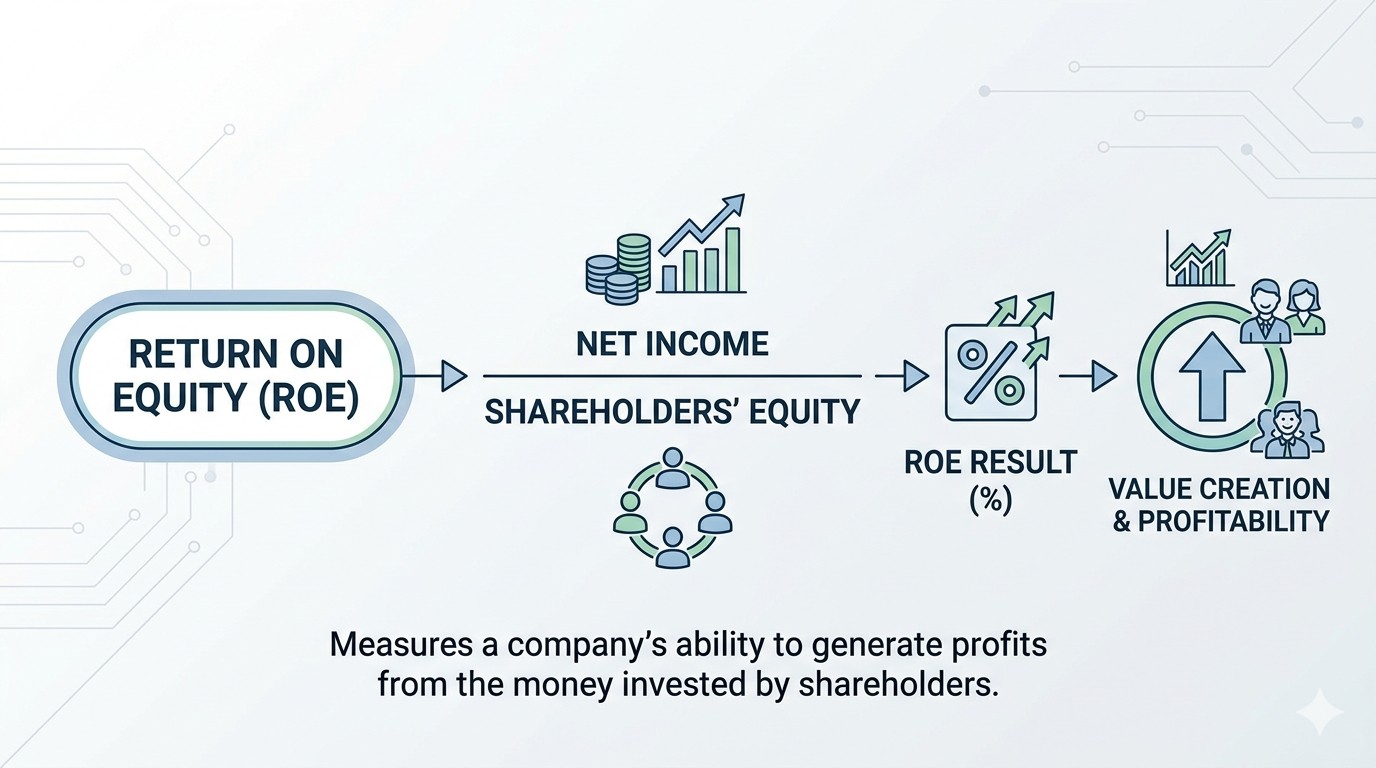
Net Income / Book Equity. It’s that simple.
DKI Takeaway: ROE cuts through the noise of absolute profit figures and reveals how well management works with what it’s been given. Two companies can report identical earnings, but the one doing it with less equity is the more efficient operator. Investors use ROE to compare companies within the same industry. High and consistent ROE is often a quality we see in companies with competitive advantages. However, it’s important to note that heavy debt can artificially inflate ROE by shrinking the equity base, so it is best read alongside leverage ratios rather than in isolation.
Note that while many analysts in the bank and insurance industries as well as Ben Graham acolytes like to look at ROE, I don’t find it to be useful. That’s because over time, book equity becomes an artifact of historical profitability and potential write-downs. I prefer to know how much I’m paying for current and projected free cash flow. What about you? Do you think book equity matters?
Information contained in this report is believed by Deep Knowledge Investing (“DKI”) to be accurate and/or derived from sources which it believes to be reliable; however, such information is presented without warranty of any kind, whether express or implied and DKI makes no representation as to the completeness, timeliness or accuracy of the information contained therein or with regard to the results to be obtained from its use. The provision of the information contained in the Services shall not be deemed to obligate DKI to provide updated or similar information in the future except to the extent it may be required to do so.
The information we provide is publicly available; our reports are neither an offer nor a solicitation to buy or sell securities. All expressions of opinion are precisely that and are subject to change. DKI, affiliates of DKI or its principal or others associated with DKI may have, take or sell positions in securities of companies about which we write.
Our opinions are not advice that investment in a company’s securities is suitable for any particular investor. Each investor should consult with and rely on his or its own investigation, due diligence and the recommendations of investment professionals whom the investor has engaged for that purpose.
In no event shall DKI be liable for any costs, liabilities, losses, expenses (including, but not limited to, attorneys’ fees), damages of any kind, including direct, indirect, punitive, incidental, special or consequential damages, or for any trading losses arising from or attributable to the use of this report.