The dollar price of Bitcoin is down almost 50% from the all-time highs reached just a few months ago. The Bitcoin haters are busy declaring victory (and ignoring that many of them have been negative on the digital asset when it was trading at $1,000). Some of the defenders are saying it’s a great time to buy. As usual, at DKI, we don’t pay attention to anyone who doesn’t explain their analysis. So, let’s take a look at what I think is happening and address some of the better alternative explanations circulating right now.
My View of Events:
Let’s start with some obvious honesty. None of us know exactly what’s happening. I’ve seen a dozen different explanations in the past week. There’s no consensus and if we look at the history of Bitcoin, 80% – 90% drawdowns are common. Bitcoin being down this much in just a week is unpleasant and jarring, but it’s not unusual. Those who have been willing to stomach the always-temporary volatility have been well-rewarded with incredible long-term returns.
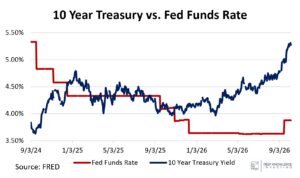
While Bitcoin had declined some from October’s high, much of the carnage has happened in the last week. This round of selling was kicked off by President Trump surprising the markets by nominating Kevin Warsh to succeed Jerome Powell as Chairman of the Federal Reserve. In addition to hating surprises, the market viewed Warsh as a hawk (one who favors higher interest rates).
Lower interest rates tend to lead to free(ish) fiat and increasing asset prices while higher rates lead to a reduction in speculative excesses. When dollars have a higher yield, that also makes them relatively more attractive vs zero yield assets like Bitcoin, gold, and silver. Asset holders and portfolio managers immediately started selling zero-yield risk. As prices fell, leveraged market participants got margin calls (especially in silver where the main US exchange increased margin requirements). This led to forced selling which caused prices to fall further leading to new margin calls and more non-discretionary forced selling. This is what George Soros referred to as reflexivity; the tendency of market forces to amplify its own trends.
I think that explains the selling, although I disagree with the reason. I don’t think Warsh is a hawk. He’s on record publicly saying he favors lower rates. In addition, President Trump told NBC News this week that Warsh wouldn’t have gotten the job had he not promised a lower fed funds rate. It’s clear that his public and private comments match each other. Finally, with Congress running multi-trillion-dollar annual deficits, there’s nothing the Fed can do to lower the yield on the longer-dated Treasuries which determine corporate borrowing rates and mortgage rates. Warsh isn’t a hawk, has only one vote on the Fed Open Market Committee, and the Fed has limited ability to control the yield curve right now. I think the market got this one wrong, but that hasn’t stopped Bitcoin from falling.
For more details on the Warsh situation, please see DKI’s posts on the topic: Looking at the Downside and Here’s What Just Happened in Gold, Silver, and Bitcoin. Those posts aren’t paywalled.
Now, let’s take a look at some of the alternative explanations being offered:
Whales Selling:
There is some truth to this one. Some of the selling is deleveraging as I noted above, and some is related to Bitcoin billionaires reducing exposure. You can see this in two ways. It is possible to track the size and age of Bitcoin wallets, and there have been some large ones that have gone active in the past year and sold. You can also see it in trading when the dollar price of Bitcoin gaps down; especially during non-market hours in New York. For reasons I’ve yet to see an explanation for, much of this large selling tends to take place on weekends and at night in New York when volume tends to be light and sellers tend to move the price more.
Some of these big holders (called whales) bought or mined Bitcoin when it was a few cents to a few dollars. I’m not sure that their sales mean the end of Bitcoin. If you were able to mine Bitcoin using a normal PC in the early days when it was trading at pennies and now found yourself sitting on a 10-figure fortune, wouldn’t you lighten up?
There is a perception that because these people found Bitcoin early and had the technical skill to mine it that they’ll be the ones to predict the future price of the asset. These are two different skill sets. The technical skill of the early adopters and miners is something to be applauded. Their willingness to hold as their fortunes grew is admirable. They have been rewarded with multi-generational wealth as a result of their technical expertise and patience. I have nothing but admiration for them. That doesn’t mean that their sales (full or partial) tell us much about the future of Bitcoin which will be driven more by macroeconomics and fiat debasement than technical expertise.
Saylor and (Micro)Strategy:
This one is a real risk. The price of Bitcoin has fallen below the price at which Strategy ($MSTR) acquired many of its coins causing the stock price to collapse. CEO, Michael Saylor, has financed the company well with a lot of preferred securities that don’t require the company to pay interest. However, $MSTR is the single largest holder of Bitcoin. Anything that causes enough stress to the company that would cause Saylor to have to sell some of its Bitcoin would ensure that Bitcoin’s biggest supporter becomes its biggest seller. I believe Bitcoin would survive this, but it would be terrible for the price. Think about this risk as similar to when Warren Buffet would by a huge stake in a public company. Investors both liked having his support and worried about they day he’d eventually sell. No one sticks around forever.
Paper Bitcoin Leads to an Increase in Supply:
I think there’s some truth to this one as well. Bitcoin has a max of 21MM coins. Technically, that can be changed, but only if the people who maintain the network and who own Bitcoin decide to destroy the one most important factor that preserves their investment and effort. We should view the 21MM max as a fixed hard cap.
However, as Bitcoin has gained institutional adoption, there have been a wide variety of financial instruments that have appeared. Some, like the Bitcoin ETFs, have enabled people comfortable with traditional finance to gain exposure. Through those funds, Bitcoin can be held in regular brokerage accounts and in pension funds without dealing with changing exposure regulations or self-custody. Others, like Bitcoin derivatives and futures, create contracts that enable parties to settle changes in value in fiat rather than by delivering actual Bitcoin.
While this doesn’t change the 21MM cap, the existence of this new “paper” Bitcoin market has led to an effective increase in the amount of Bitcoin that can be traded. When the effective supply increases, it’s the price that adjusts downwards. This is what we’ve seen since last October. This is also how the silver market has been manipulated. Please note that the recent increase in silver prices happened when people stopped settling for payment in fiat (paper silver) and started demanding delivery of metal. Once the warehouses emptied, the price skyrocketed.
Paper Bitcoin can influence the short-term price, but long-term, there are 21MM coins that will be issued and if you want to own Bitcoin, that’s the real asset. Bitcoin is permissionless and requires no trust in a counterparty. People with paper claims might one day regret that they’re trusting highly-leveraged financial institutions.
Higher Energy Prices Means a Lower Hash Rate:
This one is an interesting thesis. Some have suggested that Bitcoin tends to trade in line with the hash rate. The hash rate is the amount of computing power behind the Bitcoin network at any given time. If you look at the Bitcoin price and the hash rate, it’s clear that the correlation is meaningful. As the mega-cap tech firms start to pay huge prices for guaranteed energy, power that was economic for Bitcoin miners and nodes to use is getting more expensive. Incremental players will find mining Bitcoin to be uneconomic and some think that will lead to a lower hash rate and a permanently lower Bitcoin price.
I think this analysis is reasonable, and yet, I’m still skeptical. First, while AI can do amazing things, none of the big hyperscalers who are spending hundreds of billions of dollars a year on AI and training models have a business model to earn a return on that spending. In particular, OpenAI has committed to $1.4T of spending and expects to burn more than $100B of cash flow in the next few years. The company doesn’t have $1.5 trillion dollars. It wouldn’t take much to throw a lot of this spending into reverse.
In addition, I think we’re about to hit a second golden age of nuclear power. China is building reactors now and the Trump Administration just offered funding to build 10 big reactors in the US. Small modular reactor companies are going to make cheap(er) reliable power available everywhere. Elon Musk is among those talking about solar powered AI datacenters in space where there’s no expense required for cooling. We don’t need a DeepSeek low-expense solution to see that the energy market is going to look a lot different over the next decade.
Finally, I’m not convinced the hash rate is telling us what people assume it’s telling us. Let’s take a look at a long-term chart of the Bitcoin price overlaid with the hash rate. Starting in November of 2021, Bitcoin began a slow crash from $65k to $16k yet the hash rate climbed relatively consistently. In March of 2024, the price of Bitcoin fell while the hash rate again climbed consistently. We saw the same pattern again in January of 2025 where the Bitcoin price fell without a decline in the hash rate. Starting in August 2025, the price of Bitcoin started falling below the trend line. This time, the hash rate fell…starting three months later.
Long-term, the price of Bitcoin is correlated with the hash rate. However, of the last four times Bitcoin’s dollar price declined, the hash rate didn’t react during three of them and during the fourth, moved months later. It hasn’t been a change in the hash rate that’s led to a decrease in Bitcoin’s price. Most recently, it was a decline in Bitcoin’s price that led to a decline in the hash rate.
I did see one otherwise excellent piece of analysis that played a bit fast and loose with definitions. The author pointed out that Bitcoin requires continuous energy to run the network which secures your Bitcoin ownership while lauding gold for not needing any additional energy once it’s dug out of the ground. This is technically true, but highly misleading. Once mined and refined, gold does require energy to secure unless you’re comfortable leaving it on your front porch. Otherwise, you need to pay a vault to secure that gold and even then, you need to trust that in case of an emergency or change of government, that the vault will allow you to withdraw your gold. Both energy and trust are required to secure your gold.
The theory that higher energy prices will crash the hash rate and permanently impair the value of Bitcoin could prove to be true in the future, but based on history, I find it to be lacking in evidence.
Not a Store of Value:
Michael Gayed ( @leadlagreport ) is great at triggering the Bitcoin community by constantly declaring that it’s not a store of value. This upsets Bitcoiners who view it as an excellent alternative to precious metals like gold and silver, far superior to diamonds where the supply in vaults is larger than most think, and infinitely better than infinitely printable fiat. Gayed states that anything with tail risk (risk of catastrophic loss of value) can’t be a store of value. By that definition, nothing in the world is a store of value, something Gayed openly admits.
So, he’s right. Everything you and I value can be confiscated, stolen, or suffer a permanent loss of value. Even our own bodies break down over time and our most valuable relationships can decay without adding regular energy. The world is a risky place and nothing is guaranteed. If this is the thing that concerns you, I suggest developing for yourself something resembling Gayed’s legendary work ethic. That’s not a guarantee either, but it does push the odds in your favor.
Digital Pet Rock:
Every time Bitcoin drops by 10%, the haters jump in crowing that it’s just a digital pet rock with no value. Many of them have been saying that since Bitcoin was trading at $1,000 and never seem willing to admit they’ve been wrong on the asset. Gold, which has been the best and most consistent form of money for thousands of years, could also be described as a pet rock. Peter Schiff claims the industrial uses for gold give it value, but if that were true, copper and silver would trade at a premium to gold.
More importantly, why do the pet rock people think the dollars in their pocket have value? Why do they have trust in a piece of paper that has no value except that we all agree it has value? Why do they trust “money” that is debased by trillions of units each year? Finally, most of us spend a lot of digital dollars and receive payments through our bank accounts. Why exactly is Bitcoin a digital pet rock, but the digital “money” in your bank account isn’t? Money used to be gold and silver and was then replaced with paper that could be redeemed for gold. Now, it’s backed by “faith and credit”. How much faith do you have in our government? How creditworthy is an organization that currently has $38T in debt and another $200T of off-balance sheet liabilities?
What Do You Think?:
What are your thoughts? What are the best arguments for and against Bitcoin and how would you support or challenge them?
Information contained in this report is believed by Deep Knowledge Investing (“DKI”) to be accurate and/or derived from sources which it believes to be reliable; however, such information is presented without warranty of any kind, whether express or implied and DKI makes no representation as to the completeness, timeliness or accuracy of the information contained therein or with regard to the results to be obtained from its use. The provision of the information contained in the Services shall not be deemed to obligate DKI to provide updated or similar information in the future except to the extent it may be required to do so.
The information we provide is publicly available; our reports are neither an offer nor a solicitation to buy or sell securities. All expressions of opinion are precisely that and are subject to change. DKI, affiliates of DKI or its principal or others associated with DKI may have, take or sell positions in securities of companies about which we write.
Our opinions are not advice that investment in a company’s securities is suitable for any particular investor. Each investor should consult with and rely on his or its own investigation, due diligence and the recommendations of investment professionals whom the investor has engaged for that purpose.
In no event shall DKI be liable for any costs, liabilities, losses, expenses (including, but not limited to, attorneys’ fees), damages of any kind, including direct, indirect, punitive, incidental, special or consequential damages, or for any trading losses arising from or attributable to the use of this report.