I’m in Tokyo for through mid-December when I’ll be heading to Bangkok, Thailand. I’m open to a small number of in-person conversations. If you’re based locally, or know someone in those locations you think it would be worthwhile for me to meet, feel free to reach out privately at IR@DeepKnowledgeInvesting.com.
If you are interested in accumulating Bitcoin via mining, I’ve been mining with Simple Mining and it’s been a great experience. You can check them out here. It’s even easier than you think. It took me 30 minutes to set up the first miner and I’m already earning sats. It would take 5 minutes to set up the second. Ask Billy about why miners make money even when the dollar price of Bitcoin falls.
This week, we’ll address the following topics:
- Nvidia Earnings were excellent and guidance was better than expected. The stock is cheap vs earnings because the earnings will change when Chinese sales get removed.
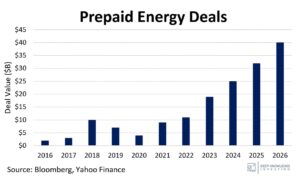
- Alphabet and Prepaid Energy Bonds: Alphabet (Google) is receiving low-cost tax-exempt funding from energy bonds to reduce the cost of data center expansion. We think other hyperscalers will follow.
- Blackstone REIT to Buy AWS Data Centers in a sale leaseback deal. Amazon will sell the data centers and rent them back for use. Blackstone gets a reliable tenant.
- Palo Alto Deal for Applied Compute is $4.5B in stock. Applied Compute helps users run open weight models, DKI’s preferred option.
- Some claim Stock Buybacks only have a one-time impact on a stock. Is that true? We explain.
I love Japan, but being 14 hours ahead of NY isn’t easy for the DKI team. Despite my days and nights being mixed up, DKI’s interns, Kunal Arora and Eli Killorin, are unstoppable. (Although why anyone would want to try is beyond me.) This issue, like so many before it, is a reflection of their effort and intellect.
Ready for another week of Nvidia raising guidance and the market not caring? Let’s dive in:
1) Nvidia Earnings:
Nvidia reported excellent Q3 earnings this week. Revenue came in at $115.8B versus expectations of $108.9B representing growth of more than 100%. EPS of $2.68 beat the $2.47 consensus. Data center segment sales were up 110% to $107.6B due partly to the new Vera Rubin servers. Management raised revenue guidance for the next quarter to $130.0B.
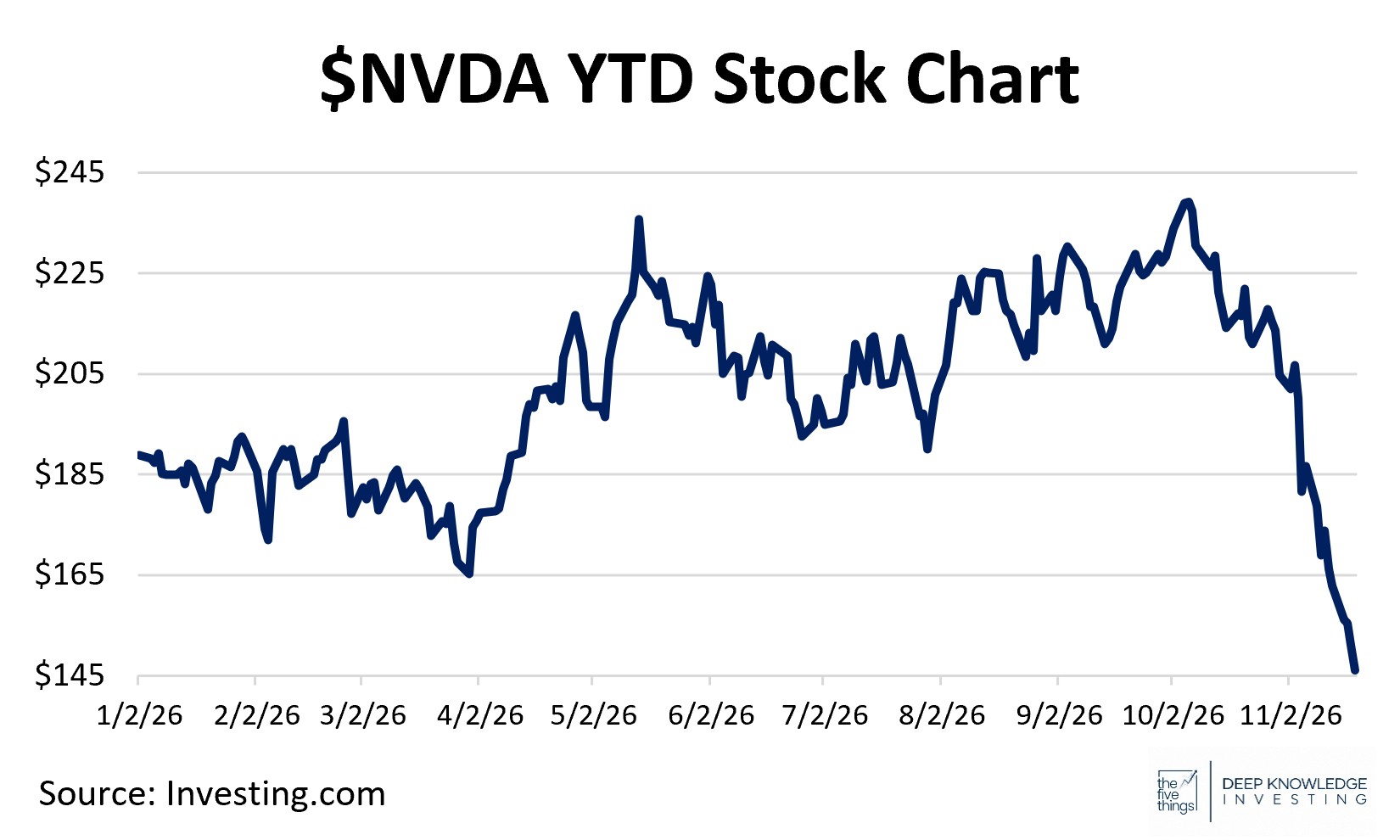
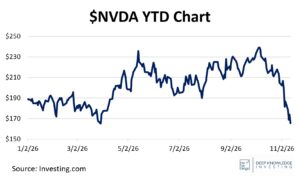
DKI Takeaway: Nvidia’s earnings are always a market event and that’s amplified by internal pressures related to the departure of CEO, Jensen Huang. A government investigation regarding making high-end GPUs available to Chinese companies is also causing concern. The stock continues to decline post-earnings, and some Wall Street firms lowered price targets. Investors are concerned about the AI trade due to spending, cash returns, and circular financing. People keep pointing to the stock trading at a low multiple of earnings, but that’s telling me the market doesn’t believe estimates. As of now, it appears that more than 20% of Nvidia’s sales were satisfying demand in China, and it’s going to be difficult to continue sending AI accelerators there over the next few years. It looks like $AMD may have been caught doing the same thing.
2) Google Parent Alphabet to Take Part in $3B of Prepaid Energy Bond Deal:
Alphabet is planning to take part in two prepaid energy bonds transactions totaling $3B. The company is listed as the funding recipient on the bond offerings to be issued by Southeast Energy Authority (SEA). This follows a $1.6B energy funding deal Alphabet took part in on November 4th. Proceeds from that transaction go towards the Salt River Project Agricultural Improvement and Power District which provides electricity to multiple Arizona counties.
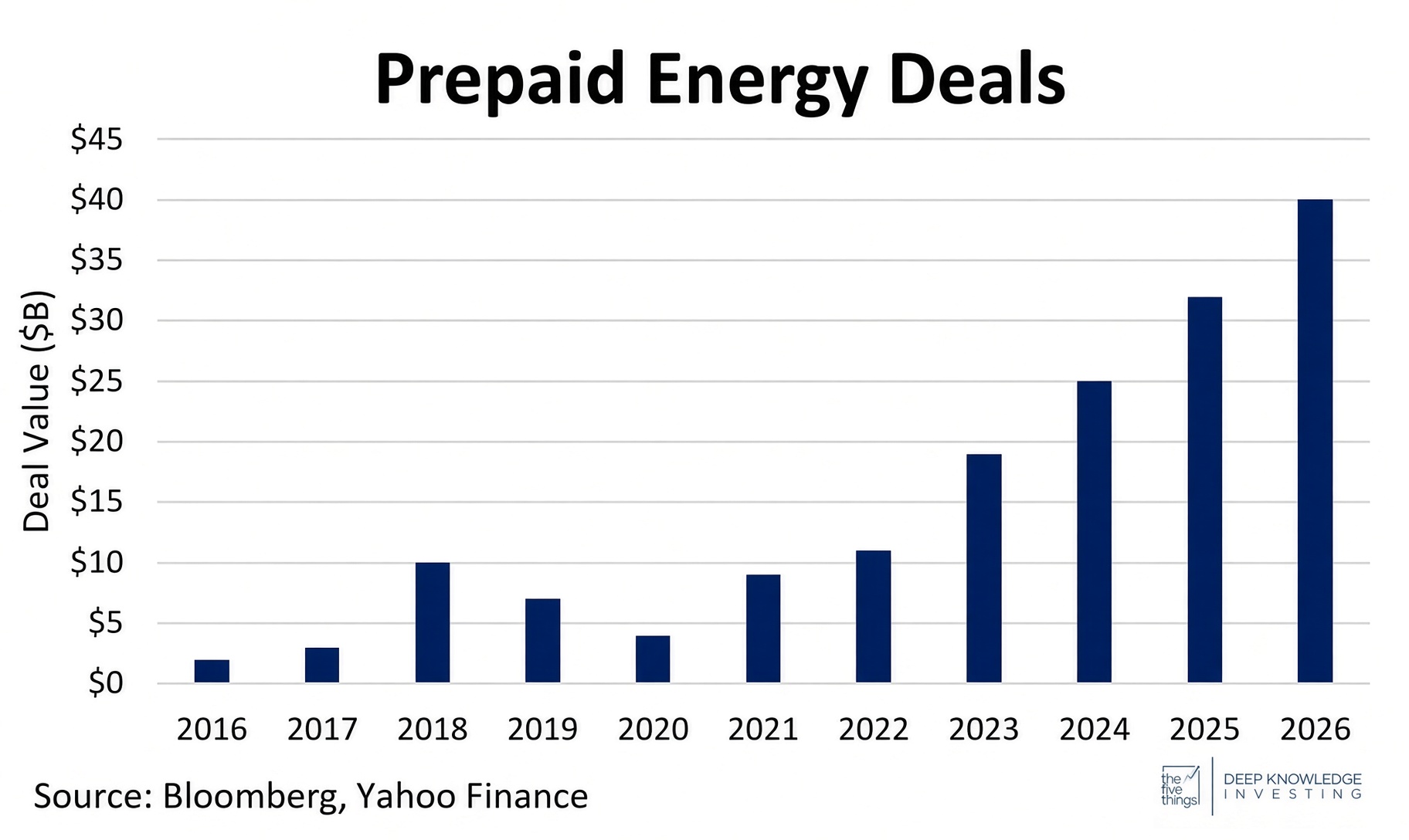
DKI Takeaway: This allows Alphabet to borrow billions of dollars at lower, tax-exempt municipal rates so it can fund its massive AI/data center expansion cheaper than by issuing standard corporate debt. By acting as the funding recipient, Alphabet receives large lump sums of cash upfront from municipal bond sales and repays the money over decades through scheduled payments that cover discounted electricity deliveries for public utilities and debt service for bondholders. Alphabet is the first major U.S. tech company to step into this financing role traditionally dominated by banks. As the cost of debt continues to increase in this high-yield environment, other companies may follow. Over the next few years, the ability to source energy for AI development will matter more than getting a supply of the newest generation of Nvidia GPUs.
3) Blackstone REIT to Buy Amazon Data Centers in $5B Deal:
Blackstone Digital Infrastructure Trust (BXDC), the data center REIT that listed in May, agreed to buy a 75% majority interest in two joint ventures with AWS in a deal valued at $5B. This is the REIT’s first-ever investment. The joint ventures hold 13 newly built powered shells across two AWS campuses in northern Indiana and Mississippi. AWS keeps 25% and leases back the whole portfolio for an initial 12 years, extendable to 32.
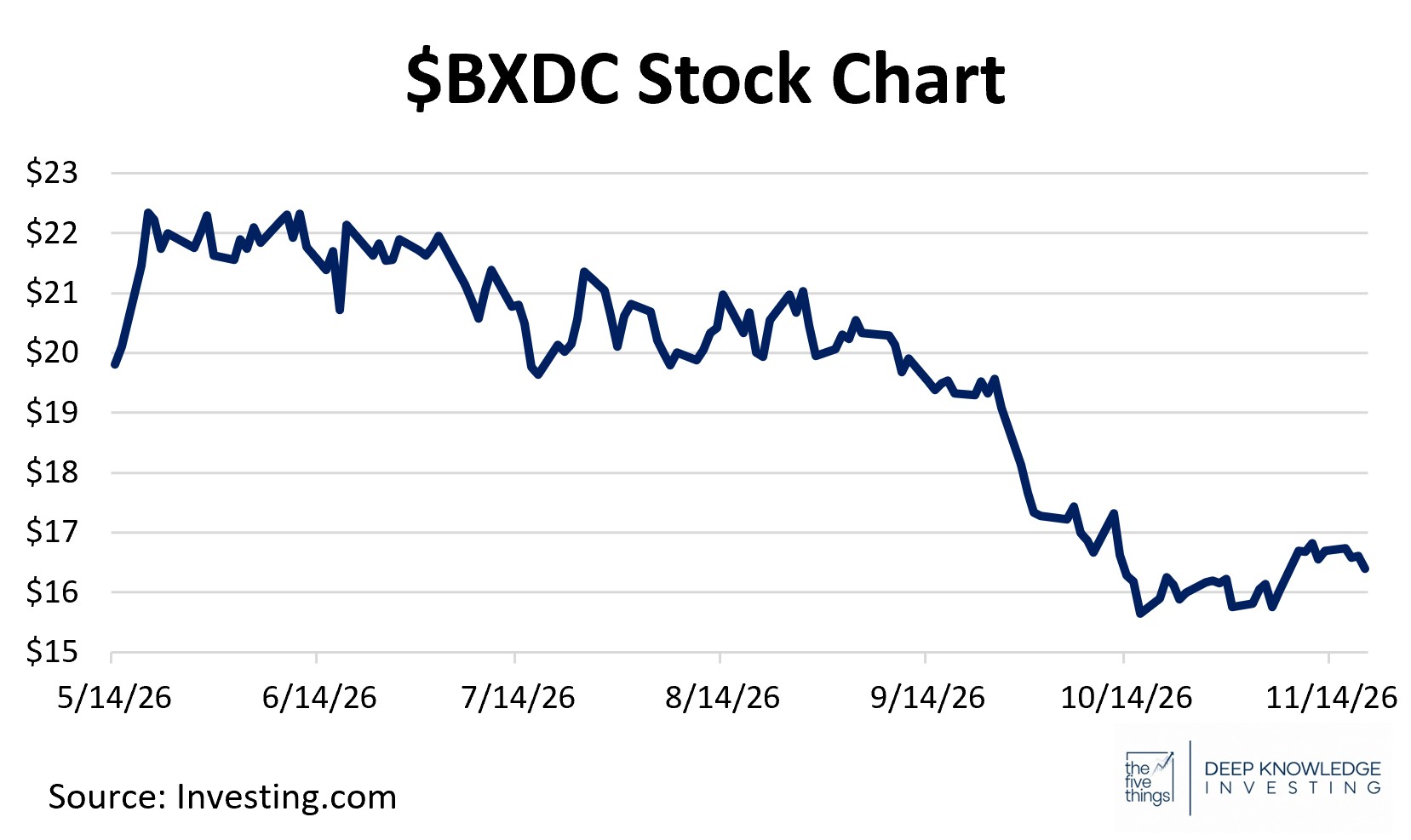
DKI Takeaway: This is a sale-leaseback, where Amazon frees capital by selling the real estate, then leases it back for its own use. It’s also a triple-net lease, meaning AWS covers taxes, insurance, and maintenance. BXDC gets a long-duration, investment-grade tenant and 12-32 years of rental income to support returns to investors of the REIT. This also goes along with Blackstone’s goal to bring AI infrastructure investment to retail investors, as the investment vehicle is a public instrument. CEO Nick Pell also noted that it creates a roadmap for more deals with hyperscalers in a market Blackstone sizes at $1T over the next 5 years. DKI still thinks a lot of these data centers are going to lose money.
4) Palo Alto Networks is Paying $4.5B for Applied Compute:
Palo Alto Networks, a cybersecurity company, has agreed to buy Applied Compute in an all-stock deal worth $4.5B. Applied Compute, an AI startup founded in 2025 by former OpenAI researchers, helps companies customize and run open-weight AI models. The price is 38% over Applied Compute’s $3.25B valuation from its funding round a few weeks ago. The deal is expected to close in calendar Q3 2027, pending regulatory approval.
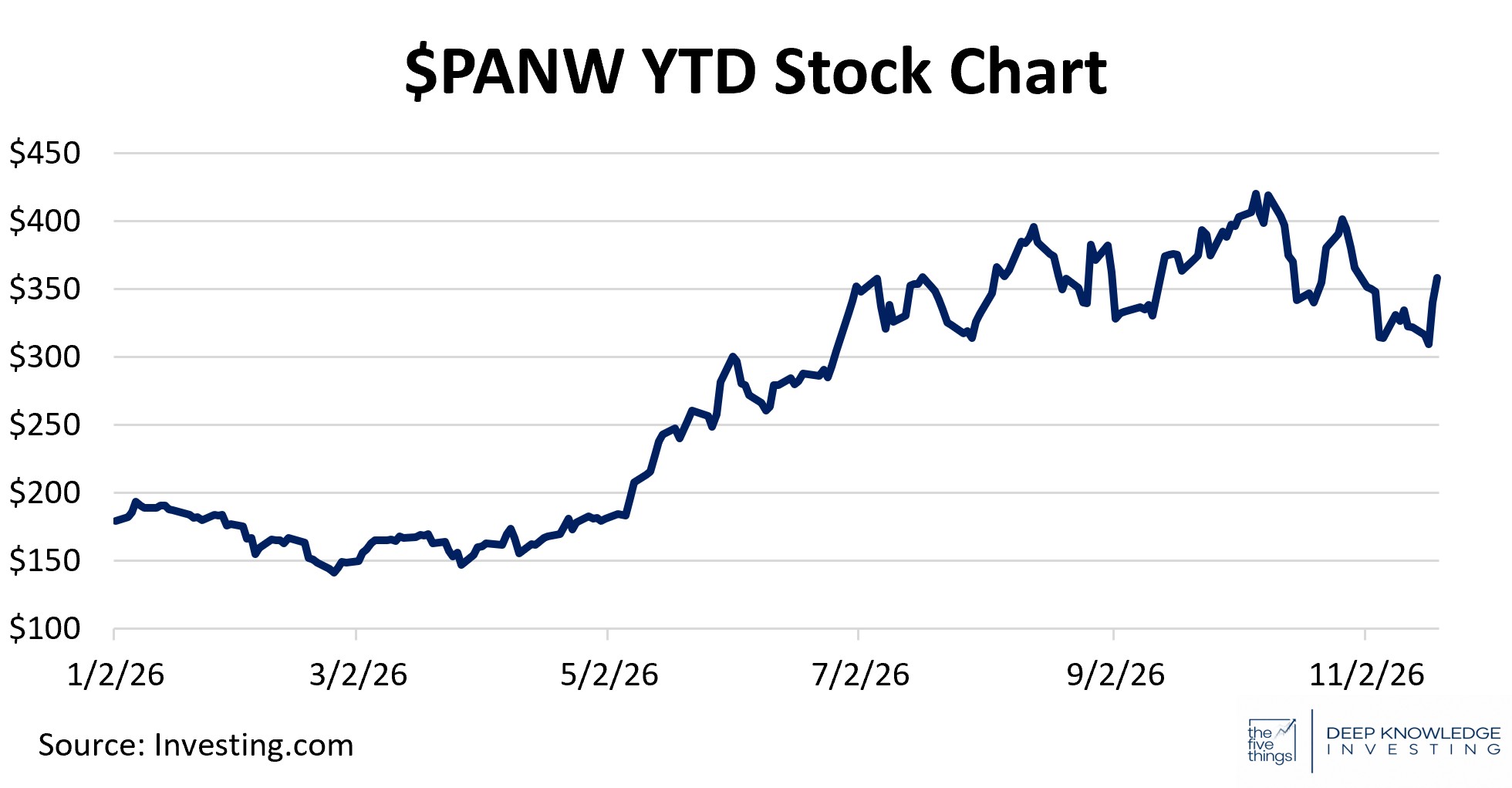
DKI Takeaway: This is a strategic expansion for Palo Alto. Applied Compute reported $100MM in annual recurring revenue, so Palo Alto is paying about forty-five times Applied’s yearly subscription revenue. At that price, the all-stock deal is dilutive to existing Palo Alto shareholders. Palo Alto’s multibillion deal with Google Cloud gives it AI infrastructure. The bigger test is folding a one-year-old startup into a large company and convincing customers to buy AI tools and security from the same vendor. I continue to believe that open weight models and preserving the ability to run private models on your own hardware to be crucial to future AI usage, personal privacy, and corporate security.
5) Educational Piece: Share Buybacks:
A stock buyback is when a company uses its own cash to repurchase its shares on the open market. When a company does this, those shares are retired, so fewer remain outstanding. This means the remaining shares represent a larger stake in the company. Buybacks are a way to return cash to shareholders, similar to dividends, but without the direct payout.
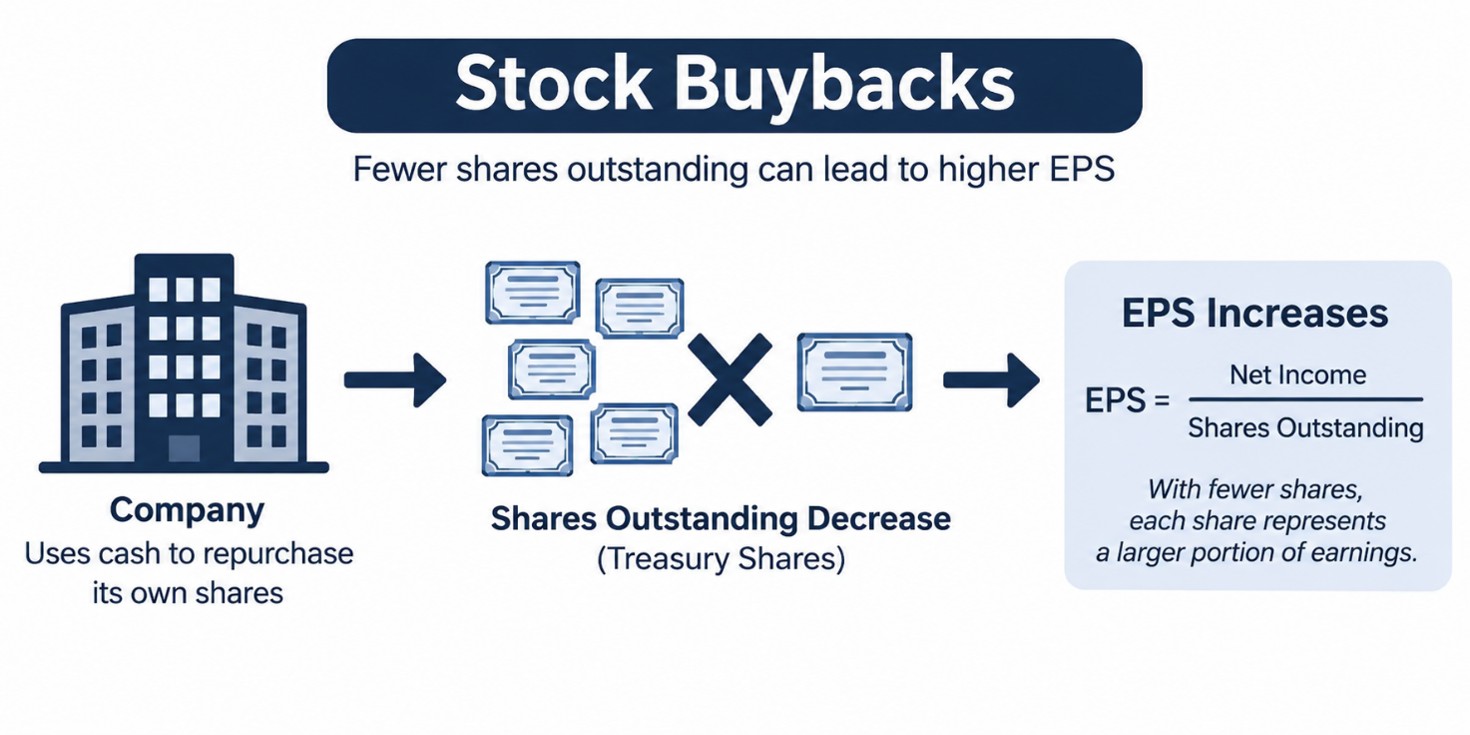
DKI Takeaway: The appeal is that stock buybacks raise the earnings per share even if the company’s profits don’t grow. For example, if a company earns $1B with 100MM shares outstanding, the company’s EPS would be $10. After buying back 10MM shares, the same $1B gets divided by 90MM shares rather than 100MM, raising EPS to $11.11. The (potential) catch is that a higher EPS doesn’t mean that the business is growing, and buying back overvalued stock can destroy value for the remaining shareholders. A buyback is a better sign when it comes alongside growing profits and an undervalued stock. Critics have said stock buybacks only have a one-time impact. This is false as the repurchased shares are permanently retired.
Information contained in this report is believed by Deep Knowledge Investing (“DKI”) to be accurate and/or derived from sources which it believes to be reliable; however, such information is presented without warranty of any kind, whether express or implied and DKI makes no representation as to the completeness, timeliness or accuracy of the information contained therein or with regard to the results to be obtained from its use. The provision of the information contained in the Services shall not be deemed to obligate DKI to provide updated or similar information in the future except to the extent it may be required to do so.
The information we provide is publicly available; our reports are neither an offer nor a solicitation to buy or sell securities. All expressions of opinion are precisely that and are subject to change. DKI, affiliates of DKI or its principal or others associated with DKI may have, take or sell positions in securities of companies about which we write.
Our opinions are not advice that investment in a company’s securities is suitable for any particular investor. Each investor should consult with and rely on his or its own investigation, due diligence and the recommendations of investment professionals whom the investor has engaged for that purpose.
In no event shall DKI be liable for any costs, liabilities, losses, expenses (including, but not limited to, attorneys’ fees), damages of any kind, including direct, indirect, punitive, incidental, special or consequential damages, or for any trading losses arising from or attributable to the use of this report.