I’m in Tokyo for the month of November. Heading to Nikko for the weekend, but will be on my way back by the time you see this. I’m open to a small number of in-person conversations. If you’re based locally, or know someone in those locations you think it would be worthwhile for me to meet, feel free to reach out privately at IR@DeepKnowledgeInvesting.com.
If you are interested in accumulating Bitcoin via mining, I’ve been mining with Simple Mining and it’s been a great experience. You can check them out here. It’s even easier than you think. This week, they hosted a webinar titled The Purest AI Trade. You can watch a replay of it here.
This week, we’ll address the following topics:
- CPI comes in high. The market is worried the Fed will hike. They will and it won’t matter.
- Anthropic Files for an IPO as industry valuations fall. This is your opportunity to own a piece of a company that listed causing the extinction of humanity as a risk factor.
- Jensen Huang Resigns under pressure. There were multiple sex scandals, a potential spy scandal, and evasion of export restrictions. We go through what’s known, suspected, and not proven. We ask who benefits from this.
- FDA Warning on GLP-1s: There will now be warnings that these weight loss drugs can cause blindness. DKI does not provide medical advice. Please consult with your physician.
- Educational Piece: Inverse and Leveraged ETFs are becoming increasingly popular. We explain how you can lose money even if the underlying index is flat.
Every week, I use this space to give credit to our interns, Kunal Arora and Eli Killorin, for their contributions to the 5 Things. They are involved in topic selection, research, writing, and image creation. Much of what you are about to read is a result of their intellect and hard work. DKI will also be adding a new intern next month. Details to follow soon. Now, we’ll dive into this week’s issue:
1) CPI:
CPI was up 0.4% vs last month which annualizes to 4.9%. This was down from 0.6% last month and was above expectations of 0.3%. There is no annual comparison because of the government shutdown last October. Core CPI was up 0.3% vs last month. This was consistent with last month and above expectations of 0.2%.
Food was up 0.5% for the month (annualizes to 6.2%). I’ve been saying forever that this category has been understated and we’re now seeing big increases. Earlier this year, I suggested that fertilizer that wasn’t coming through the Strait of Hormuz would impact food prices. That, plus higher prices for diesel, would be big contributors to this month’s increase.
Food away from home was also up 0.5%. Higher prices plus constantly shifting tipping expectations are making eating out more difficult. In previous CPI analysis I’ve commented that the waiters who insist that if you’re not going to tip at least 25%, you don’t “deserve” to eat out are going to end up with 100% of nothing. I’m currently in Tokyo where my favorite sushi place has 2 sushi chefs. You order on your phone via a QR code. The chef puts your food in front of you. A runner/cashier brings you soup and drinks, and runs your credit card at the end of the meal. The entire restaurant is staffed by three people. Service is fantastic and there’s no tipping. I think we’re going to start seeing ordering via apps in more places in the US and more restaurants will find Japanese-style ways of reducing service staff even before we get robot waiters.
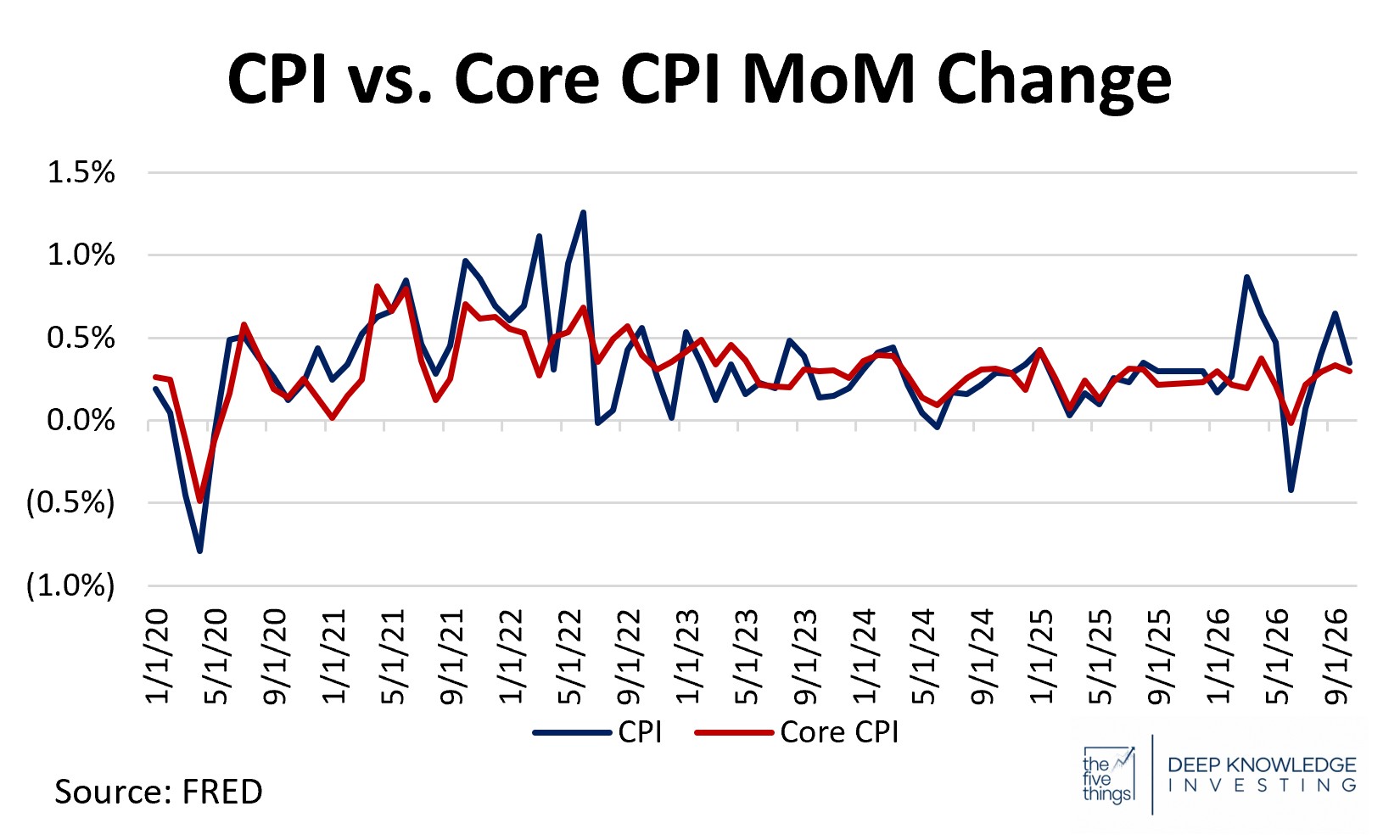
DKI Takeaway: I don’t think the Fed matters much here. Market commentators think the Fed controls interest rates because for most of our careers, the Fed had enormous influence. I think inflation is being driven by excessive spending in Congress, something that wouldn’t have changed regardless of which team won last week’s election. That excess spending is being funded by new debt which amounts to dollar creation. A larger number of dollars chasing the same number of goods leads to higher prices.
The Fed has enabled this, but they aren’t causing it. The bond market is correctly pricing in higher future inflation leading to higher yields on the 5-year Treasury which influences corporate borrowing rates and the 10-year Treasury which influences mortgage rates. So, the Fed will hike and it won’t matter.
2) Anthropic Files for an IPO:
Anthropic will seek just over a $1.3T valuation in its IPO. In a filing published on Tuesday, the company noted that it would sell 825MM shares between $70-$78/share. Anthropic would raise $61B at the midpoint and plans to raise an additional $26B from other companies like Google and AMD. Shares are expected to start trading next Thursday, listing on the Nasdaq under the ticker $ANT.
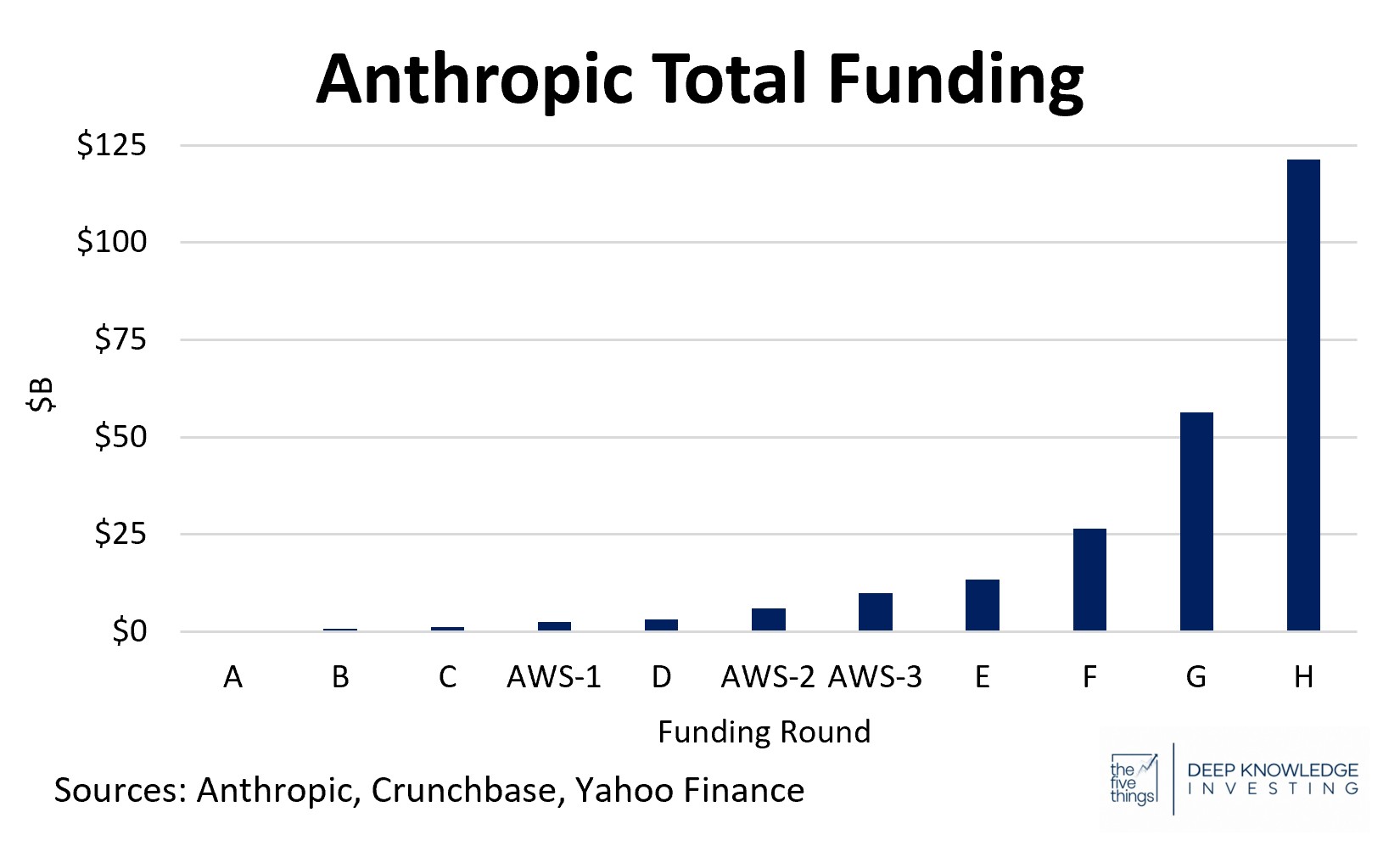
DKI Takeaway: Anthropic is moving ahead with its IPO amidst an unfavorable environment for the AI trade. The midterm results have raised concerns over slowdowns in data center development. The lack of a positive financial return on massive investments coupled with heavy capital needs and increased debt has caused investors to worry about industry sustainability. Investors have rotated out of tech and into more defensive sectors. As a result, Anthropic is set to IPO well below the $2T valuation it initially targeted, while rival OpenAI barely hit half of its funding goal last week. We remind everyone that Anthropic listed its AI causing the extinction of humanity as a risk factor in the registration statement.
3) Nvidia CEO Jensen Huang Resigns Over Multiple Affairs, but Who Wins?:
Jensen Huang, the star CEO who built Nvidia into the world’s leading AI company, was forced out by his Board this week. Let’s go over what we know, what we suspect, and what’s not proven yet.
What we know:
Huang has admitted to an affair with Alice Huang, a Megaspeed executive. He has also admitted to an affair with an Nvidia executive who reports directly to him. (There may have been an affair with another Nvidia employee as well.) This is a violation of company policy. We also know Huang retained a PR firm that specializes in sex scandals and asked Nvidia insiders to Cc them. Months ago, a short seller was able to confirm the affair with Alice Huang by speaking with people at Nvidia. The Board either knew there were issues long before this week, or should have known.
What we suspect:
Megaspeed buys GPUs in Singapore and rents them to companies. It seems likely that a large part of Megaspeed’s operations involved renting high-end Nvidia products to Chinese companies in order to circumvent US export regulations. Nvidia stopped reporting sales in Singapore last quarter. This doesn’t prove anything, but the timing is suspect. I have been saying since January of 2025 that China has been successful in evading GPU restrictions partly by renting capacity in other countries.
What’s not proven:
There are allegations that Alice Huang is a Chinese spy. While China has been using honeypot traps on US researchers, businessmen, and politicians for years, as of now, I’ve seen no conclusive evidence that Huang is connected to the CCP.
What’s not true:
There have been some who have expressed concerns that in the event of a divorce, Jensen Huang’s wife would own enough Nvidia stock to influence the company. I am not going to speculate on the future of the Huang marriage or on what Mrs. Huang might request and receive. However, Jensen owns roughly 3 ½ % of Nvidia stock and these aren’t super-voting shares. Control of Nvidia is not a concern.
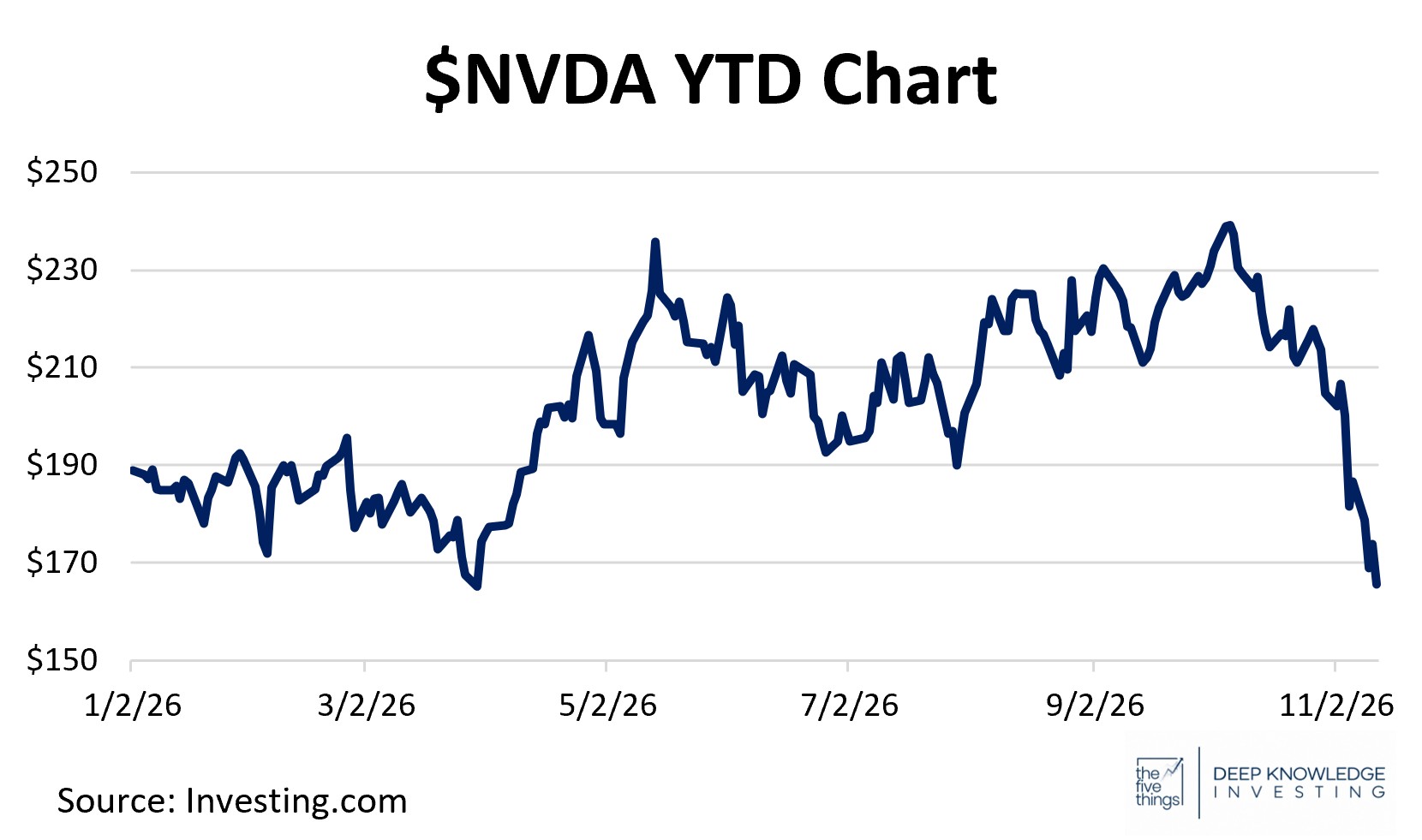
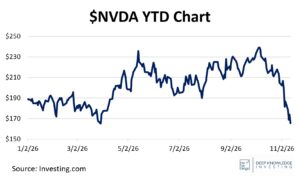
DKI Takeaway: Nvidia insiders have known about at least some of the above for a year. A short seller wrote about one of the affairs months ago. I wrote about China evading export restrictions using third-country rental companies almost two years ago. So, the question we should be asking is why is all of this news coming out now? The best answer I’ve seen is it relates to the US election that happened the week before the Huang news became widely-disseminated. Democrats ran on an anti-AI anti-data center platform that was popular with voters and contributed to their victory. The CEOs of OpenAI and Anthropic are on the far left politically. They’re also asking for more regulation of their industries. This past summer, I wrote that their cries for regulation aren’t about public safety. If that were the case, they could slow down development on their own. It’s common for big companies in an industry to ask for more government regulation. While it tends to make their business less profitable, it prevents new competition from gaining ground as upstarts have to face impediments that the big companies didn’t when they were small.
More importantly, Huang has been advocating for open weight models while OpenAI and Anthropic want controlled closed models. In my opinion, one of the biggest dangers of AI is it gives people “the answer” instead of directing them to primary sources. When you can download a model and adjust its parameters, you have some control over how it works and privacy in its operation. Closed AI models like the kind at OpenAI and Anthropic can provide effective censorship without actually banning the “wrong” answer.
Huang had earned himself the moniker “The Godfather of AI”. Taking him out of the most important company in AI is a huge win for China as they develop their own capabilities. Losing the best advocate we have for open computing is potentially a loss for all of us.
Credit to Quoth the Raven for being both early and right on this situation. All along, he has said that there would be more to this story than extra-marital sex. We’ll all be watching to see what assumptions are in Nvidia’s agreements to invest in and fund the operations of many of the company’s customers.
4) FDA Warns of Vision Loss Risk Linked to GLP-1 Drugs:
The FDA is requiring a class-wide label warning on every GLP-1 for an optic nerve condition called NAION. NAION is a rare optic nerve condition that can cause painless vision loss in one eye. It is permanent and has no known treatment. The agency said NAION cases have been reported in every GLP-1 on the market, and there could be an increased risk between the two. The warning is not a recall or a black box. It is a label change meant to flag risks for potential users.
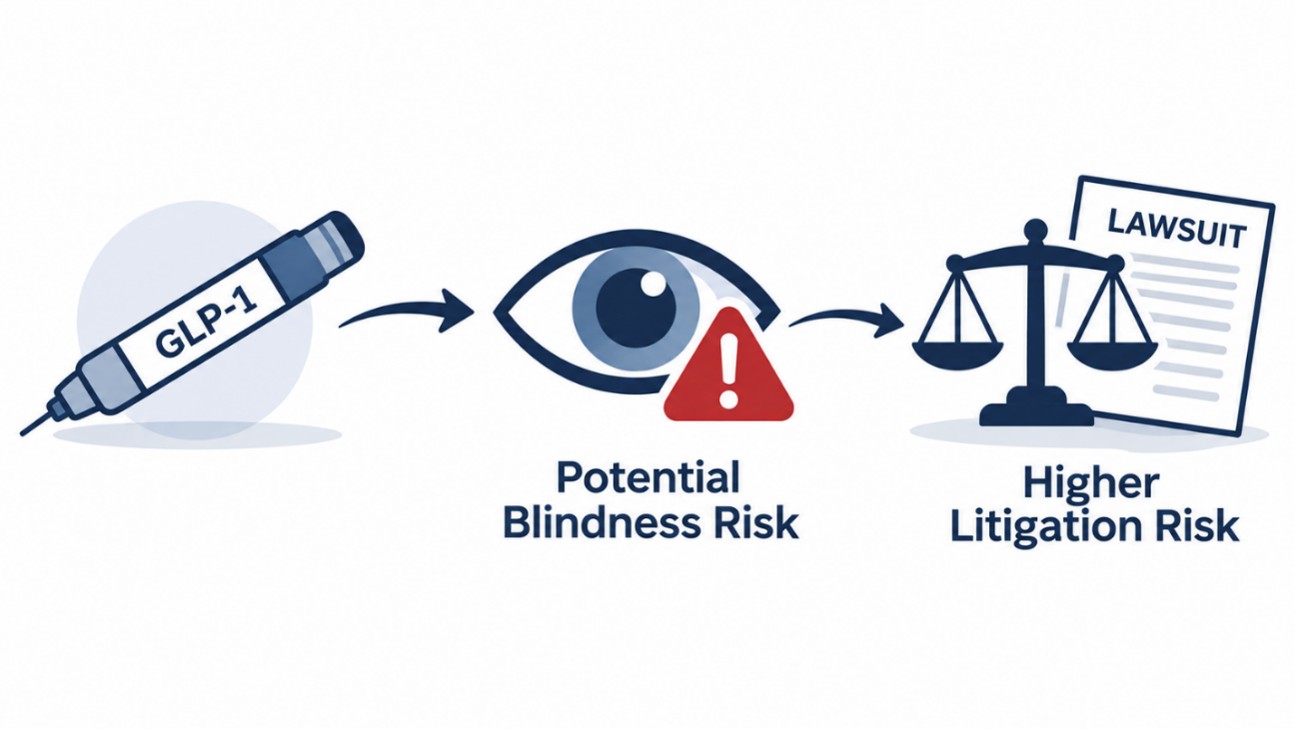
DKI Takeaway: This is a disclosure event and not a demand shock. The U.S. is catching up on a risk that has been disclosed elsewhere. Novo already added the warning to its European Wegovy and Ozempic labels in June, and it also appears in Australia. The real risk is potential litigation, not a lack of demand from the label. At least 4,000 claims alleged vision loss as of September, and a formal FDA warning gives plaintiffs more to work with. For GLP-1 producers like Novo Nordisk and Eli Lilly, it means potential legal costs rather than fewer prescriptions, and the long-term GLP-1 growth story remains intact. DKI does not provide medical advice nor are we qualified to do so. If you are taking these drugs or want to do so, please discuss potential risk factors and trade-offs with your physician.
5) Educational Piece: Inverse and Leveraged ETFs:
Leveraged and inverse ETFs are funds built to magnify or reverse what the market does in a single day. A 2x leveraged fund is intended to give you two times the daily return of an index or stock. An inverse fund is intended to provide the opposite return, so you gain 1% for a -1% move in the index.
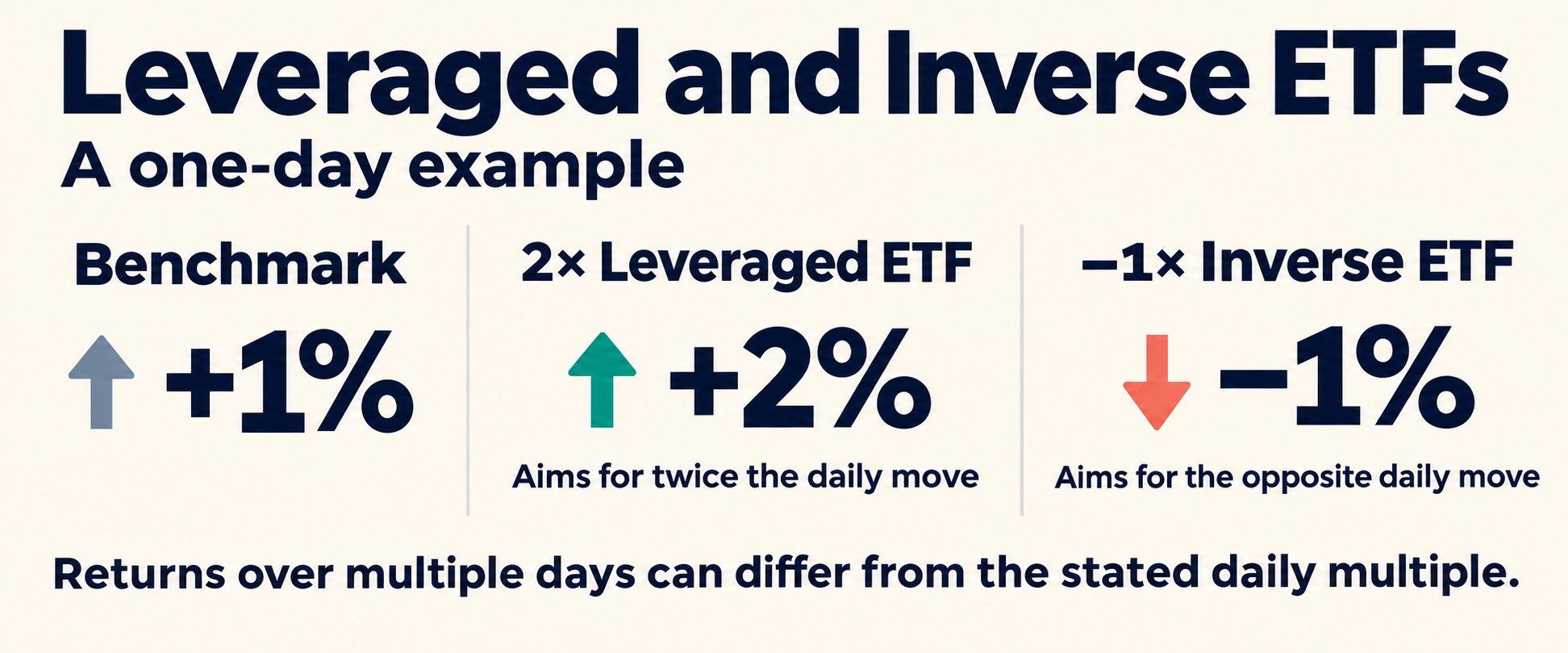
DKI Takeaway: The catch with these funds is that they reset every day, meaning there can be long-term tracking error. If you invest $100 into an index and $100 into a 2x fund intended to track that index, a 10% increase in day one followed by a 10% loss in day two results in a loss of 1% for the index and 4% for the 2x ETF. ($100*1.1*.9 = $99 for the index vs. $100*1.2*.8 – $96 for the leveraged fund) Due to this dynamic, volatile markets can result in losses even if the underlying index ends flat. In addition, many of these leveraged funds use options to create the additional exposure so option decay can add costs.
Information contained in this report is believed by Deep Knowledge Investing (“DKI”) to be accurate and/or derived from sources which it believes to be reliable; however, such information is presented without warranty of any kind, whether express or implied and DKI makes no representation as to the completeness, timeliness or accuracy of the information contained therein or with regard to the results to be obtained from its use. The provision of the information contained in the Services shall not be deemed to obligate DKI to provide updated or similar information in the future except to the extent it may be required to do so.
The information we provide is publicly available; our reports are neither an offer nor a solicitation to buy or sell securities. All expressions of opinion are precisely that and are subject to change. DKI, affiliates of DKI or its principal or others associated with DKI may have, take or sell positions in securities of companies about which we write.
Our opinions are not advice that investment in a company’s securities is suitable for any particular investor. Each investor should consult with and rely on his or its own investigation, due diligence and the recommendations of investment professionals whom the investor has engaged for that purpose.
In no event shall DKI be liable for any costs, liabilities, losses, expenses (including, but not limited to, attorneys’ fees), damages of any kind, including direct, indirect, punitive, incidental, special or consequential damages, or for any trading losses arising from or attributable to the use of this report.