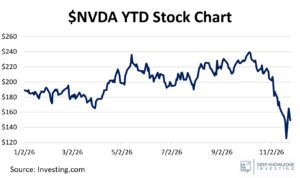
I’m in Tokyo for through mid-December when I’ll be heading to Bangkok, Thailand. Heading to Hiroshima for the weekend and will be back in Tokyo Sunday night. I’m open to a small number of in-person conversations. If you’re based locally, or know someone in those locations you think it would be worthwhile for me to meet, feel free to reach out privately at IR@DeepKnowledgeInvesting.com.
If you are interested in accumulating Bitcoin via mining, I’ve been mining with Simple Mining and it’s been a great experience. You can check them out here. It’s even easier than you think. It took me 30 minutes to set up the first miner and I’m already earning sats. It would take 5 minutes to set up the second. Ask Billy about why miners make money even when the dollar price of Bitcoin falls.
I hope everyone had a great Thanksgiving. If you’re reading this, I’m thankful for you. I’d also like to express special appreciation for our premium subscribers who make this publication worthwhile. Helping them with their portfolios is rewarding work. Please reach out if you’d like our assistance. We just added a new position this week.
This week, we’ll address the following topics:
- Regardless of the Facts, the Advice is the Same: Analysts said the Fed couldn’t hike due to high oil prices. Now, they’re saying the Fed can’t hike due to falling oil prices. We examine this “analysis”.
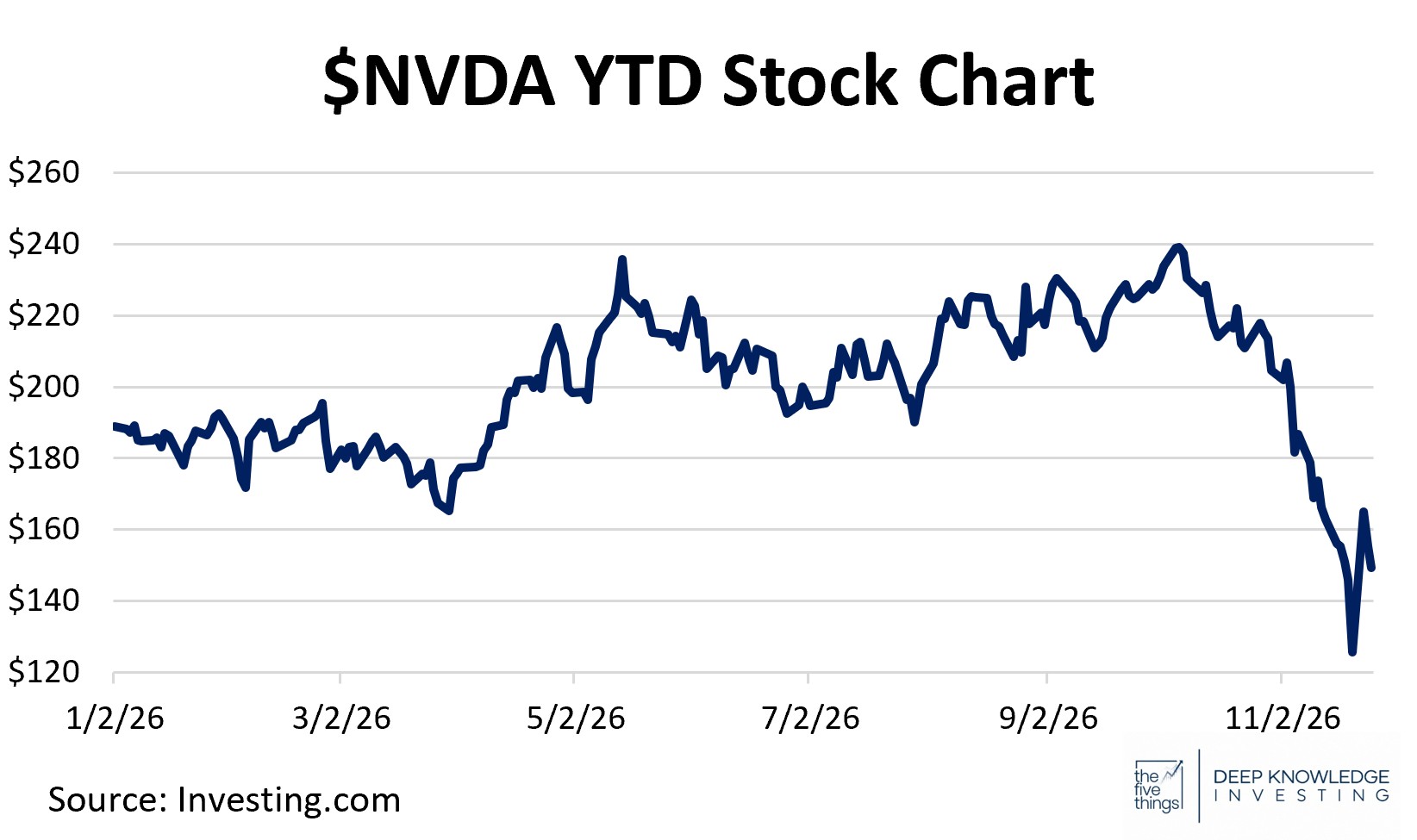
- Jensen Huang’s Return results in a trillion dollar gain in market cap. The thing I care about is open vs closed computing. I don’t want Sam Altman and Dario Amodei to determine “truth” for the rest of us.
- CrowdStrike Agrees to Acquire Zscaler in an effort to become a one-stop-cybersecurity shop. DKI likes the deal.
- Tesla and SpaceX Assemble Deal Teams on Merger Talks: This would be the largest merger in history by a huge margin. We cover the positives and risks of such a deal.
- Educational Piece: Revisiting Leveraged ETFs: The 3x inverse $NVDA funds were nearly wiped out on Monday. The value of these leveraged funds is approaching zero.
DKI is thankful for our two fantastic interns, Kunal Arora and Eli Killorin. I gave them the opportunity to take the holiday-shortened week off. They resolutely ignored the message and turned in their best draft ever. Please give them a mental round of applause as you read this week’s issue.
Ready for a week of same as it ever was at Nvidia? Let’s dive in:
1) When Opposite Events Lead to the Same Conclusion:
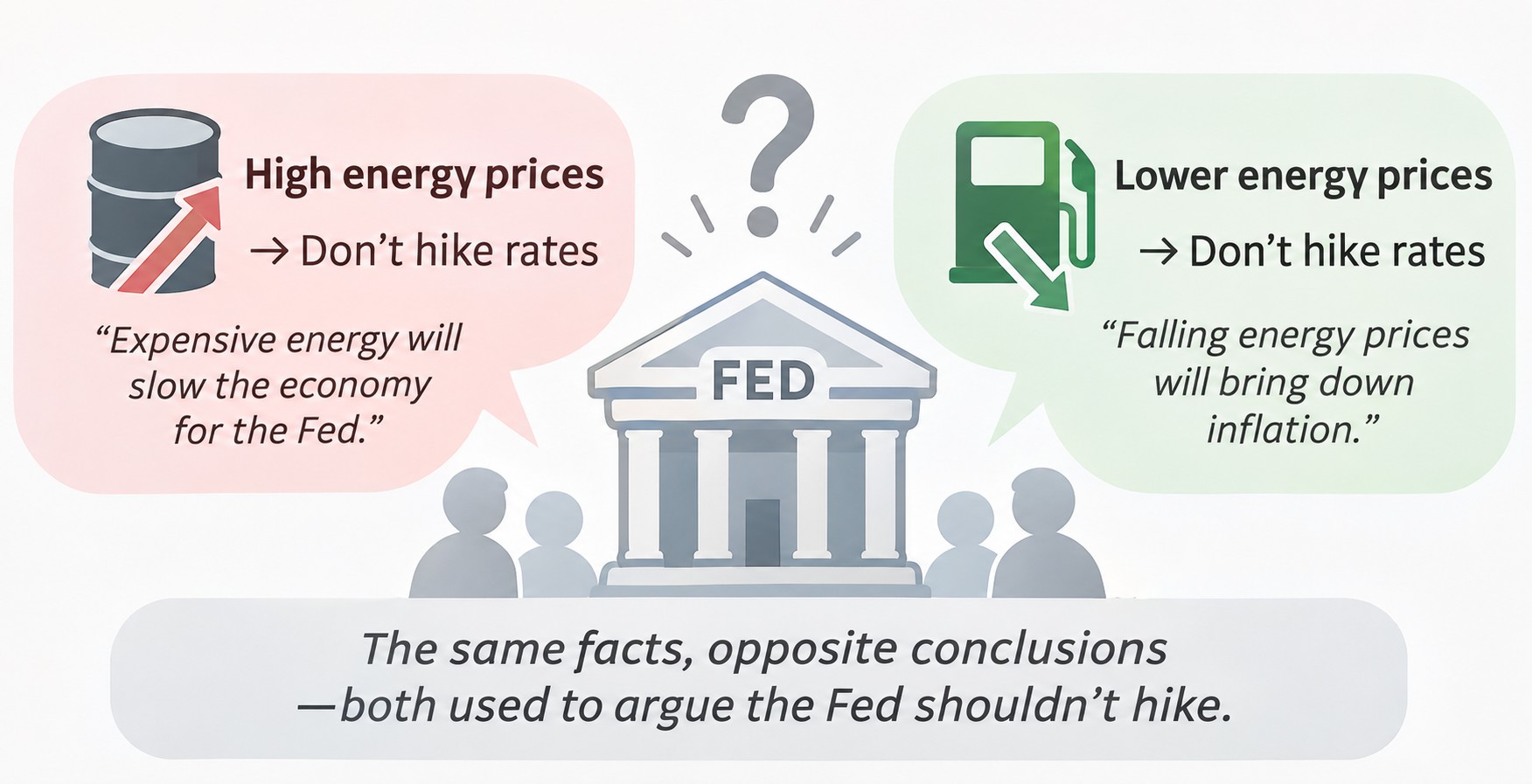
A couple of weeks ago, I wrote an article on the DKI blog titled Explanations After the Fact where I noted that the same facts are often used to explain two opposite effects. I’m now seeing the same thing related to inflation, energy prices, and the Federal Reserve. A few weeks ago, when the Fed was communicating that rate hikes were coming, it seemed like every commenter on X was saying that rate hikes would be a mistake. Analysts explained that inflation was high due to high oil prices, that high oil prices would slow the economy faster than rate hikes, and that you can’t print oil. Their point was that expensive energy would do the work of the Fed for them and that hiking into inflation caused by high oil prices risked crashing the economy. Now that oil prices have fallen, the same people are saying that this will lead to reduced inflation so the Fed shouldn’t hike. Opposite events with the same conclusion.
DKI Takeaway: In general, I’m not a fan of measures of inflation that exclude things people need to buy. People like to look at the Core CPI which excludes food and energy. While food and energy prices can be volatile, they are still expenses for every household. In addition, the Core CPI was still above the 2% target (which I continue to insist is 2% too high).
Finally, we’ve been above the 2% target for more than half a decade. At some point, people advocating for lower interest rates should acknowledge that they want the target moved to somewhere in the 3% – 4% range, or just admit they want low rates to prop up equity prices for the stocks they own.
The fact that the Fed hasn’t hiked aggressively in years tells me they’ve quietly raised the 2% target. The fact that cutting doesn’t lower borrowing rates tells me the bond market is pricing in higher long-term inflation. And the fact that people are saying that high oil prices and low oil prices both mean the Fed should cut is telling me they’ll bend the interpretation of every fact to get the conclusion they prefer for their own portfolio. For more detail on this topic, check out our blog post “Regardless of the Facts, the Advice is the Same”.
2) Nvidia Reinstates Jensen Huang as CEO:
There were a $trillion reasons why many/most $NVDA shareholders wanted Huang back in his old office. They don’t care about affairs. They do care about the stock price. The Board had an impossible choice. I’ve said before that the affairs weren’t the key consideration. (Worth noting that Huang disclosed additional affairs to the Board as part of coming clean about everything. That means there were at least 4 of them.) While not proven, it seems highly likely that Huang was using proxies like Megaspeed to circumvent US export restrictions on the best Nvidia AI accelerators. Technically, selling to Megaspeed wasn’t illegal when he did it, but knowingly using a third party to get product to Chinese developers isn’t legal. That’s the reason I (incorrectly) thought the Board couldn’t bring back the “Godfather of AI”.
President Trump changed that. If the President says the White House looked into it and they think no laws were broken and that they don’t think Huang was selling out the company and the country to a Chinese spy, then what do you do as a member of the Board? I know – everyone has their skeptical hats on here, but the only reason selling high-end GPUs to China is illegal is because the White House says it is. The Biden Administration had rules regarding which processors could and couldn’t be sold to Chinese companies. The Trump Administration has similar rules. I’m not saying the optics here are good. (The optics here are terrible.) I’m saying if the White House says Huang selling GPUs to Megaspeed is legal, then the Board has to assume it’s legal. Once that’s established, they had sidelined a trillion-dollar CEO because of extra-marital affairs.
DKI Takeaway: I don’t think the real issue here is adultery or Alice Huang’s relationship with her government. I think the key issue is open vs closed computing. The heads of OpenAI and Anthropic call themselves “effective altruists”. It’s a political philosophy where they believe they should determine the best use of resources for the public good. Except their idea of “best” may differ from your opinion or mine. OpenAI and Anthropic prefer a world where they control the models which users can access only on their platform. Their AI provides the answers and has access to all of our personal and professional data. They are the gatekeepers to knowledge and the source of truth. I don’t want anyone from any political party to have this level of control over information and our data.
Jensen Huang is an advocate for open computing. He favors many models competing with each other. Users have the ability to download open weight models, to adjust the parameters, and to run them on their own private hardware. There is no individual repository for truth (or a duopoly). There is competition and individual preference. I prefer this vision.
For more details on this, please check out our blog post, “Nvidia Rehires Jensen Huang”. What do you think? What would you have done if you were a member of the Nvidia Board of Directors? Who worries you more; Jensen, or Sam and Dario?
3) CrowdStrike Agrees to Acquire Zscaler for $44B:
CrowdStrike has agreed to buy Zscaler in an all-stock deal worth $44B. Zscaler is a cybersecurity company that provides software, cloud infrastructure, and policy engines to form a zero-trust architecture. The company’s products protect over 50% of Fortune 500 companies. This makes it the largest cybersecurity acquisition on record. The deal is expected to close in the second half of 2028, pending shareholder and regulatory approval.
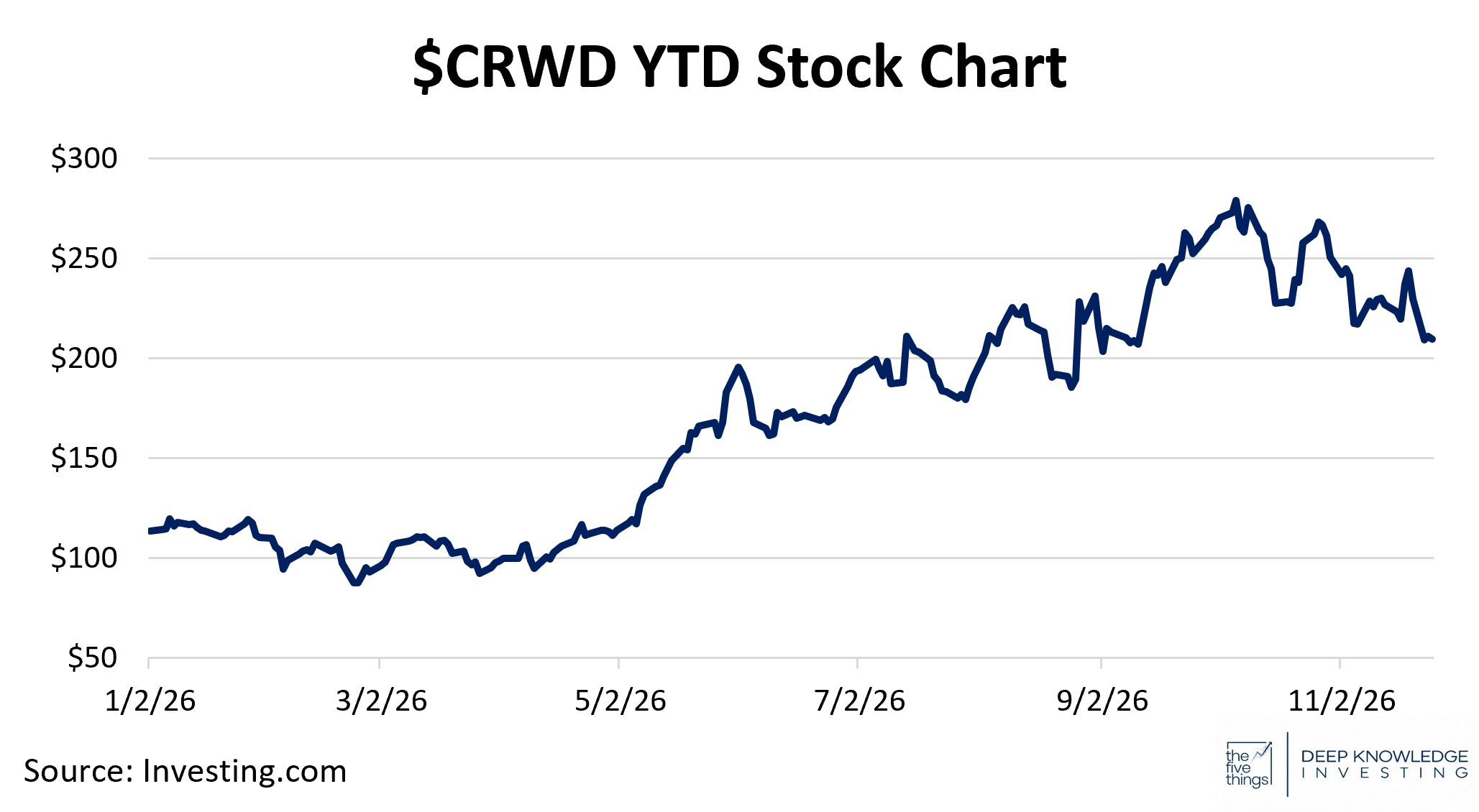
DKI Takeaway: This move pushes CrowdStrike into the one big market it was missing: network security. By acquiring Zscaler, CrowdStrike can skip years of building its own product and gain a large customer base. CrowdStrike is pitching customers on a single platform that covers everything, and competitors like Palo Alto have been buying their way towards a similar goal. Deals like this give the largest players the scale to offer a one-stop-shop model. As AI makes cyberattacks more difficult to stop, more deals of this kind could follow.
4) Tesla and SpaceX Assemble Deal Teams for a Potential Merger Worth up to $3.5T:
Tesla and SpaceX have each formed special committees of independent directors (3 from Tesla, 2 from SpaceX) to negotiate what may become the biggest merger in history. The talks cover a potential all-stock merger with a combined value of up to $3.5T. Goldman Sachs and Morgan Stanley are advising SpaceX while Evercore is advising Tesla. The investment banks will be fine-tuning financial models to work on negotiating positions for each side. No official agreement has been announced, but one could come by the end of the year.
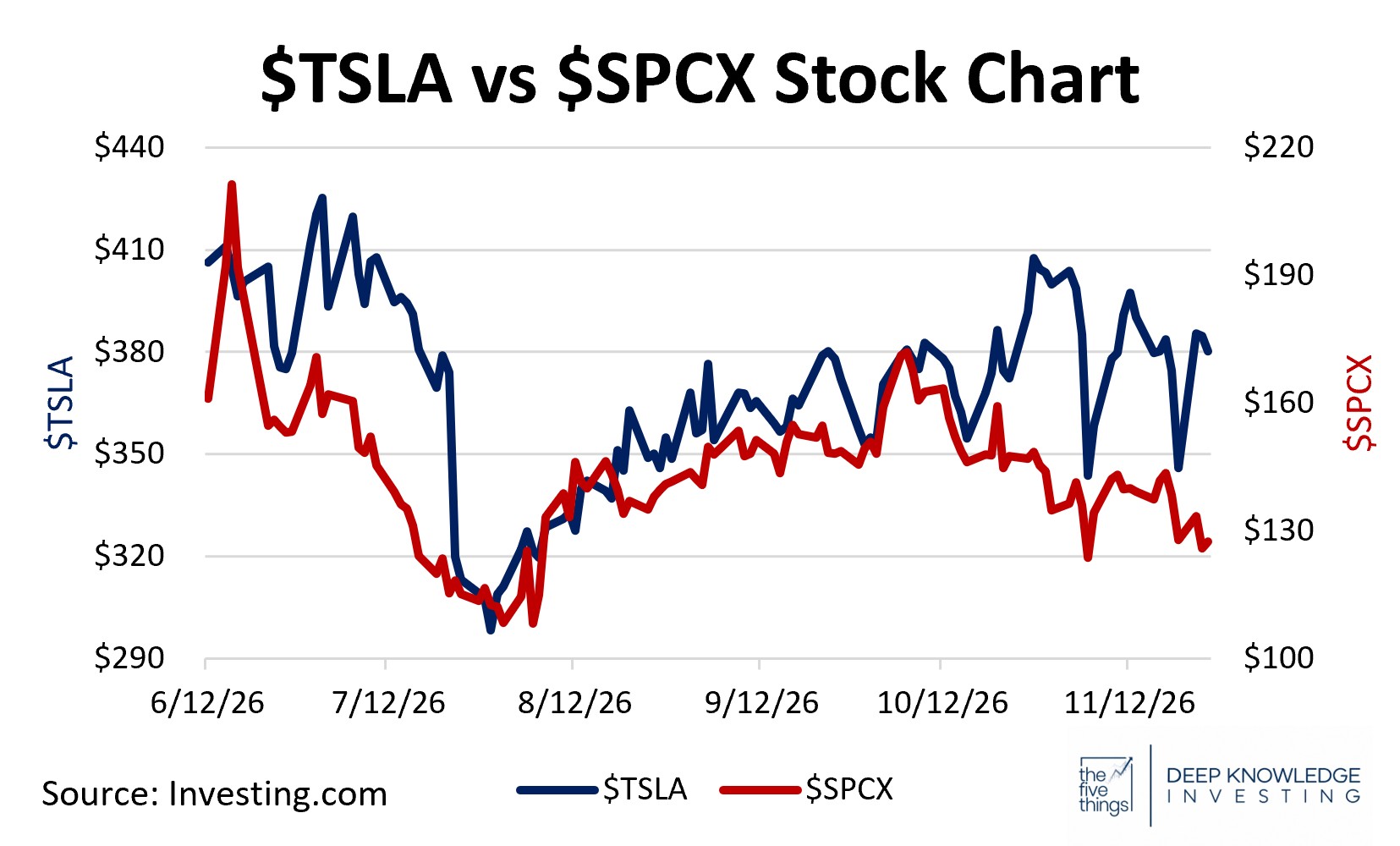
DKI Takeaway: Pros of the merger would include alignment on AI across autonomous vehicles, xAI, and Optimus (Tesla’s humanoid robot development). The companies already supply some technology for each other, and bringing everything under one roof would remove operational hurdles. However, the long-term visions of the two differ. Tesla is focusing on autonomous driving and advanced robotics, while SpaceX is scaling space launches, Starlink capacity, and Grok AI (built by xAI). Both agendas would compete for the same capital, so how the combined company is structured would influence how resources get split. For Tesla shareholders, SpaceX’s extreme valuation means the merger would heavily dilute their ownership in the combined company and allow Elon Musk to gain more control (he has 13.5% voting power in Tesla compared to 85% in SpaceX). For SpaceX shareholders, it could speed up the company’s entry into the S&P 500 by passing the index’s profitability requirement, thereby triggering buying from funds tracking the index.
5) Educational Piece: Revisiting Leveraged ETFs:
A few weeks ago, DKI covered Leveraged and Inverse ETFs. As a quick recap, these are investment instruments used to deliver a multiple of an asset’s daily return. For example, a 2x fund targets twice the daily move and a 3x inverse fund targets three times the opposite move. Monday’s $NVDA trading showed how this can go wrong. Nvidia stock rose more than 30% on the return of Jensen Huang, and two London-listed 3x inverse Nvidia ETPs (exchange-traded products) got crushed. One from GraniteShares lost 92% during the day, and the one from Leverage Shares lost around 81%. GraniteShares ($3SNV.L ) is shown below.
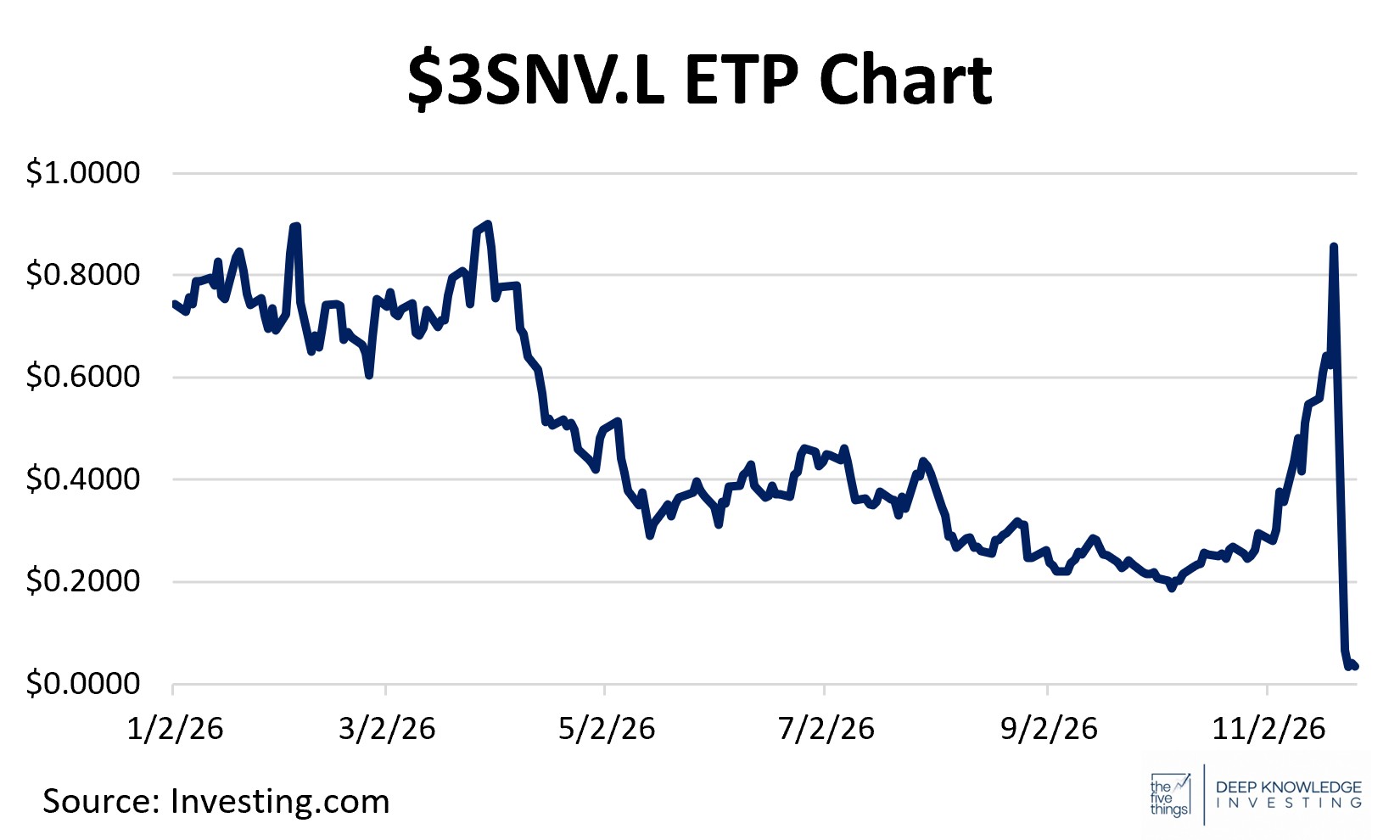
DKI Takeaway: The catch with these funds is that they reset every day, meaning there can be a long-term tracking disparity, and a big move in a single day can do even more damage. The chart above shows both. The fund fell from about $0.75 to about $0.20 over most of the year, then rose to roughly $0.85 as Nvidia stock declined. When Nvidia jumped 34% in one session, the fund fell back to just a few cents, a loss of around 92%. A 3x inverse fund loses about 3% for every 1% the stock rises, so a one-third rally wipes out the equity.
A second risk relates to mathematics. If you invest $100 in a 3x inverse fund and the stock falls 10%, you have $130. If the stock then rises 11.11%, you lose a third of your equity and end with $86.67, even though the stock finished flat across the two days. Due to this dynamic, volatile markets can result in losses even if you are right about the direction of the stock.
Information contained in this report is believed by Deep Knowledge Investing (“DKI”) to be accurate and/or derived from sources which it believes to be reliable; however, such information is presented without warranty of any kind, whether express or implied and DKI makes no representation as to the completeness, timeliness or accuracy of the information contained therein or with regard to the results to be obtained from its use. The provision of the information contained in the Services shall not be deemed to obligate DKI to provide updated or similar information in the future except to the extent it may be required to do so.
The information we provide is publicly available; our reports are neither an offer nor a solicitation to buy or sell securities. All expressions of opinion are precisely that and are subject to change. DKI, affiliates of DKI or its principal or others associated with DKI may have, take or sell positions in securities of companies about which we write.
Our opinions are not advice that investment in a company’s securities is suitable for any particular investor. Each investor should consult with and rely on his or its own investigation, due diligence and the recommendations of investment professionals whom the investor has engaged for that purpose.
In no event shall DKI be liable for any costs, liabilities, losses, expenses (including, but not limited to, attorneys’ fees), damages of any kind, including direct, indirect, punitive, incidental, special or consequential damages, or for any trading losses arising from or attributable to the use of this report.