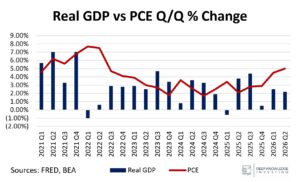
On Friday, Federal Reserve Chairman, Kevin Warsh, spoke at Jackson Hole. He reiterated a commitment to the 2% inflation target and noted that inflation isn’t under control. Most importantly, he acknowledged that the current policy isn’t restrictive. His predecessor, Jerome Powell, used to comment often that he thought Fed policy was restrictive. Most saw the speech as hawkish and the probability in betting markets of a September rate hike rose. While some argued the speech wasn’t hawkish, markets disagreed and moved in a way I found interesting.
I want to note that any discussion of the Federal Reserve, inflation, and interest rates depends on data that isn’t accurate. The CPI is intentionally understated as Owners’ Equivalent Rent understates the cost of shelter, the largest item in the CPI. The unemployment rate is understated as it excludes people the government pays to avoid working. Each time the government increases benefits, it competes with employers for the pool of unemployed people. I’d prefer to see people focus on the labor force participation rate rather than the unemployment rate. GDP benefits from government spending whether that spending is constructive or destructive. So, we’re all working from bad data.
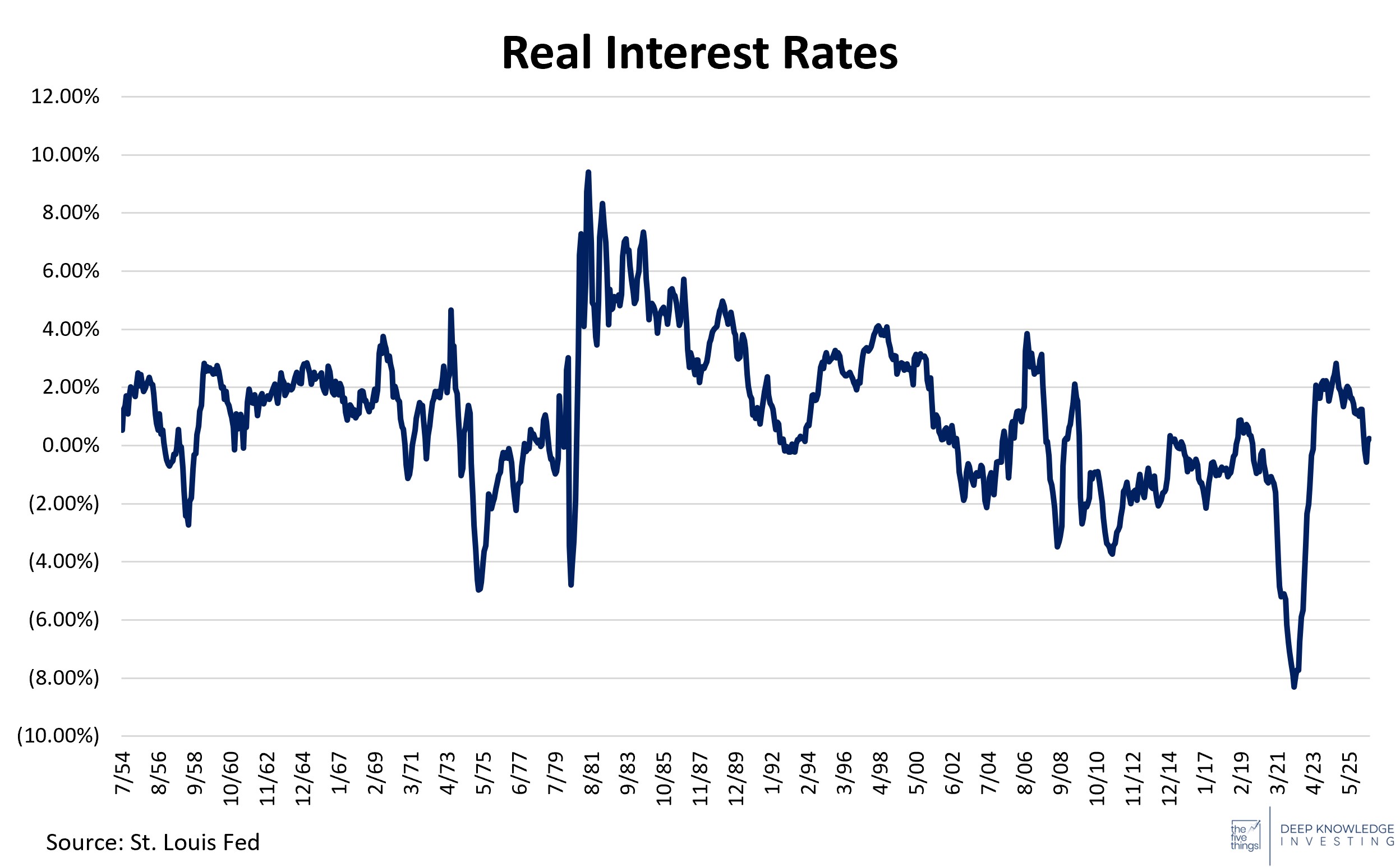
Let’s start with Warsh’s most significant comment; that current policy isn’t restrictive. He’s right and I spent the past few years arguing that Chairman Powell was wrong when he kept claiming otherwise. When we look at the real rate of interest (the fed funds rate less inflation), it’s around zero. Any money someone lends gets paid back in dollars that have reduced purchasing power, and when the real rate is below 2%, we tend to get a lot of misallocation of funds. That’s why we end up with “zombie companies”. These are businesses that have failed and have no value, but because the debt on the business has a low interest rate, haven’t been forced into bankruptcy yet. Instead of allowing failure and recycling that capital into something that could succeed, real rates around zero encourage wasteful capital allocation.
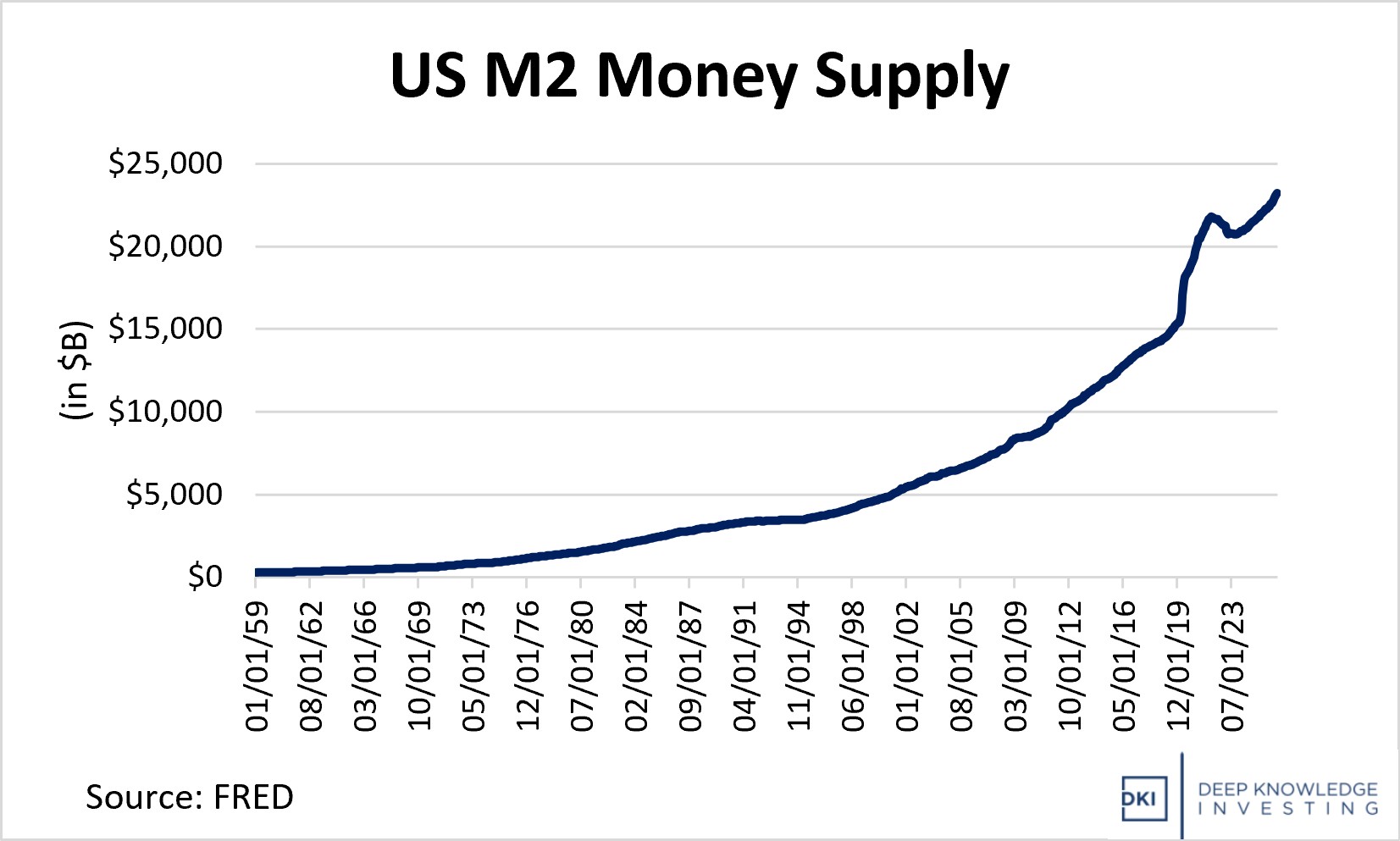
I’ve been saying for years that the Fed is trapped. Politicians and citizens look to them to get inflation under control, but inflation is being caused by overspending in Congress. It’s a bipartisan problem. When Congress overspends by a few trillion dollars a year and finances that with more debt, it causes an expansion of the money supply which is the real definition of inflation. As more dollars caused by this constant stimulus spending chase the same amount of goods, prices rise which is how most of us think about inflation.
Many think the Fed controls interest rates. They do not. They control the overnight rate. The bond market controls the rest of the yield curve. This is why the Fed can’t get real borrowing rates lower. They started a cutting cycle two years ago, and the yield on the 10-year Treasury and the 30-year Treasury are higher. If the Fed could control rates, they’d be lower. Instead, as the Powell Fed cut, the bond market priced in higher future inflation and reduced prices (increasing the yield) on long-dated bonds. Seen another way, Warsh can cut the fed funds rate, but he can’t stop this:
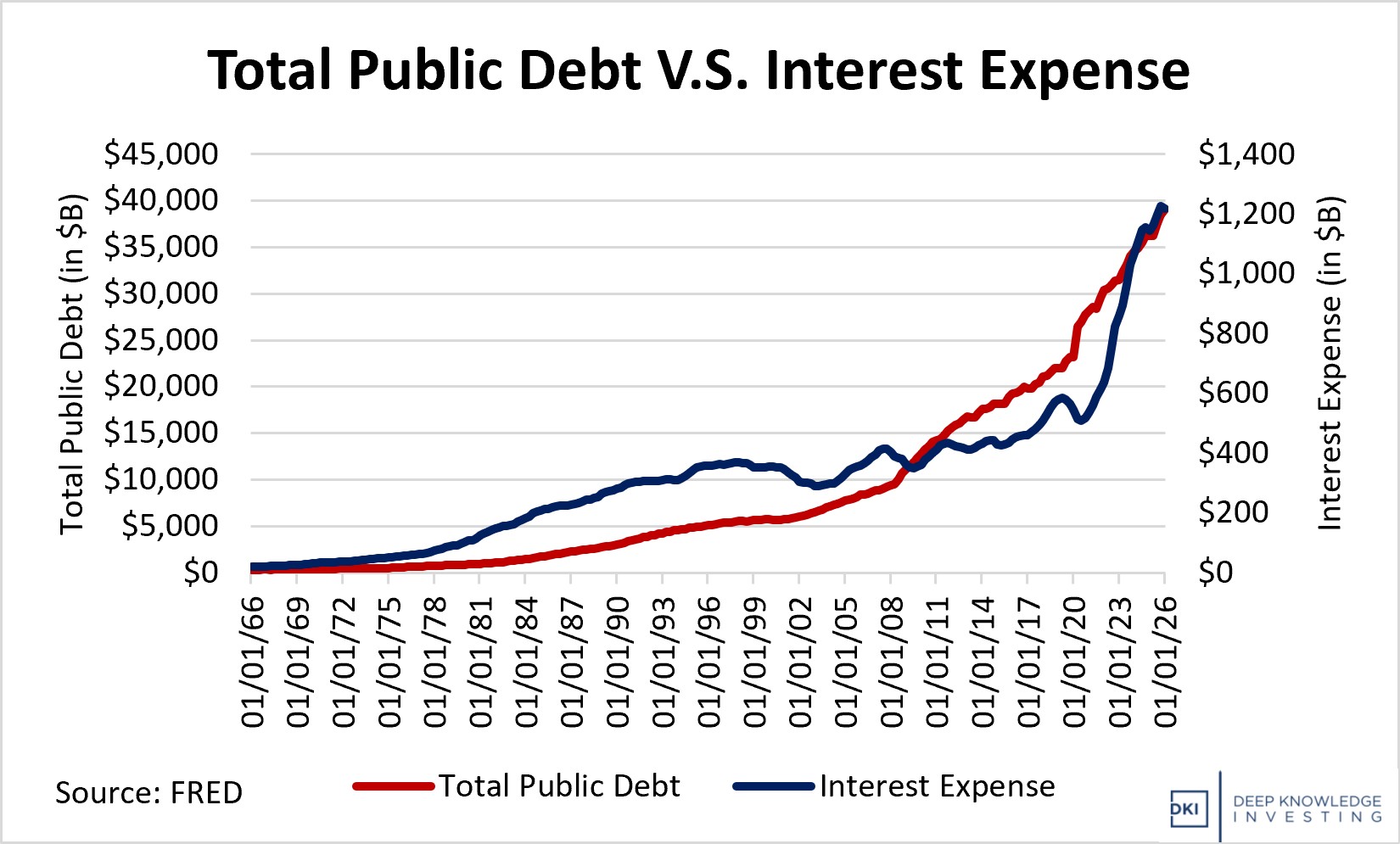
The debt will increase by trillions of dollars a year. Interest expense will increase exponentially as low-yielding debt matures and is replaced by larger amounts of higher-yielding debt. This will be financed by more debt and when there’s a crisis, Congress will respond with more stimulus. Its antidote to poison is always more poison.
Warsh is right. Current policy isn’t restrictive at all and he should be hawkish (or at least trying to talk the bond market into doing his work for him). So, what would be expect to see during and immediately after Warsh’s speech? I think it’s exactly what we saw. In my opinion, the bond market got it right and the hard asset market got it wrong. Let’s explain with charts.
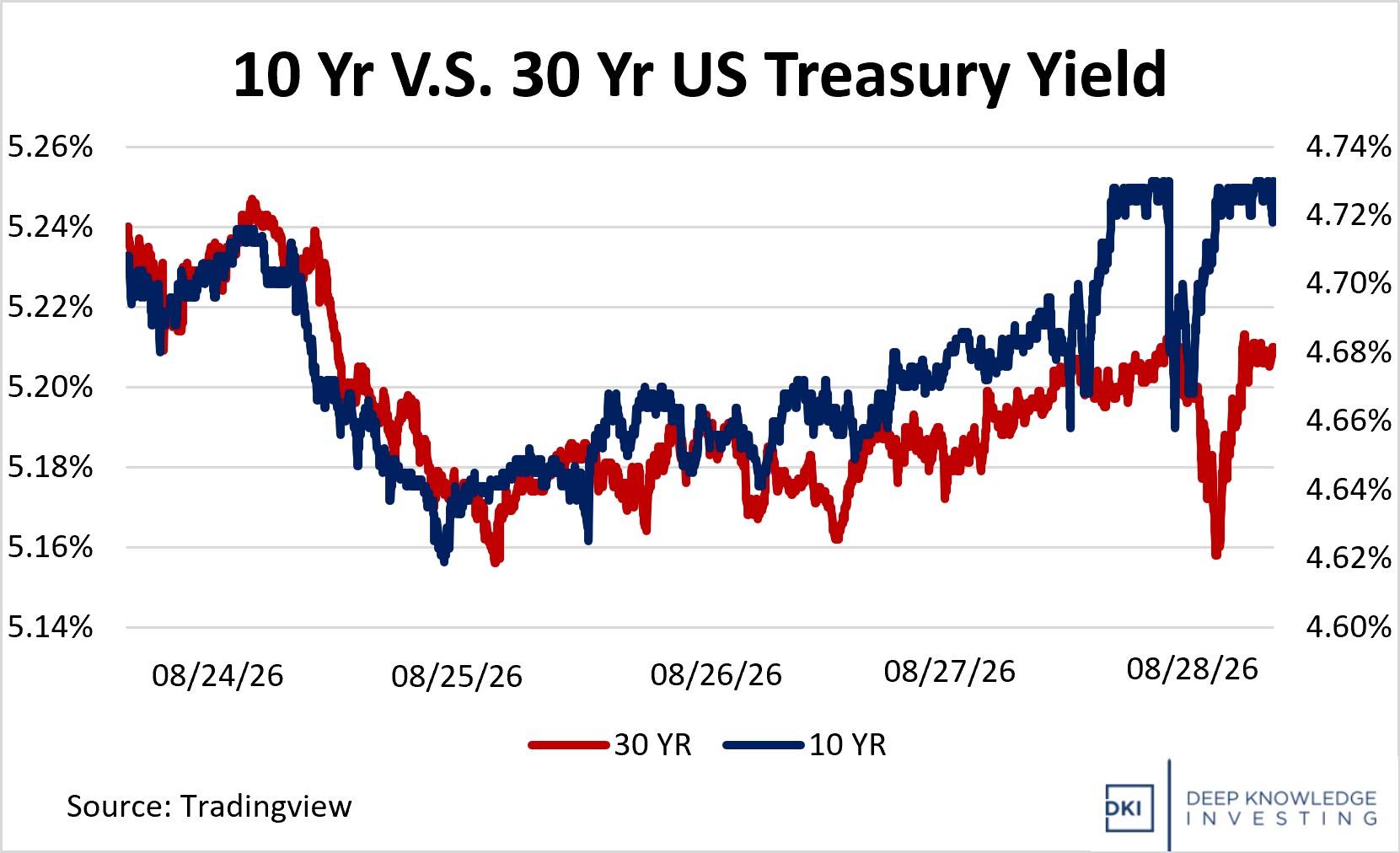
We can see the yield on the 10-year and the 30-year fall during Warsh’s speech and then immediately recover. Both ended Friday barely changed (less than 2bp which is 0.02%). The bond market realizes that a 25bp (.25%) change in the fed funds rate will have no effect on the debasement of the dollar.
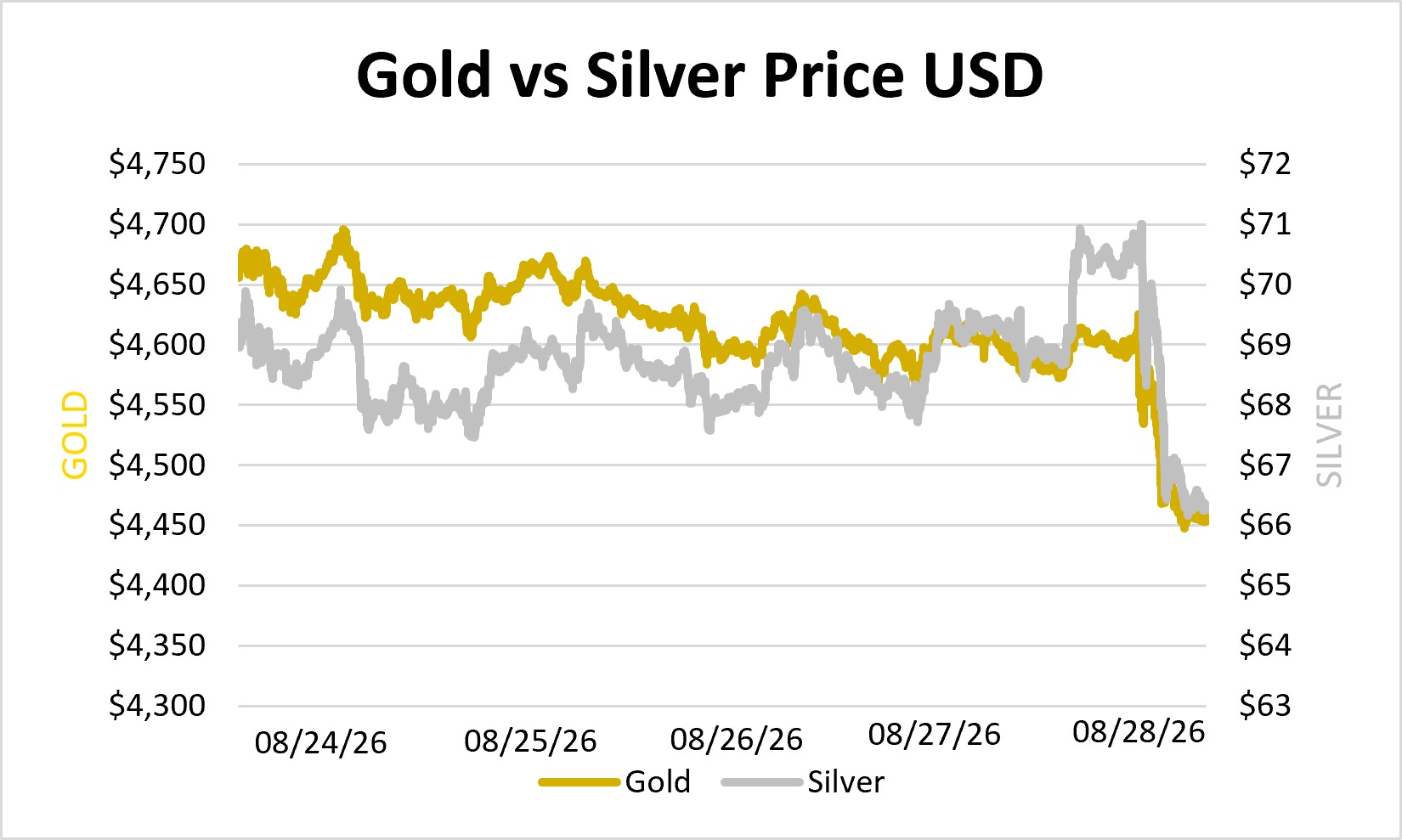
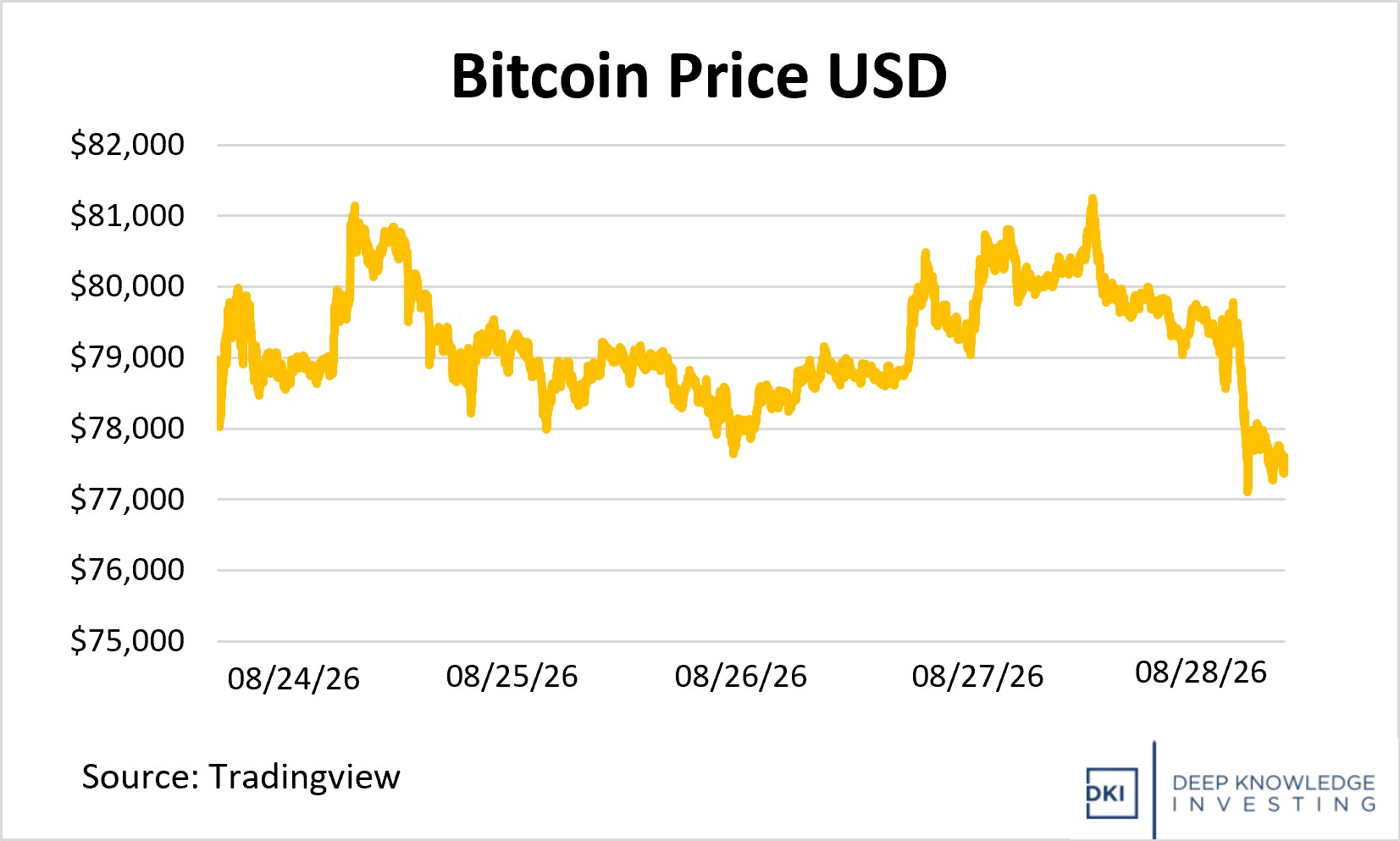
While some argued that Warsh’s speech wasn’t hawkish, hard assets disagreed. Gold was down more than 3% on Friday and silver was down more than 4%. Bitcoin dropped more than 3%. The thinking there is that these are assets with no yield. If the Fed Chair is indicating he’s leaning hawkish (favoring higher rates), then Treasuries become relatively more attractive. The more the US Treasury is willing to pay (has to pay) to induce investors to hold them, the easier it is for that asset to pull funds from other no-yield assets.
While I understand this reaction, I disagree with it. In this case, Warsh and the Treasury have to pay more to incentivize investors precisely because these investors know they’ll be paid back in dollars with reduced purchasing power. Dollars are not being created with actual effort; but rather, at the push of a button. That button is being pushed trillions of times a year and is real inflation. The answer to that is to own assets that are difficult to reproduce; assets that take effort and energy to create the next unit.
Your tl;dr version: Warsh told the truth on Friday. Current policy isn’t restrictive. There’s nothing he can do to stop the expansion of the money supply. Own hard assets.
Acknowledgements: DKI Interns Eli Killorin and Kunal Arora contributed to this report. Their work ethic, professional conduct, and strong intellect are assets to Deep Knowledge Investing.
Information contained in this report is believed by Deep Knowledge Investing (“DKI”) to be accurate and/or derived from sources which it believes to be reliable; however, such information is presented without warranty of any kind, whether express or implied and DKI makes no representation as to the completeness, timeliness or accuracy of the information contained therein or with regard to the results to be obtained from its use. The provision of the information contained in the Services shall not be deemed to obligate DKI to provide updated or similar information in the future except to the extent it may be required to do so.
The information we provide is publicly available; our reports are neither an offer nor a solicitation to buy or sell securities. All expressions of opinion are precisely that and are subject to change. DKI, affiliates of DKI or its principal or others associated with DKI may have, take or sell positions in securities of companies about which we write.
Our opinions are not advice that investment in a company’s securities is suitable for any particular investor. Each investor should consult with and rely on his or its own investigation, due diligence and the recommendations of investment professionals whom the investor has engaged for that purpose.
In no event shall DKI be liable for any costs, liabilities, losses, expenses (including, but not limited to, attorneys’ fees), damages of any kind, including direct, indirect, punitive, incidental, special or consequential damages, or for any trading losses arising from or attributable to the use of this report.