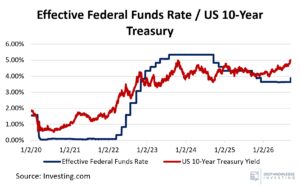
I’m still in Antigua, Guatemala where the weather is beautiful and I was woken up at 1am by the second earthquake in two weeks here. If one of you has upset a volcano, please apologize.
The Federal Reserve kept the fed funds rate unchanged. Many expressed concern regarding the three dissenters who wanted a 25bp hike. I think a difference of opinions is healthy. I also think they should just send everyone home and let the bond market set interest rates. #EndTheFed. Apple is lobbying the US Government for permission to use Chinese DRAM. Micron has concerns about their sales. I have concerns about relying on Chinese hardware. Nvidia is in talks to guarantee and/or fund $600 BILLION of OpenAI spending. I think this is a terrible idea. The market agreed and sent the entire tech sector down. CXMT has a successful IPO and starts producing memory for X86 CPUs instead of Nvidia GPUs. DKI has been writing about and investing for the shift from training to inference since last year. We explain below. The big US tech firms have good quarters, but the stock market is now calculating the probability of earning a return on massive and growing AI cap-x before deciding whether to buy or sell. In this week’s educational topic, we discuss rights and warrants and discuss how DKI subscribers just made a great return in contingent value rights (CVRs).
This week, we’ll address the following topics:
- The Fed holds with multiple hawkish dissents. Some complain that new Chairman Warsh says little. DKI replies it doesn’t matter what he says. We explain below.
- Micron raises DRAM prices due to massive demand. Now, Apple wants to use Chinese DRAM supply. There are security concerns.
- Nvidia is in talks to guarantee a $250B OpenAI data center and to finance $350B of GPU purchases. OpenAI has shown no ability to earn a return on hundreds of billions of dollars of spending. The deal was bad enough to take down the entire sector.
- CXMT is producing memory for X86 CPU makers, Intel and AMD, implying they agree with DKI’s thesis regarding the beneficiaries of the shift from training to inference.
- The big tech firms report strong results, but see their stock prices move up or down based on evidence that their AI spending will become profitable.
- In this week’s educational topic, we discuss rights and warrants. We also highlight an excellent return made by DKI subscribers in a contingent value right.
DKI’s interns, Kunal Arora, Eli Killorin, and Param Shaw not only continue to be meaningful contributors; but also, improve their efforts each week. We are fortunate to have all three of them and applaud their considerable contributions to each week’s 5 Things issue.
Ready for a week of not caring what Chairman Warsh says to the press? Let’s dive in:
1) Fed Holds Rates Steady:
The Federal Reserve concluded its July meeting and elected to keep the fed funds rate unchanged. Wall Street had a meaningful probability on a small rate hike (around 33%). While I understood the logic, and would have voted to hike had I been in the room, I was on record saying I thought they’d hold. I cited uncertainty about the war in Iran and the subsequent effect on energy prices. The logic for a hike is continued high inflation even when backing out energy prices combined with a continued strong labor market. I agree with this logic. The reason I thought the Fed would hold is high energy prices contain their own solution as usage declines with higher prices. As many have pointed out in recent days, you can’t print more oil. In addition, the issue right now isn’t just the Strait of Hormuz; but rather, limited refining capacity leading to high crack spreads. A change in interest rates won’t affect that.
There were three dissents from Fed Governors who wanted a 25bp (.25%) increase in the fed funds rate. In the past year, there has been concern in the press about the growing number of dissents in Fed meetings which typically “feature” unanimous votes. I view the dissents as healthy and welcome. If everyone has the same opinion on everything all the time, then why do we need an Open Market Committee? The whole point of having voting members from all over the country is to get differing points of view. There should be disagreements and competing priorities. This was something Warsh addressed in a positive manner in his press conference. (In fairness, I believe the Fed shouldn’t exist at all, but if we’re going to have one, then there should be competing ideas.)
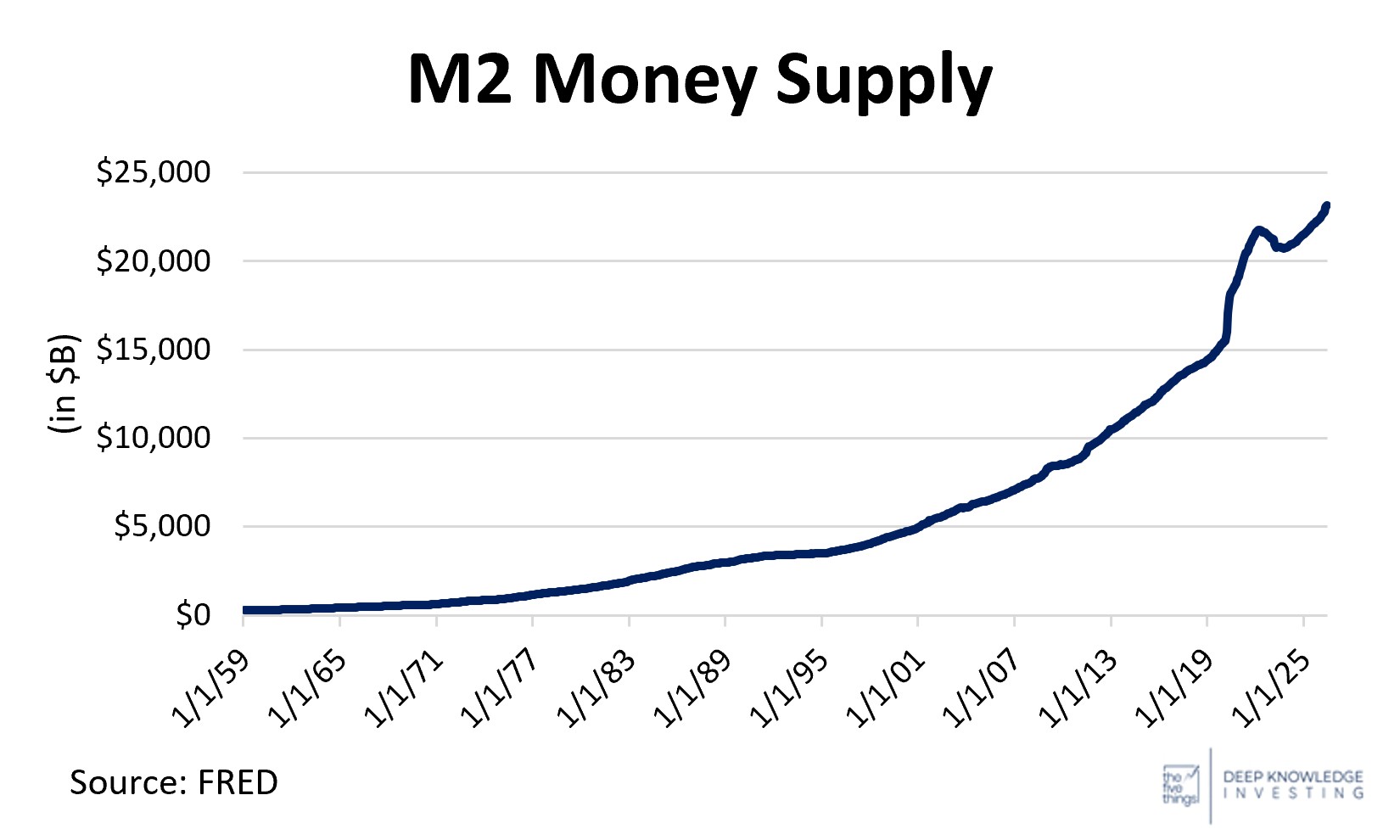
This is the problem.
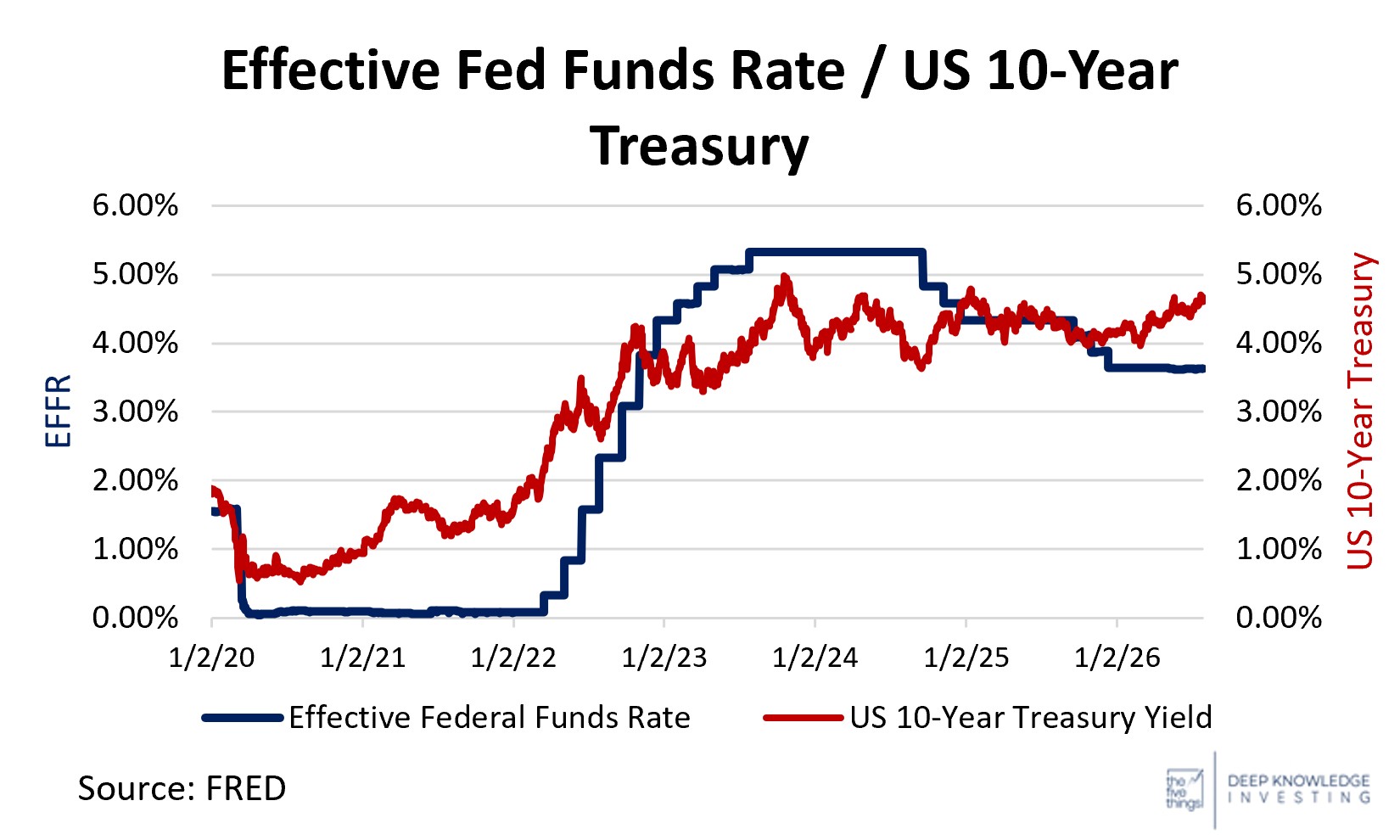
This is the result.
DKI Takeaway: Many of the people I follow on X (formerly Twitter) complained that Chairman Warsh spent his entire press conference saying little of substance. I agree with them; however, it doesn’t’ matter what Warsh says on the podium. The on-balance sheet debt of the US government just crossed $40 trillion dollars. Add in off-balance sheet liabilities of around $200 trillion and the total liabilities of the federal government is around a quarter of a quadrillion dollars. The Chairman can say he’s dedicated to reducing inflation, but it’s a mathematical certainty that those liabilities will be repaid in dollars with much less purchasing power. It’s either that or an Argentina-style default.
Please look at the two graphs above together. There was a massive increase in the money supply caused by overspending. This is actual inflation. Now look at the right side of the second graph. As the Fed has cut, borrowing rates have risen. That’s the bond market telling us the Fed is out of dry power and short on influence. Warsh can’t change that.
2) Apple and Micron Catch President Trump in a Tug of War for Chinese Chips:
Apple pitched President Trump and other officials a plan to use memory chips from China’s ChangXin Memory Technologies (CXMT) and Yangtze Memory Technologies (YMTC) in Apple products sold outside of the US. This lobbying effort was countered by Micron, which warned that allowing Chinese companies to sell their tech in the US could destroy the domestic market the way it did US steel manufacturing. Micron claimed it will keep investing in the US and ramping up production as an alternative. (DKI notes this isn’t just talk and Micron is following through on its commitments.) Much of the controversy also stems from CXMT and YMTC being designated as Chinese military companies by the Pentagon, meaning deals by Apple and others would carry legal and reputational risk. China has been caught putting spyware and malware into solar panel equipment shipped to the US. It’s reasonable to assume they might do the same here.
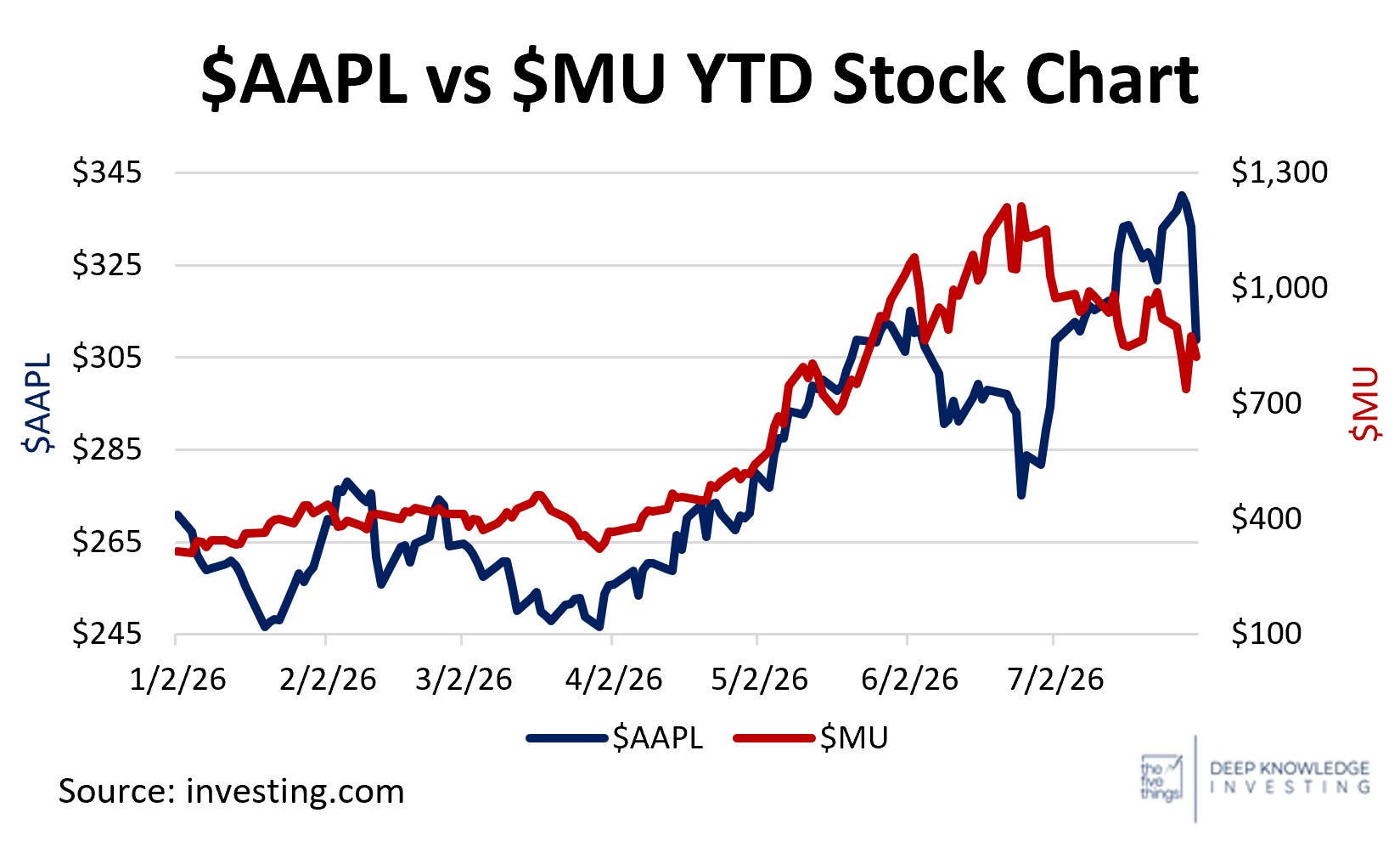
A good year with high volatility for both stocks.
DKI Takeaway: Rising memory costs have been one reason companies like Apple have increased prices across many popular products. Apple used to exert leverage over memory suppliers due to its massive buying volume, but with datacenter demands leading to staggering order increases, Apple has declining influence. With most manufacturing, when domestic supply gets expensive, companies look abroad. This has already started happening in AI with increasing enterprise token usage for inexpensive Chinese AI models in the US, compounding a price war that includes Meta and OpenAI. We could see something similar in memory if the White House approves Apple’s request. For more on a related topic; the competition between Nvidia and Huawei in AI accelerators, check out our post titled DeepSeek Founder Says the Quiet Part Out Loud.
3) Nvidia in Talks to Guarantee Financing $250B for OpenAI Data Center:
Nvidia is in talks to provide a backstop for up to $250B in financing for OpenAI’s planned 10-gigawatt data center in Ohio. This is the largest data center project ever announced, with a total cost (including the chips) of over $500B. The guarantee would cover the facility’s lease and construction debt (not the chips) and would let OpenAI raise capital at favorable rates despite lacking an investment-grade credit rating. Nvidia is also negotiating an additional $350B to finance OpenAI’s purchase of Nvidia chips. Both of these plans are not finalized and in ongoing negotiations.
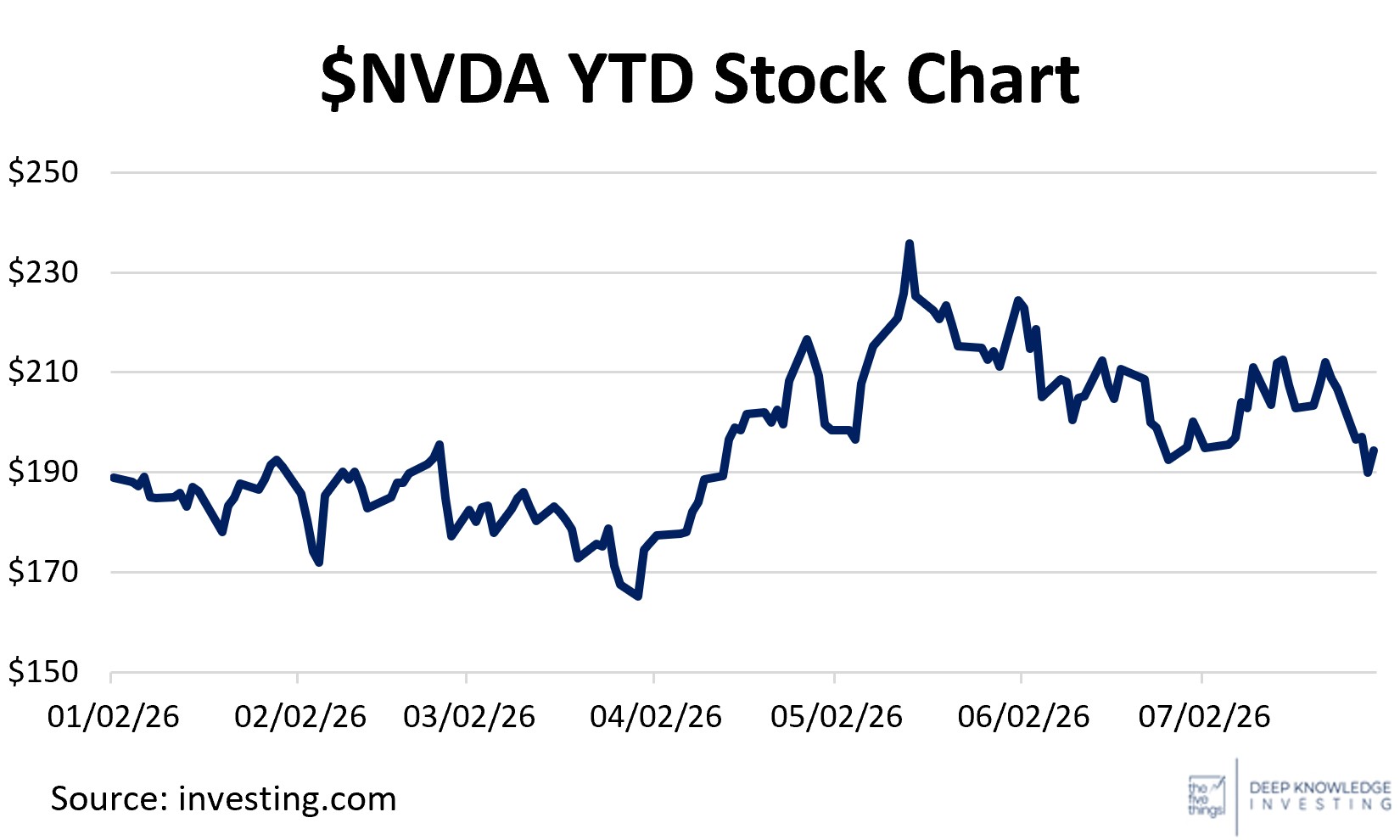
Best GPUs in the industry, but this deal looks awful.
DKI Takeaway: Nvidia would guarantee debt for a facility built to house its chips also financed by Nvidia. If the deal goes through, that looks more like a closed loop where Nvidia is paying for its own revenue growth rather than meeting organic demand. Nvidia would be the financer, the landlord’s guarantor, and the chip supplier, all at once. If OpenAI’s operating losses and cash burn don’t improve, Nvidia is exposed to every leg of the deal. As OpenAI becomes dependent on Nvidia’s backing, it’s losses also become Nvidia’s problem. DKI has been clear for more than a year that OpenAI has no ability to earn a return on the massive capital it’s deploying and Sam Altman has almost admitted as much when he suggested the US government declare the firm “too big to fail”. I think OpenAI has a bad product which is the reason they’re losing share. The entire US-based AI sector saw their stocks fall as the market quickly drew the same conclusion: This deal is insane.
4) CXMT Corp Bets on AMD and Intel over Nvidia:
CXMT, a Chinese memory chip maker, recently executed an IPO and saw its valuation surge past $500B during the first trading day. Instead of making high bandwidth memory (HBM) chips that power NVIDIA’s GPUs, CXMT is focusing on DDR5 memory, the standard used in Intel and AMD servers. That represents a bet that AI demand isn’t confined to GPU clusters, but is spreading into regular servers as well as AI PCs. Memory prices have skyrocketed, and Intel is increasing its spending to keep up with demand.
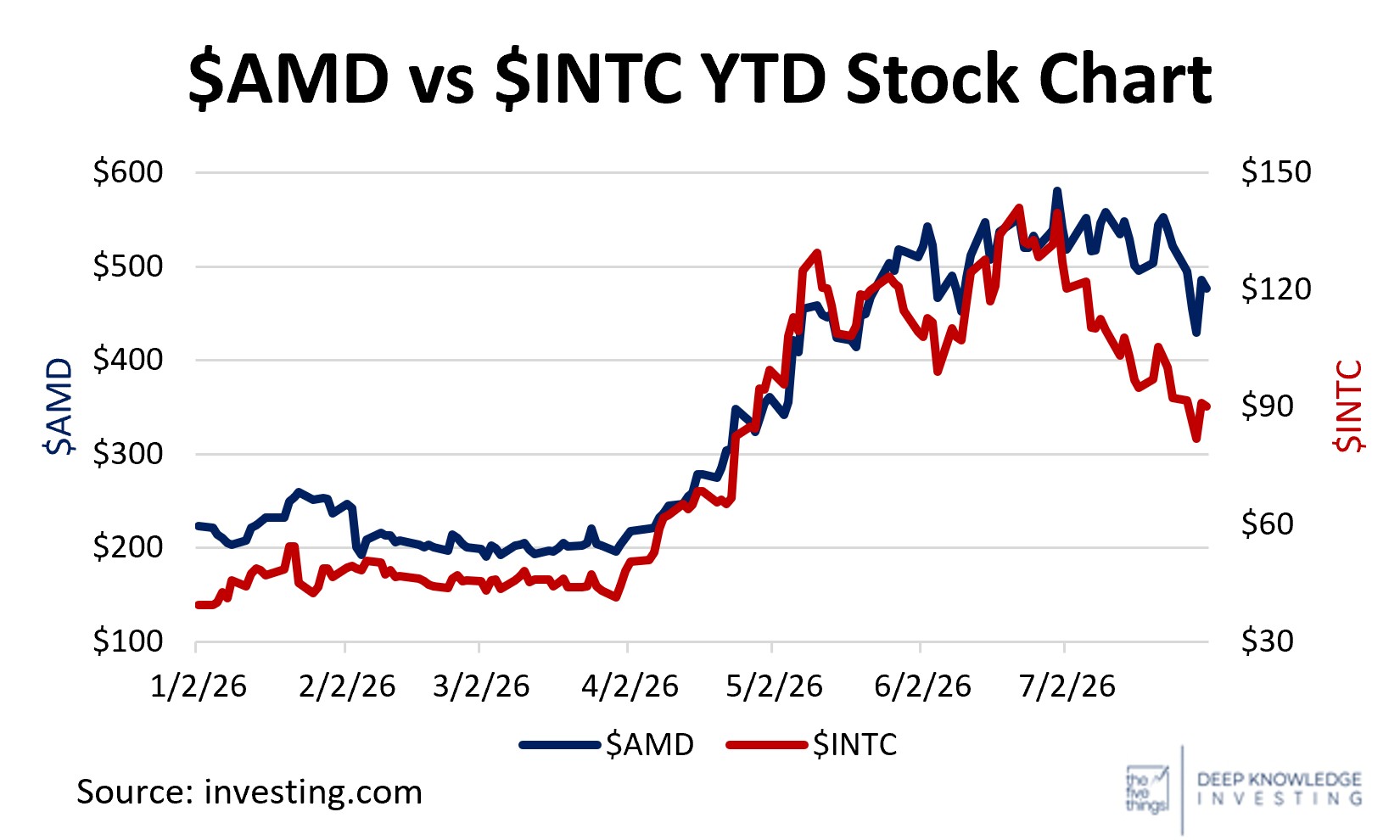
DKI has been invested in the sector.
DKI Takeaway: CXMT betting on DDR5 instead of HBM signals the size of the demand pool. If demand were limited to NVIDIA’s GPU clusters, a company this size wouldn’t need to build up its capacity for standard Intel and AMD servers. Rising prices suggest a crunch across the board because AI adoption is broader than a single chip architecture. Demand for AI computing is showing up everywhere, not just in Nvidia’s ecosystem. A key part of DKI’s positive thesis on Intel has been the shift from training which relies on Nvidia GPUs to inference which relies on Intel CPUs.
5) Big Tech Earnings Come Out with Capex and Cash in Focus:
Big Tech’s Q2 2026 earnings season peaked this week. Alphabet reported on July 22 while Microsoft, Meta, Apple, and Amazon reported last Wednesday and Thursday. Amazon, Google, Meta, and Microsoft plan combined AI capex of $725B in 2026. That figure is up 77% from 2025. Investors are beginning to test spending plans against AI revenue growth. Results were mixed. Microsoft beat revenue and EPS estimates in part due to significant Azure growth. The stock surged over 15% at Thursday’s close and set a one-day record for market cap gains. Meta beat on revenue but missed on EPS after expenses grew by 55%. Alphabet posted its first negative free cash flow quarter as a public company. Amazon beat on revenue and cloud growth, with AWS expanding 37% YoY, well above the 31% Wall Street expected, pushing shares up in after hours. Apple beat both revenue and EPS expectations, but shares fell in aftermarket trading after its services segment missed estimates.
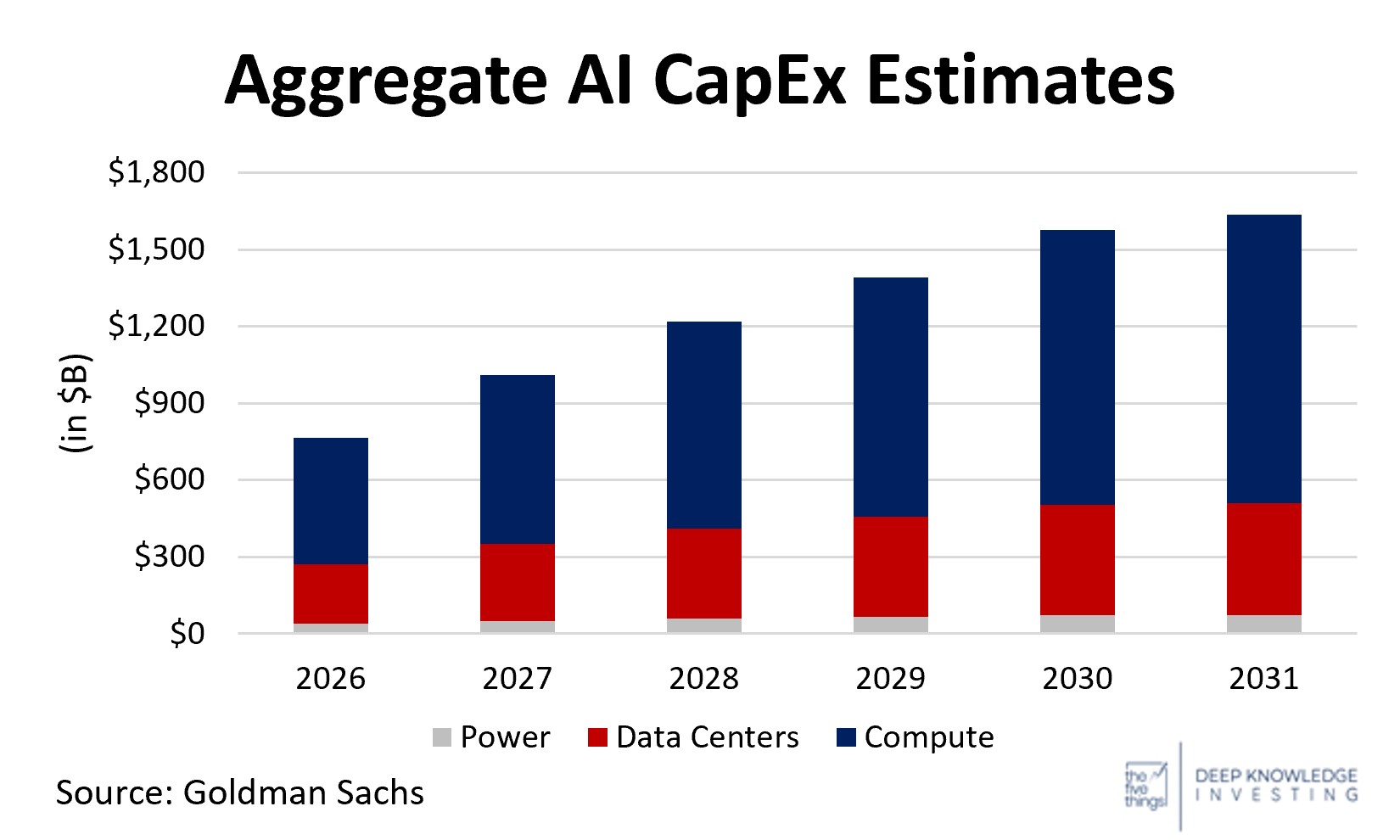
Investors are starting to look for revenue growth to justify this.
DKI Takeaway: This week’s earnings mark a clear shift. As a group, the hyperscalers posted record or near-record revenue, but the market judged each one by whether that growth kept pace with its spending. Microsoft and Amazon rose because Azure and AWS growth implied their cap-x plans were worthwhile. Meta fell after expenses surged and free cash flow dropped to $784MM. Alphabet sold off even as Google Cloud grew 82% because it posted its first negative free cash flow quarter as a public company. This comes on the back of a weeks-long tech/chip selloff. It’s not so much fading AI demand; but rather, investors starting to look for a return on trillions of dollars of spending. The market spent the last year pricing in a future where capex, cash burn, and execution risk didn’t exist. That was never reality.
6) Educational Piece: Rights and Warrants:
When public companies issue new shares, the equity stake of current shareholders gets diluted. However, some companies give these shareholders a chance to maintain proportionate ownership through rights offerings. Shareholders often receive one right for every share they hold, and the offer specifies how many rights are needed to purchase one new share. For example, someone holding 100 shares (and therefore 100 rights) under an offer requiring 2 rights per new share can buy up to 50 additional shares at a designated price. Rights often hold intrinsic value immediately because they’re typically offered below the current market price and don’t require the holder to exercise them. Warrants work similarly in that they let you buy shares at a fixed price, but are typically issued above the current market price, meaning they carry option value at issuance. What they lack in immediate exercise value they make up for in time value. Warrants often run for 5 years or longer, compared to a rights subscription window that is usually 15-30 days. For example, if a stock trades at $50 and a warrant carries a $65 price, a holder could wait for a few years and wait for the stock to climb past $65 before exercising.
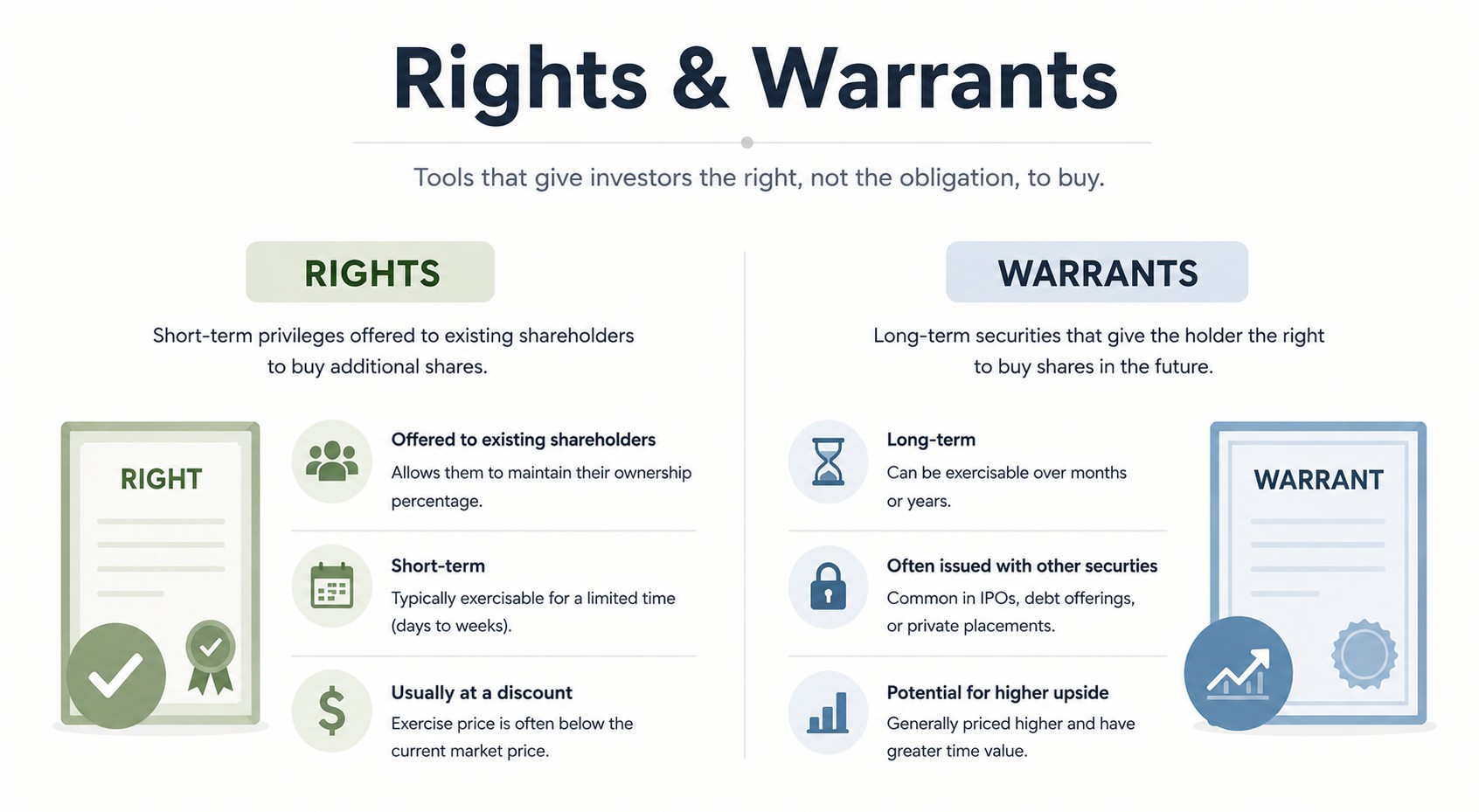
This gives you a general sense of how these instruments tend to work.
DKI Takeaway: Investors can exercise their rights and warrants to get new shares, sell them in the market to other investors, or let them expire. Warrants are rarely offered alone due to the higher cost. Instead, they’re often used as a sweetener tacked onto bond or equity offerings as a way the company incentivizes investors. While the pre-emptive right (a shareholder’s right to maintain proportionate equity) is legally protected in some foreign markets, it’s not in the US, which is part of why rights are much less common here. In fact, rights offerings are often read by the market as a sign of financial distress, since healthy companies often raise equity through ordinary public offerings instead.
DKI premium subscribers just benefitted from a rights offering. We bought scPharmaceuticals in mid-2024. The company was acquired by MannKind for about 50% more than what we paid a little more than a year after our initial purchase. Shareholders received cash plus a contingent value right (CVR) which pays scPharma shareholders based on a regulatory approval and a revenue target. Last week, we received notice that the regulatory approval was received prior to the deadline unlocking 75% of the maximum payout. The CVR wasn’t tradeable, something we emphasized when I told subscribers I was tendering and wanted to own the security. This week, we found out that decision was profitable.
Information contained in this report is believed by Deep Knowledge Investing (“DKI”) to be accurate and/or derived from sources which it believes to be reliable; however, such information is presented without warranty of any kind, whether express or implied and DKI makes no representation as to the completeness, timeliness or accuracy of the information contained therein or with regard to the results to be obtained from its use. The provision of the information contained in the Services shall not be deemed to obligate DKI to provide updated or similar information in the future except to the extent it may be required to do so.
The information we provide is publicly available; our reports are neither an offer nor a solicitation to buy or sell securities. All expressions of opinion are precisely that and are subject to change. DKI, affiliates of DKI or its principal or others associated with DKI may have, take or sell positions in securities of companies about which we write.
Our opinions are not advice that investment in a company’s securities is suitable for any particular investor. Each investor should consult with and rely on his or its own investigation, due diligence and the recommendations of investment professionals whom the investor has engaged for that purpose.
In no event shall DKI be liable for any costs, liabilities, losses, expenses (including, but not limited to, attorneys’ fees), damages of any kind, including direct, indirect, punitive, incidental, special or consequential damages, or for any trading losses arising from or attributable to the use of this report.