I’m currently in Florida, Uruguay and heading back to Montevideo soon. After that, I’ll have a week in Buenos Aires, a week in Florence, and will spend November in Japan. I’m open to a small number of in-person conversations. If you’re based locally, or know someone in those locations you think it would be worthwhile for me to meet, feel free to reach out privately at IR@DeepKnowledgeInvesting.com.
If you are interested in accumulating Bitcoin via mining, I’ve been mining with Simple Mining and it’s been a great experience you can check them out here. It’s even easier than you think. It took me 30 minutes to set up the first miner and I’m already earning sats. It would take 5 minutes to setup the second.
This week, I was hosted by Janet Alvarez on the SiriusXM Business Briefing. If you’re a SiriusXM subscriber, it’s worth checking out her show. I also had the opportunity to speak to the Manhattan Alternative Investment Network about using Bitcoin as a currency and the implications of remarks by Treasury Secretary Bessent on the Japanese reverse carry trade.
In a break from the recent trend, DKI didn’t have anything go up 100% or more this week. What I did do was explain to subscribers how I’ve been trading $SVIA and what to look for to ensure you’re buying the stock cheap instead of when there’s a potential problem. Is DKI going to make you more than 100% a month? Of course not, but you still might want to think about subscribing.
I want to start this week with a comment on this week’s title. Anthropic claims it might destroy humanity if it doesn’t get competition-killing regulation. With equity indexes near all-time highs, Oura pulls it’s IPO despite being 4x oversubscribed. They cite market uncertainty…with the IPO 4x oversubscribed! Economic commentators celebrate a PCE index that’s below expectations insisting it means the Fed can’t raise the fed funds rate again. The reason the PCE was below expectations was a change in methodology. I want to urge everyone to be skeptical of what you read. Frequently, the real reasons for things are not the same as the stated reasons. Or maybe I’m just cranky this week. Let me know what you think.
This week, we’ll address the following topics:
- Nvidia and Anthropic: Anthropic says it needs to be regulated or it might destroy humanity. Nvidia says it’s a solvable problem. I think Anthropic is auditioning for a DoW international hacking contract.
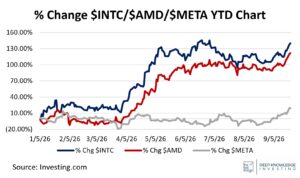
- AMD is acquiring World Labs for $8.2B. The intention is to produce hardware capable of simulating a 3D environment. It’s a positive for robotics, self-driving cars, and could create CPU demand for $AMD, $INTC, and $ARM.
- Oura cites an improving business and a massively oversubscribed IPO…then cancels the IPO due to “market uncertainty”. I’m skeptical that’s the real reason.
- PCE comes in below expectations. The reason for that was a change in methodology. The Fed probably won’t hike this month, but I disagree with market logic on this one.
- Educational: Mezzanine debt sounds exotic. We explain what it is and how it’s used in this week’s educational topic.
As usual, we applaud Kunal Arora and Eli Killorin for their significant contributions to this piece. I had the opportunity to mention them by name on SiriusXM this week. Their hard work and intellect earns them the credit.
Ready for another week of me being skeptical of everything? Let’s dive in:
1) Nvidia Releases New Platform and Anthropic’s IPO Prospectus Leaked:
Nvidia released its Open Agent Safety Platform intended to prevent AI agents from breaking out of sandboxes. Key partners included Microsoft, Crowdstrike, Intel, and Cisco. The platform functions as a browser for AI, providing it with access to only permissioned resources. Nvidia outlined two components of the platform called OpenShell and Sentry. The former is the software that sets limits capabilities/access, and the latter is a hardware enforcer that monitors agents and runs on network chips. In other AI news, Anthropic’s prospectus got leaked, showing it intends to raise $100B at a $2T valuation. Revenue growth of $4.6B in 2025 was 12x the 2024 figure. During that period, operating loss grew to $8.1B with a net loss of $42B ($34B of which was a non-cash accounting charge). They also plan to spend $518B on cloud, computing, and infrastructure in the next few years.
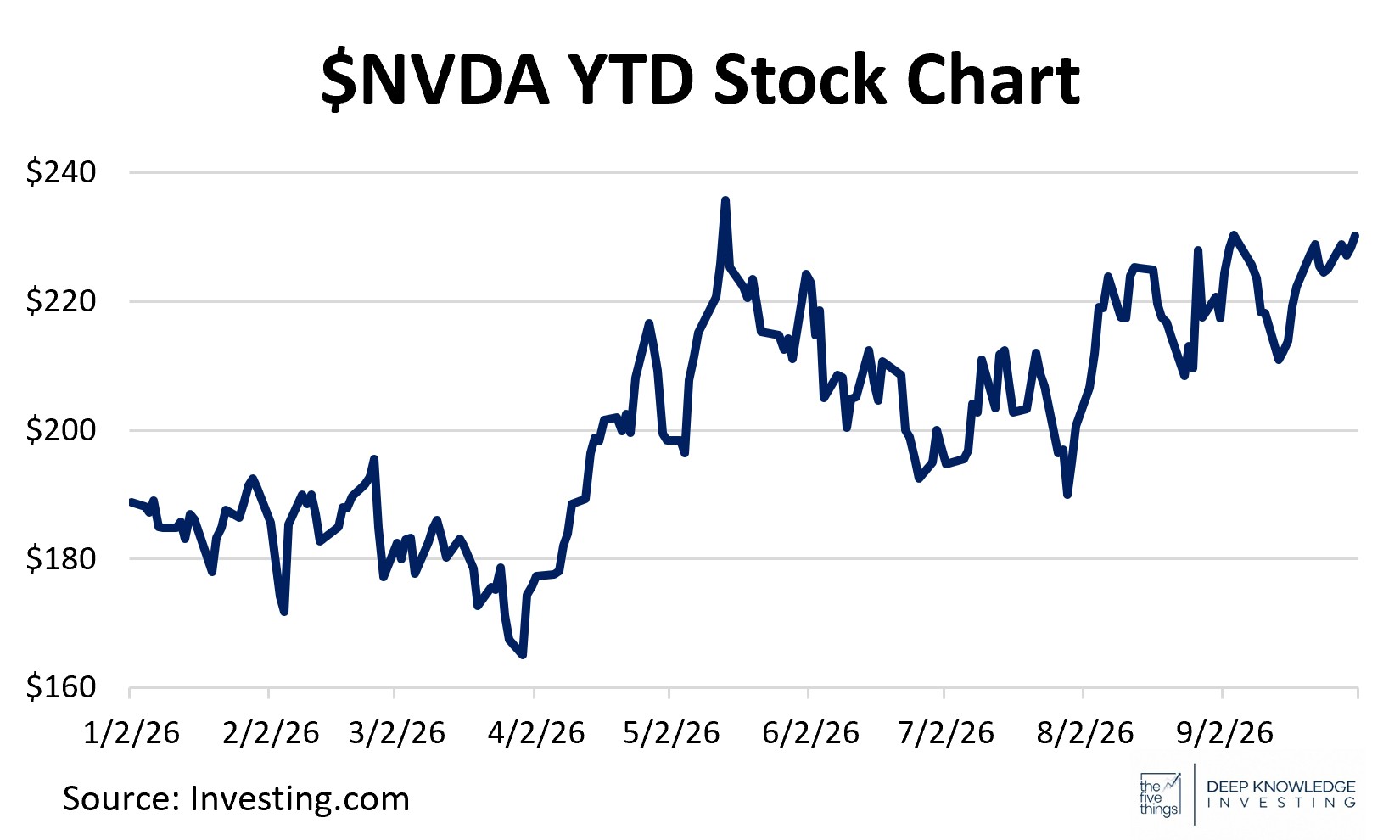
Nvidia claims rogue AI is tamable while Anthropic and OpenAI say they can’t control their creations. It’s a real-life Dr. Frankenstein.
DKI Takeaway: Anthropic’s CEO recently warned the industry about excessive development of AI and the existential risk it poses. Anthropic threatens the extinction of humanity while Nvidia says rogue AI is a solvable problem. Nvidia benefits from more AI development, but I think the rogue AI problem might be intentional and agree that it could be solvable. Anthropic delivered a 261-page prospectus which included a CEO warning. One third of the document focused on risks warning the public about the AI buildout. Anthropic even included a risk in the prospectus that AI could lead to a real-life Terminator scenario and destroy humanity. I’m skeptical. With models from both OpenAI and Anthropic regularly escaping supposedly-secure sandboxes, does anyone else think these events are intentional? Is it that hard to deny a computer program unfettered access to the internet, or are these events an audition for a massive order from the Department of War and intelligence agencies? In addition, the cries from OpenAI and Anthropic for regulation are insane. These companies could slow development and avoid destroying humanity on their own. The call for regulation appears to be an attempt to prevent future competition from startups and open-source models.
2) AMD Acquisition of World Labs:
On September 28th, AMD announced an agreement to acquire World Labs, the AI research company led by Fei-Fei Li for $8.2B in stock. World Labs is an artificial intelligence startup that builds spatial and physical intelligence models. The models are supposed to generate, reconstruct, and simulate an active 3D environment. Potential applications include robots that have to navigate the evnironment and self-driving cars. World Labs previously worked with AMD on GPU training. Li comes to AMD as an Executive VP and Chief Scientist. This is AMD’s second largest acquisition.
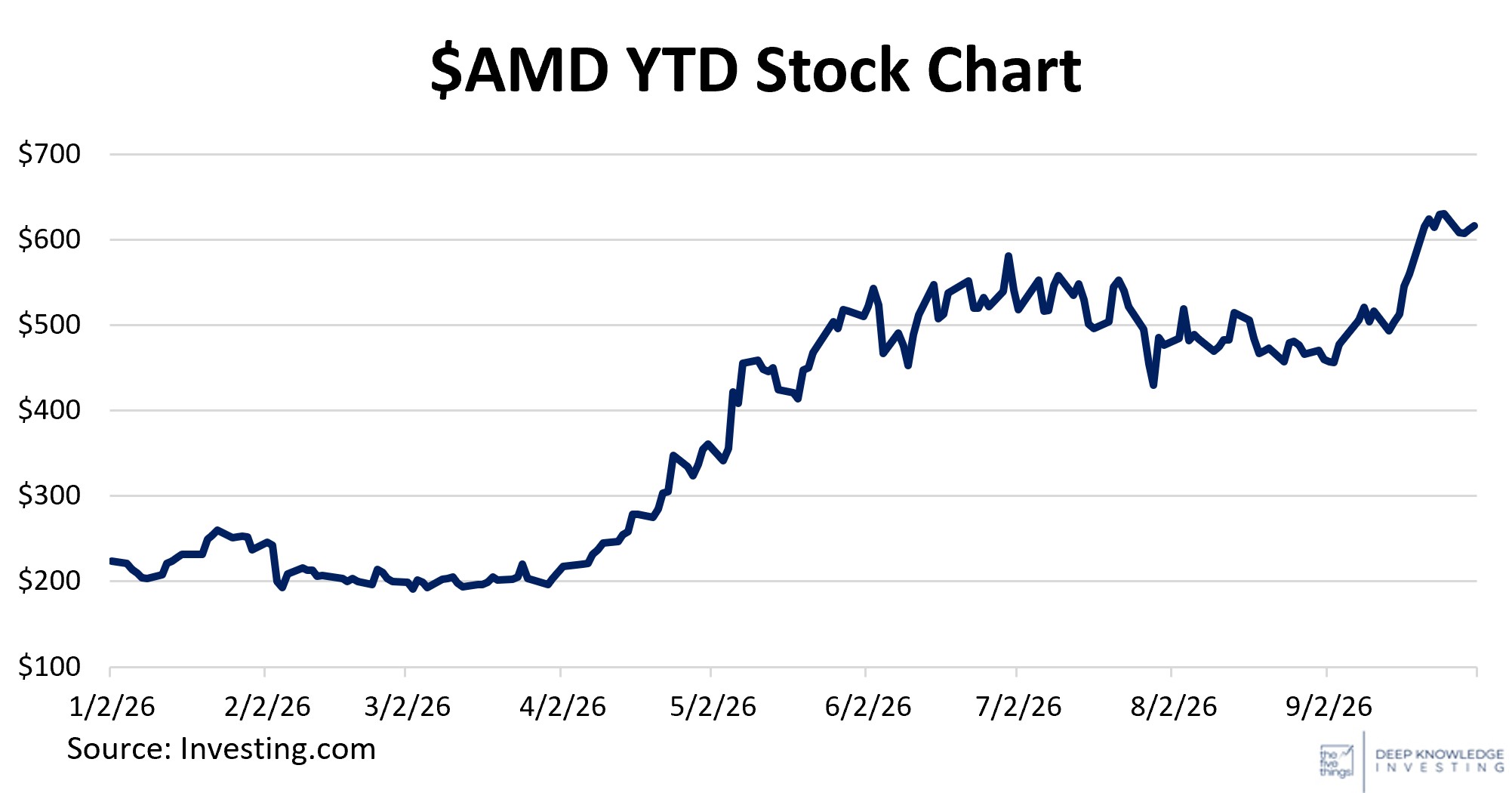
The deal is expensive, but the potential market is huge.
DKI Takeaway: AMD and World Labs have a prior working relationship. This helps lower risk. Li gives AMD a credible research leader in physical AI. What the deal buys is a model layer which can then pull developers toward AMD hardware. If World Labs models get built to run on AMD silicon optimally it gives developers a reason beyond price to choose its hardware over Nvidia’s. I’ve started to do some research calls on the acquisition and experts are already pointing to the additional CPU demands of running these applications. That would benefit AMD, Intel, and ARM.
3) Oura Delays IPO:
On September 29th Oura announced it was delaying its IPO. The company planned to sell 50MM shares under the ticker symbol $OURA, raising up to $2.2B at a roughly $15B valuation. Oura ring is a fitness wearable that tracks wearers’ health and biometric markers twenty-four hours a day. To get the full benefits of the ring, wearers need to sign up for a subscription service, which costs $5.99 per month. That service has 5MM paid members as of June 2026 implying $360MM of current annual recurring revenue. Oura cited “market uncertainty” as the reason for delaying its IPO. At the time, the S&P 500 was just 1.7% off its all-time high.
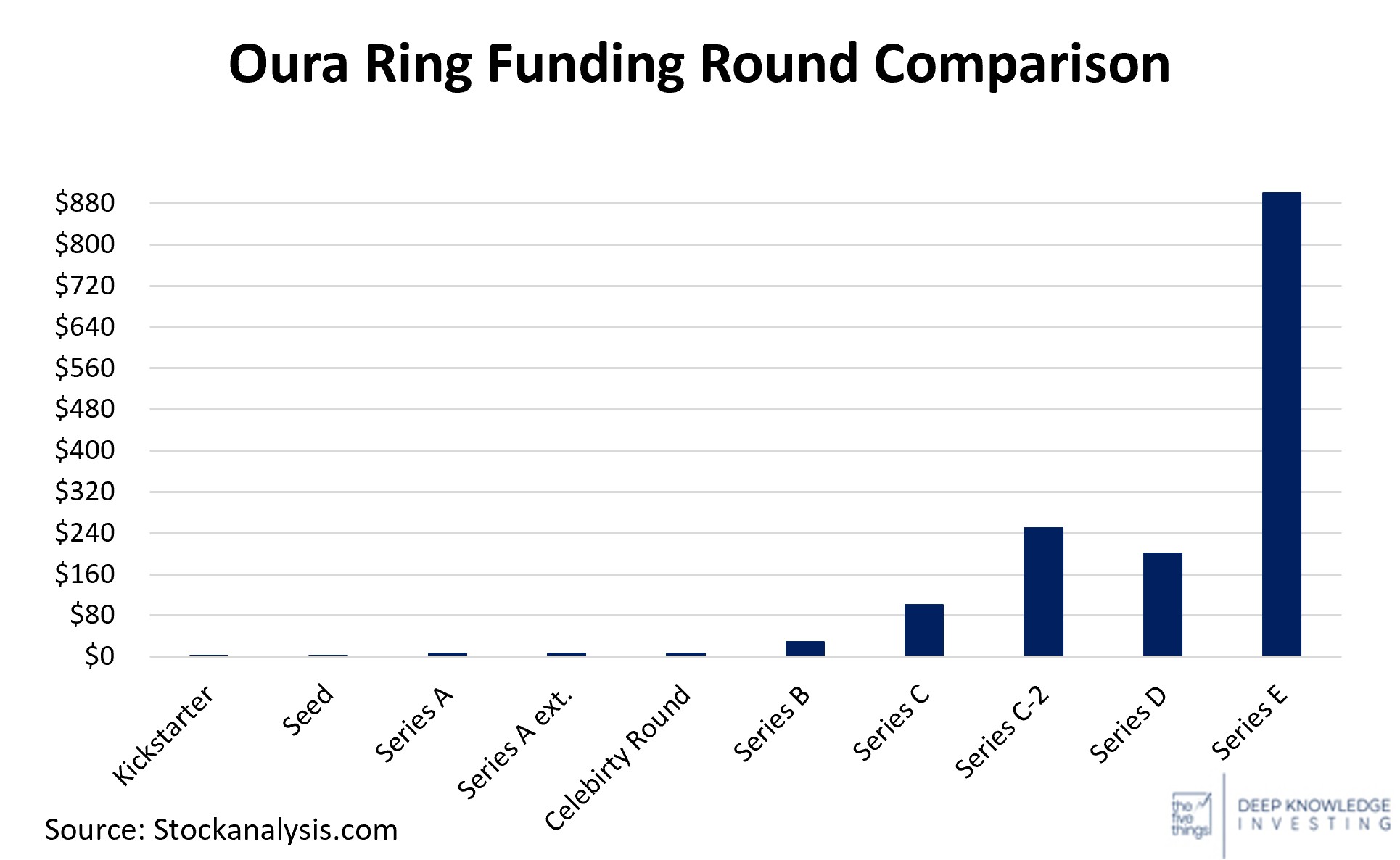
If the offering was 4x oversubscribed, why delay citing market conditions?
DKI Takeaway: Oura claimed demand was strong, that the business improved during the IPO process, and that the offering was 4x oversubscribed, but still decided to delay the IPO. With equity market indexes near all-time highs and an oversubscribed offering, I’m skeptical of the stated reason; “market uncertainty”. Wouldn’t you sell stock now if you were worried about a future decline, especially with huge current demand? It was reported that early investors like Forerunner wanted to exit. I have no proof that there were accounting issues or any malfeasance uncovered during the IPO process. I just think the stated reason was unlikely to be the real reason.
4) PCE was Irrelevant:
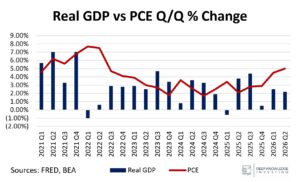
The market rallied when the PCE (personal consumption expenditures) came in below expectations. People thought that the below-expectation number meant that the Fed wouldn’t hike the fed funds rate this month. That’s probably correct, and also irrelevant. I see two problems with sentiment.
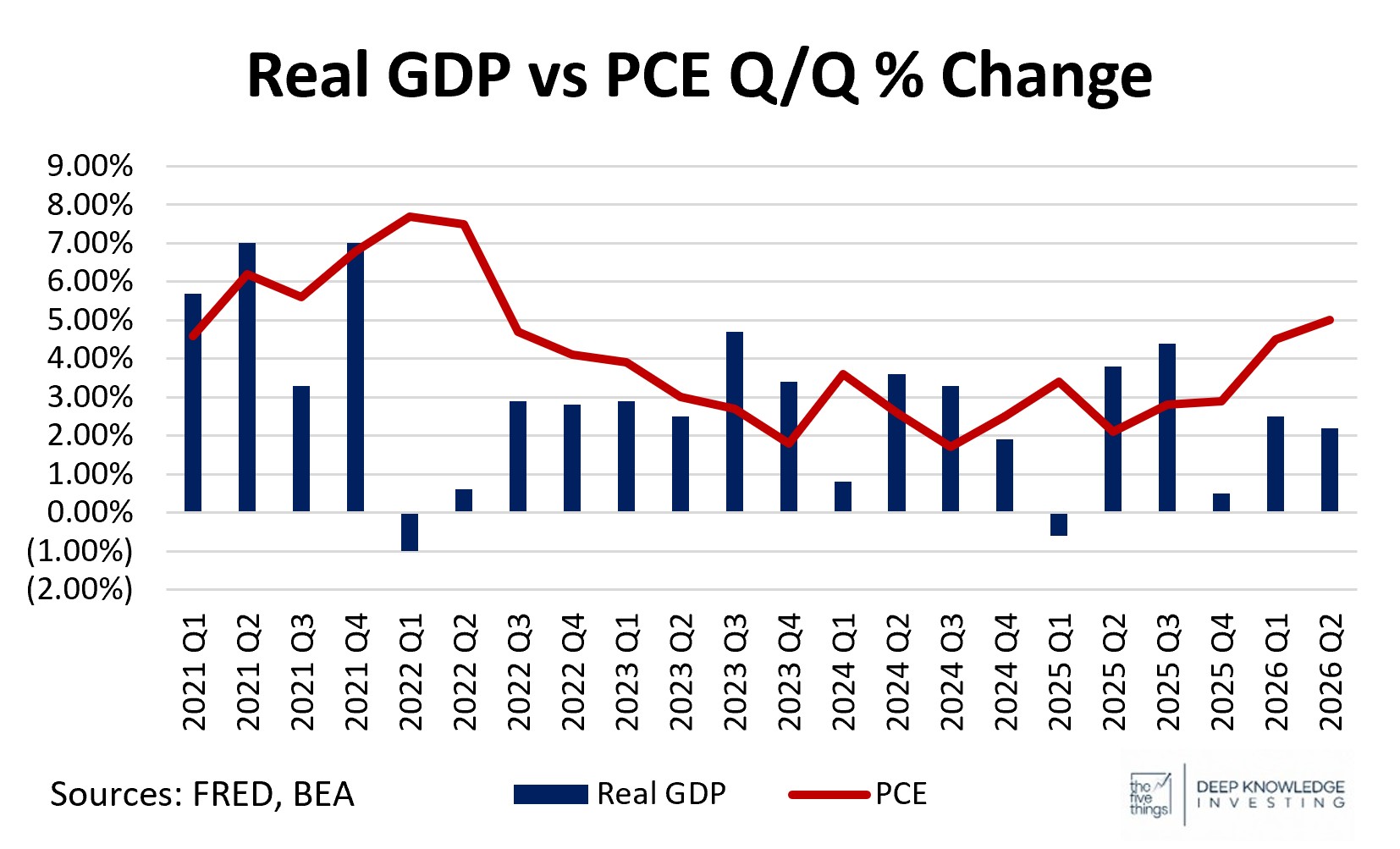
Inflation revised down while GDP revised up.
DKI Takeaway: First, the PCE was 3.4%. That’s high on both an absolute basis and high relative to the 2% target. Some would argue that this is due to temporarily elevated oil prices which slow the economy more effectively than a fed rate hike. They suggest that raising rates into an oil-led inflation number isn’t the right answer. These are both reasonable arguments. Unfortunately for them, we can look at the Core PCE number which excludes food and energy. That was up 3.0%, still far too high.
Making the situation worse is the lower-than-expected number was a result of changes in methodology by the Bureau of Economic Analysis. They revised the calculation down (it’s always down) because they thought some categories showed inflation that was too high. So, the core number was too high and the only reason it wasn’t higher was a change in methodology. This doesn’t indicate that inflation is under control or that inflation is a result of high oil prices.
Second, the fed funds rate has been de-linked from borrowing rates for at least two years. Over the past 25 months, the fed has delivered eight 25bp cuts and one 25bp hike. The yield on the 10-year Treasury has steadily increased. Inflation is being driven by overspending out of Congress, something that’s not going to change. There’s nothing the Fed can do about that. I think they’re unlikely to hike this month because the next meeting is just before the November election. A rate hike won’t actually change anyone’s mortgage rate prior to voting, but the optics of a pre-election hike aren’t good.
5) Educational Topic: Mezzanine Debt:
Mezzanine debt is a hybrid form of financing that sits between senior debt and preferred equity in the capital structure. In the event of a liquidation, mezzanine debt holders are paid after senior creditors and before equity holders. This added risk means it normally pays higher interest and can have a mix of cash interest and PIK interest that accrues to the principal amount owed. Mezzanine debt also often carries equity kickers like warrants/options to help investors to receive higher returns.
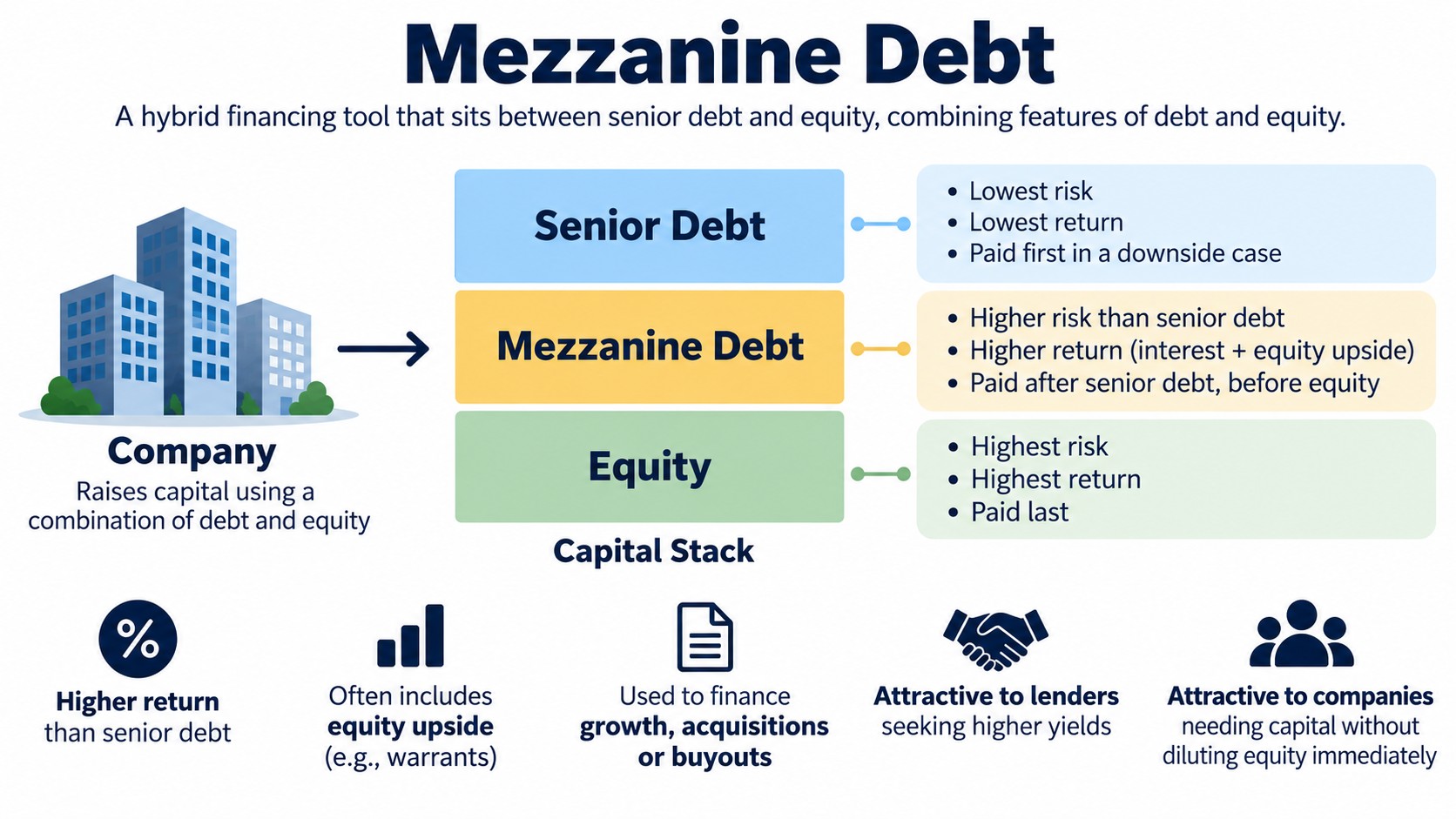
DKI Takeaway: Borrowers may like mezzanine debt because it lets them raise more capital than senior lenders will provide without giving up as much ownership as an equity raise. This is why it’s common in leveraged buyouts, acquisitions, and growth-related financings. It’s also more common for smaller companies, since the PIK interest can help limit cash expense. The trade-off is cost and risk. While the PIK interest helps to preserve some cash now, the capital structure positioning makes it more expensive than senior debt.
Information contained in this report is believed by Deep Knowledge Investing (“DKI”) to be accurate and/or derived from sources which it believes to be reliable; however, such information is presented without warranty of any kind, whether express or implied and DKI makes no representation as to the completeness, timeliness or accuracy of the information contained therein or with regard to the results to be obtained from its use. The provision of the information contained in the Services shall not be deemed to obligate DKI to provide updated or similar information in the future except to the extent it may be required to do so.
The information we provide is publicly available; our reports are neither an offer nor a solicitation to buy or sell securities. All expressions of opinion are precisely that and are subject to change. DKI, affiliates of DKI or its principal or others associated with DKI may have, take or sell positions in securities of companies about which we write.
Our opinions are not advice that investment in a company’s securities is suitable for any particular investor. Each investor should consult with and rely on his or its own investigation, due diligence and the recommendations of investment professionals whom the investor has engaged for that purpose.
In no event shall DKI be liable for any costs, liabilities, losses, expenses (including, but not limited to, attorneys’ fees), damages of any kind, including direct, indirect, punitive, incidental, special or consequential damages, or for any trading losses arising from or attributable to the use of this report.